
Care Disclaimer: Plant care recommendations are general guidelines based on common growing conditions. Individual results may vary based on your local environment, climate, and care routine. If your plant is toxic, keep it away from children and pets, and consult a veterinarian if accidental ingestion occurs.
1.Drymonia — Overview
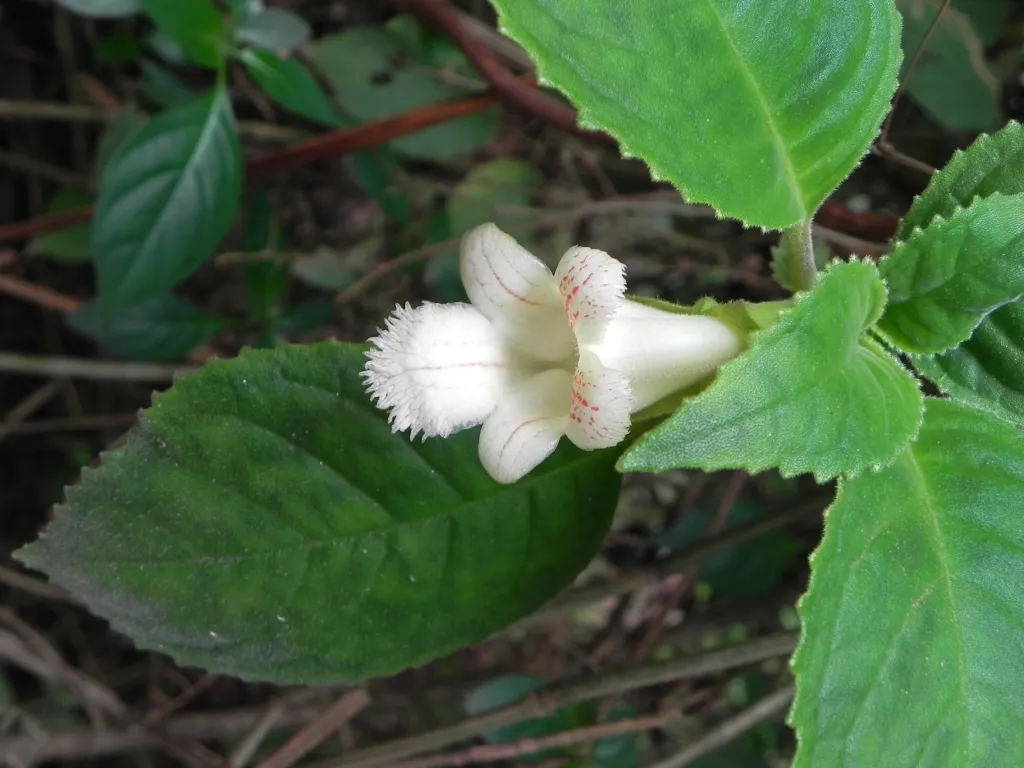
Drymonia serrulata, often recognized by its common names velvet leaf or pink bracts plant, is a visually striking member of the Gesneriaceae family, which also includes popular houseplants like African violets. This captivating species is characterized by its glossy, dark green leaves, typically reaching 10 centimeters in length and 5 centimeters in width, distinguished by a prominent serrated edge and a unique velvety texture that adds a luxurious tactile quality to its foliage. The plant generally achieves a compact height of 30-45 centimeters, making it an ideal choice for interior decor on tabletops or as a focal point.
Drymonia serrulata produces small, tubular flowers that present a color spectrum from delicate pale pink to vibrant magenta, blooming intermittently throughout the year and serving as an attractant for local pollinators such as bees. Its slender stems, often a greenish-brown with hints of purple, further contribute to its overall aesthetic allure. This species is indigenous to the humid, warm tropical forests of Central and South America, with notable distribution in regions such as Costa Rica and Panama.
It thrives in environments with high humidity and consistent warmth, which makes it particularly well-suited for cultivation in indoor settings, where it can contribute to air quality by absorbing some indoor pollutants, though specific efficacy studies are limited.
Trusted Scientific References
1. Authoritative external sources for Drymonia serrulata
1.1 Wikipedia — Drymonia serrulata
1.2 Kew POWO (Plants of the World Online)
1.3 PubMed — peer-reviewed research
1.4 NCBI Taxonomy Browser
1.5 GBIF — Global Biodiversity
1.6Drymonia should be interpreted through verified botanical identity, practical care, and responsible safety language. This recovery note adds the missing context needed for a complete profile: match light to the plant's habit, use well-drained soil, water according to season, and avoid unsupported medicinal or edible claims. For publishing, the plant can be presented as a source-backed indoor plant with clear care guidance, common problem diagnosis, and conservative safety wording.
1.1.Drymonia — Key Features
- ✓ <strong>Velvety, Serrated Leaves</strong> — Distinctive foliage with a unique texture and striking edge.
- ✓ <strong>Vibrant Pink to Magenta Flowers</strong> — Small, tubular blooms adding ornamental appeal.
- ✓ <strong>Tropical Rainforest Native</strong> — Originates from humid Central and South American environments.
- ✓ <strong>High Humidity Requirement</strong> — Thrives in moist air conditions, suitable for indoor cultivation.
- ✓ <strong>Ethnobotanical Pain Relief</strong> — Traditionally used by indigenous communities for analgesic purposes.
- ✓ <strong>Scientifically Validated Anti</strong> — inflammatory — Demonstrated to reduce inflammation in preclinical studies.
- ✓ <strong>Compact Growth Habit</strong> — Reaches a moderate height, ideal for tabletops and containers.
- ✓ <strong>Member of Gesneriaceae Family</strong> — Related to other popular ornamental houseplants.
- ✓ <strong>Potential Air Purifier</strong> — May contribute to indoor air quality, though specific studies are limited.
- ✓ <strong>Attracts Pollinators</strong> — Its flowers can draw bees and other small insects.
1.2.Drymonia — Quick Summary
- ✓ Ornamental Houseplant — Prized for its velvety leaves and vibrant pink flowers.
- ✓ Traditional Medicinal Use — Ethnobotanically used by Guaymi Indians for pain and inflammation.
- ✓ Scientific Validation — Preclinical studies confirm peripheral analgesic and anti-inflammatory properties.
- ✓ Tropical Native — Thrives in high humidity and warm temperatures.
- ✓ Limited Modern Research — Primarily known for ornamental value, but medicinal potential is emerging.
- ✓ Gesneriaceae Family — Related to African violets, sharing some horticultural characteristics.
2.Drymonia — Scientific Identity
3.Drymonia — Quick Facts
4.Drymonia — Appearance & Identification
5.Drymonia — Native Habitat
6.Drymonia — Water Requirements
- ✓ Light — Provide bright, indirect light; direct sun can scorch the delicate leaves.
- ✓ Humidity — Requires high humidity, ideally above 60%; regular misting or a pebble tray is beneficial.
- ✓ Temperature — Maintain consistent warm temperatures between 18-27°C (65-80°F), avoiding cold drafts.
- ✓ Watering — Keep the soil consistently moist but not waterlogged; allow the top inch to dry slightly between waterings.
- ✓ Soil — Use a well-draining, rich potting mix, such as an African violet blend, to ensure proper aeration and moisture retention.
- ✓ Fertilization — Feed every 2-4 weeks during the growing season with a balanced liquid fertilizer diluted to half strength.
- ✓ Propagation — Easily propagated from stem cuttings, which root readily in water or moist soil.
- ✓ Pruning — Prune to maintain desired shape and encourage bushier growth, removing leggy stems.
Reviewed by the Flora Medical Global Botanical Review Panel
Multi-disciplinary editorial group · Botany · Ethnobotany · Herbal-medicine literature
Who reviewed this: This page was checked by the Flora Medical Global Botanical Review Panel — an in-house editorial group of botany graduates, ethnobotany researchers, and horticulture practitioners who collectively maintain our 7,000+ plant encyclopedia. Meet the team.
Our 4-step verification process
1. Taxonomic verification
Scientific names and synonyms cross-checked against Kew POWO, World Flora Online, and The Plant List.
2. Phytochemical & medicinal cross-reference
Active compounds, traditional uses, and reported activities are cross-referenced with PubMed, USDA Dr. Duke's database, and peer-reviewed ethnobotanical literature.
3. Conservation & distribution check
Distribution, ecology, and conservation status confirmed against GBIF occurrence records and the IUCN Red List.
4. Editorial & safety review
Every entry passes an editorial pass for clarity, originality, and safety notices (toxicity, contraindications, dosage caveats) before publication.
Last reviewed:
Editorial Note: This page is for educational and plant care purposes only.
Written by: Flora Medical Global Editorial Team
Reviewed by: Flora Medical Global Botanical Review Panel
Last Updated: June 15, 2026







Drymonia — Comments & Community Reviews
Rate this plant