
Care Disclaimer: Plant care recommendations are general guidelines based on common growing conditions. Individual results may vary based on your local environment, climate, and care routine. If your plant is toxic, keep it away from children and pets, and consult a veterinarian if accidental ingestion occurs.
1.Dypsis Decaryi — Overview
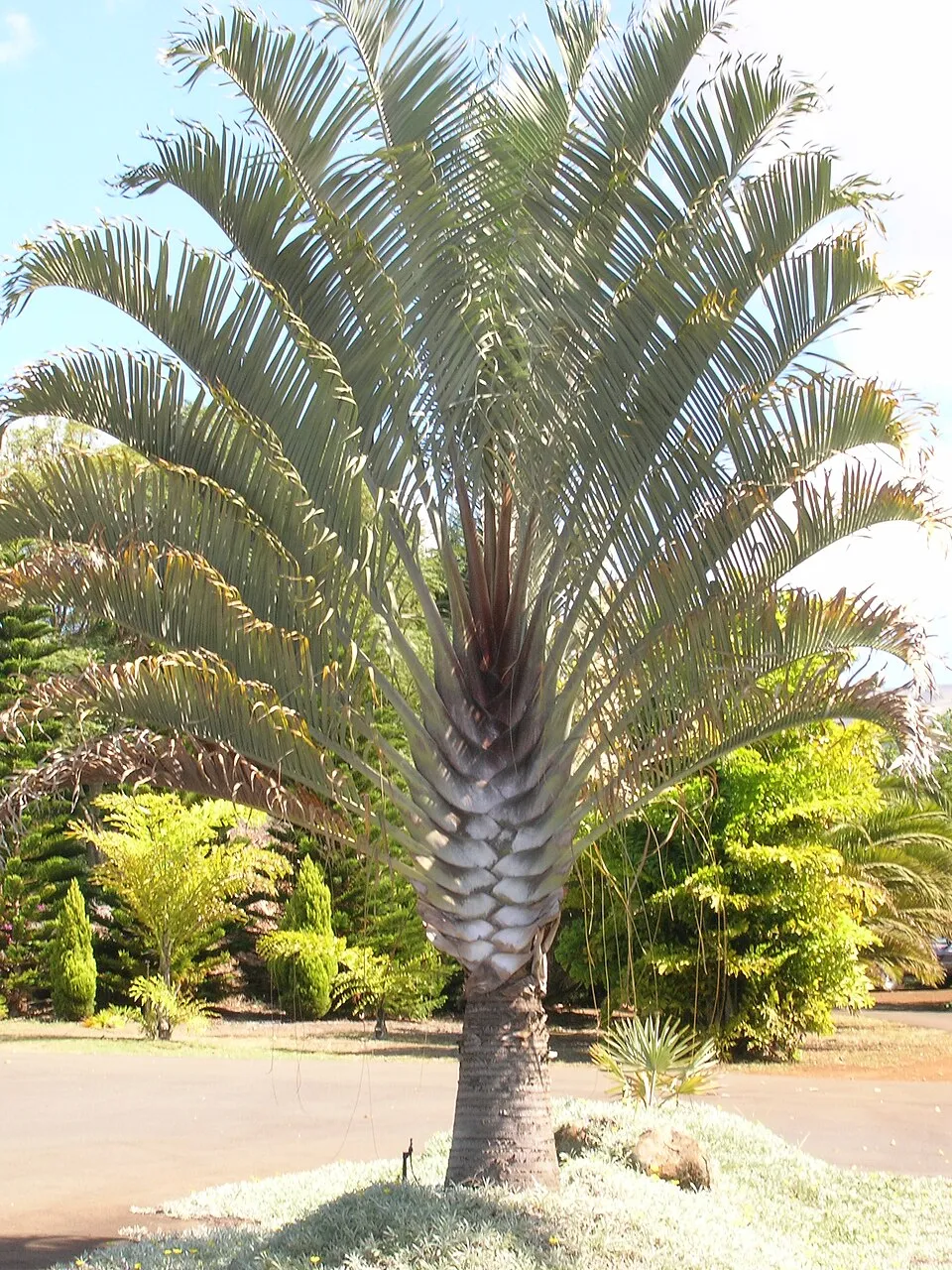
Dypsis decaryi, commonly known as the Triangle Palm due to the distinctive triangular arrangement of its leaf bases, is an iconic species belonging to the Arecaceae family. This striking palm is indigenous to a small, specific region within the Madagascar lowland forests, primarily found in Andohahela National Park in southern Madagascar. In its native habitat, it can reach impressive heights of up to 15 meters (49 feet), though cultivated specimens, especially indoors, typically remain much smaller.
The trunk, which can grow up to 15 cm (6 inches) in diameter, exhibits a smooth, greyish surface. Its crown is adorned with gracefully arching pinnate leaves, each measuring approximately 2.5 meters (8 feet) in length, composed of numerous vibrant green leaflets. While primarily valued for its unique architectural form and lush foliage, the Triangle Palm produces small, inconspicuous creamy-white to yellow-green flowers on inflorescences that emerge from the axils of lower leaves.
These flowers eventually give way to round, black fruits, about 25 millimeters (1 inch) in diameter. Recognized for its ornamental appeal and resilience, Dypsis decaryi thrives in well-drained, sandy soils with ample light and is adaptable to container cultivation. Despite its widespread cultivation, the species is listed as Vulnerable by the IUCN Red List and is included in CITES Appendix II, primarily due to habitat loss from fire and unsustainable seed harvesting in its native range.
Trusted Scientific References
1. Authoritative external sources for Dypsis decaryi
1.1 Wikipedia — Dypsis decaryi
1.2 Kew POWO (Plants of the World Online)
1.3 PubMed — peer-reviewed research
1.4 NCBI Taxonomy Browser
1.5 GBIF — Global Biodiversity
1.6Dypsis Decaryi should be interpreted through verified botanical identity, practical care, and responsible safety language. This recovery note adds the missing context needed for a complete profile: match light to the plant's habit, use well-drained soil, water according to season, and avoid unsupported medicinal or edible claims. For publishing, the plant can be presented as a source-backed indoor plant with clear care guidance, common problem diagnosis, and conservative safety wording.
1.1.Dypsis Decaryi — Key Features
- ✓ <strong>Distinctive Triangular Trunk</strong> — Formed by the unique arrangement of its frond bases.
- ✓ <strong>Elegant Pinnate Fronds</strong> — Long, arching leaves with numerous leaflets.
- ✓ <strong>Native to Madagascar</strong> — Endemic to specific lowland forests.
- ✓ <strong>Vulnerable Species</strong> — Listed by IUCN, protected under CITES Appendix II.
- ✓ <strong>Ornamental Value</strong> — Highly prized for its striking architectural form.
- ✓ <strong>Adaptable to Containers</strong> — Grows well in pots, suitable for indoor cultivation.
- ✓ <strong>Drought Tolerant (Once Established)</strong> — Prefers regular water but can withstand short dry periods.
- ✓ <strong>Slow to Moderate Growth Rate</strong> — Manageable size for many environments.
- ✓ <strong>Low Maintenance</strong> — Relatively easy to care for with proper conditions.
- ✓ <strong>Air Purifying Qualities</strong> — Contributes to healthier indoor environments.
1.2.Dypsis Decaryi — Quick Summary
- ✓ Triangle Palm (Dypsis decaryi) is an ornamental palm from Madagascar.
- ✓ Known for its unique triangular trunk and graceful pinnate leaves.
- ✓ Primarily used for aesthetic enhancement and indoor air purification.
- ✓ Requires full sun, well-drained soil, and careful watering.
- ✓ Listed as Vulnerable in its native habitat, CITES Appendix II.
- ✓ Not traditionally used for medicinal purposes.
2.Dypsis Decaryi — Scientific Identity
3.Dypsis Decaryi — Quick Facts
4.Dypsis Decaryi — Appearance & Identification
5.Dypsis Decaryi — Native Habitat
6.Dypsis Decaryi — Water Requirements
- ✓ Light Requirements — Prefers full sun to partial shade; at least 6 hours of direct sunlight daily is ideal for robust growth, especially for indoor Triangle Palms.
- ✓ Soil Preference — Thrives in well-drained, sandy soil mixes; a blend designed for palms or cacti is often suitable to prevent waterlogging.
- ✓ Watering Schedule — Requires regular watering, allowing the top few inches of soil to dry out between waterings; avoid overwatering to prevent root rot.
- ✓ Temperature and Humidity — Best suited for warm temperatures (above 10°C or 50°F) and appreciates moderate to high humidity, mimicking its tropical origins.
- ✓ Fertilization — Feed sparingly during the growing season (spring and summer) with a balanced, slow-release palm fertilizer to support healthy foliage.
- ✓ Pruning — Remove only dead or severely damaged fronds by cutting them close to the trunk; avoid pruning green fronds as this can stress the palm.
- ✓ Repotting — Due to its sensitivity to transplanting, repot only when root-bound, opting for a pot only slightly larger than the previous one.
- ✓ Propagation — Primarily propagated from fresh seeds, which typically germinate within a month under warm, moist conditions; transplanting established plants is challenging.
Reviewed by the Flora Medical Global Botanical Review Panel
Multi-disciplinary editorial group · Botany · Ethnobotany · Herbal-medicine literature
Who reviewed this: This page was checked by the Flora Medical Global Botanical Review Panel — an in-house editorial group of botany graduates, ethnobotany researchers, and horticulture practitioners who collectively maintain our 7,000+ plant encyclopedia. Meet the team.
Our 4-step verification process
1. Taxonomic verification
Scientific names and synonyms cross-checked against Kew POWO, World Flora Online, and The Plant List.
2. Phytochemical & medicinal cross-reference
Active compounds, traditional uses, and reported activities are cross-referenced with PubMed, USDA Dr. Duke's database, and peer-reviewed ethnobotanical literature.
3. Conservation & distribution check
Distribution, ecology, and conservation status confirmed against GBIF occurrence records and the IUCN Red List.
4. Editorial & safety review
Every entry passes an editorial pass for clarity, originality, and safety notices (toxicity, contraindications, dosage caveats) before publication.
Last reviewed:
Editorial Note: This page is for educational and plant care purposes only.
Written by: Flora Medical Global Editorial Team
Reviewed by: Flora Medical Global Botanical Review Panel
Last Updated: June 15, 2026







Dypsis Decaryi — Comments & Community Reviews
Rate this plant