

Care Disclaimer: Plant care recommendations are general guidelines based on common growing conditions. Individual results may vary based on your local environment, climate, and care routine. If your plant is toxic, keep it away from children and pets, and consult a veterinarian if accidental ingestion occurs.
1.Echinopsis Subdenudata — Overview
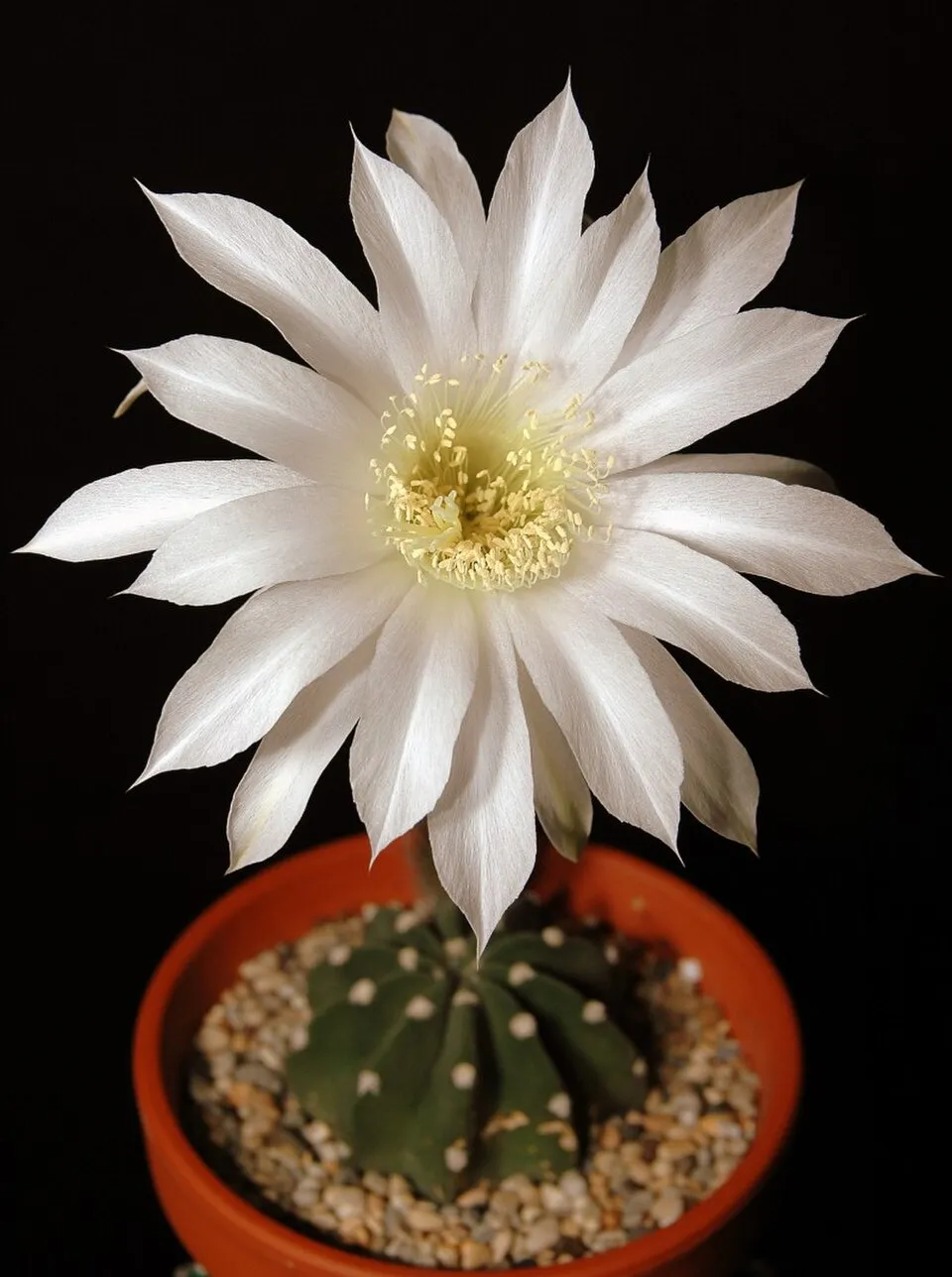
Echinopsis subdenudata, commonly known as the Easter Lily Cactus, is a captivating succulent species native to the arid mountainous regions of South America, primarily Bolivia, though also found in parts of Argentina. This solitary or clumping globular cactus typically reaches a height of 10-30 centimeters (4-12 inches) and can spread up to 15 centimeters (6 inches) in diameter. Its cylindrical stem is adorned with a smooth, bright green to slightly bluish epidermis, featuring prominent, yet often indistinct, vertical ribs that lend it an elegant, sculptural quality.
Unlike many cacti, its spines are notably sparse, measuring around 1-2 centimeters in length and appearing fine and golden, contributing to its soft visual appeal. Under optimal conditions, Echinopsis subdenudata produces spectacular, funnel-shaped flowers that are a hallmark of its genus. These large, fragrant blooms, typically white or pale yellow with pink-tinged edges, can span up to 15 centimeters (6 inches) in length and unfurl dramatically at night during the spring and early summer months, often lasting only a day or two.
The plant thrives in well-draining sandy or gritty soils and requires full sunlight or bright indirect light, mimicking its natural habitat. It exhibits a relatively slow growth rate but is a long-lived perennial, making it a cherished and enduring ornamental addition to indoor plant collections, especially for those seeking unique flowering cacti. Taxonomically, it belongs to the Cactaceae family, a diverse group renowned for its succulent adaptations and beautiful floral displays.
Trusted Scientific References
1. Authoritative external sources for Echinopsis subdenudata
1.1 Wikipedia — Echinopsis subdenudata
1.2 Kew POWO (Plants of the World Online)
1.3 PubMed — peer-reviewed research
1.4 NCBI Taxonomy Browser
1.5 GBIF — Global Biodiversity
1.6Echinopsis Subdenudata should be interpreted through verified botanical identity, practical care, and responsible safety language. This recovery note adds the missing context needed for a complete profile: match light to the plant's habit, use well-drained soil, water according to season, and avoid unsupported medicinal or edible claims. For publishing, the plant can be presented as a source-backed indoor plant with clear care guidance, common problem diagnosis, and conservative safety wording.
1.1.Echinopsis Subdenudata — Key Features
- ✓ <strong>Solitary or Clumping Globular Form</strong> — Grows as a single spherical stem or forms small clusters, reaching up to 15 cm in diameter.
- ✓ <strong>Flattened Stem Apex</strong> — Features a distinctly flattened top, contributing to its unique and attractive shape.
- ✓ <strong>Indistinct Ribs</strong> — The stem surface displays prominent but often softly defined vertical ribs, adding textural interest.
- ✓ <strong>Small, Fine Golden Spines</strong> — Possesses sparse, short (1-2 cm) golden spines, giving it a softer appearance compared to many cacti.
- ✓ <strong>Large, White Nocturnal Flowers</strong> — Produces impressive, funnel-shaped white or pale yellow flowers that are highly fragrant.
- ✓ <strong>Flowers Open at Night</strong> — A characteristic feature where blooms unfurl after dusk, lasting through the night into early morning.
- ✓ <strong>Requires Well</strong> — Draining Soil — Essential for preventing root rot and ensuring the health of this succulent species.
- ✓ <strong>Prefers Bright Light</strong> — Thrives in conditions mimicking its native arid habitat, requiring ample sunlight or bright indirect light.
- ✓ <strong>Frost</strong> — Sensitive — Needs protection from cold temperatures and frost, making it an ideal indoor plant in cooler climates.
- ✓ <strong>Popular Ornamental Succulent</strong> — Highly valued by collectors and enthusiasts for its aesthetic appeal and dramatic flowering.
1.2.Echinopsis Subdenudata — Quick Summary
- ✓ Echinopsis subdenudata, known as the Easter Lily Cactus, is a globular cactus native to Bolivia, belonging to the Cactaceae family.
- ✓ It is highly prized for its large, intensely fragrant, and spectacular nocturnal white flowers.
- ✓ This perennial succulent typically grows up to 15 cm in diameter and is valued primarily for its ornamental beauty.
- ✓ It thrives in bright, indirect light and requires well-draining soil, making it a popular and relatively easy-to-care-for indoor plant.
- ✓ While not traditionally recognized for significant direct medicinal uses, its genus and family have a history of traditional applications for skin soothing and mild sedative effects.
- ✓ The plant is generally considered non-toxic, but careful identification is crucial to avoid confusion with psychoactive relatives within the Echinopsis genus.
2.Echinopsis Subdenudata — Scientific Identity
3.Echinopsis Subdenudata — Quick Facts
4.Echinopsis Subdenudata — Appearance & Identification
5.Echinopsis Subdenudata — Native Habitat
6.Echinopsis Subdenudata — Water Requirements
- ✓ Light Requirement — Provide bright, indirect light to full morning sun; avoid intense, scorching afternoon sun, especially in hot climates, to prevent sunburn.
- ✓ Soil Composition — Plant in a specialized well-draining cactus and succulent mix, typically composed of sand, perlite, and a small amount of organic matter, to prevent root rot.
- ✓ Watering Schedule — Water moderately during the active growing season (spring and summer) when the soil is completely dry; reduce watering significantly in fall and winter to prevent dormancy issues.
- ✓ Temperature & Humidity — Maintain temperatures between 15-30°C (59-86°F) and protect from frost, as it is highly frost-sensitive. Medium to high humidity (50-70%) is preferred but not strictly essential.
- ✓ Fertilization — Feed with a low-nitrogen, high-potassium/phosphorus fertilizer diluted to half strength during the spring and summer months, typically once a month, to support flowering.
- ✓ Potting — Use terracotta pots with ample drainage holes to promote aeration and prevent waterlogging, ensuring the pot size accommodates its slow growth.
- ✓ Propagation — Easily propagated from seeds sown in warm, moist conditions or by carefully removing and rooting offsets that form at the base of the parent plant.
Reviewed by the Flora Medical Global Botanical Review Panel
Multi-disciplinary editorial group · Botany · Ethnobotany · Herbal-medicine literature
Who reviewed this: This page was checked by the Flora Medical Global Botanical Review Panel — an in-house editorial group of botany graduates, ethnobotany researchers, and horticulture practitioners who collectively maintain our 7,000+ plant encyclopedia. Meet the team.
Our 4-step verification process
1. Taxonomic verification
Scientific names and synonyms cross-checked against Kew POWO, World Flora Online, and The Plant List.
2. Phytochemical & medicinal cross-reference
Active compounds, traditional uses, and reported activities are cross-referenced with PubMed, USDA Dr. Duke's database, and peer-reviewed ethnobotanical literature.
3. Conservation & distribution check
Distribution, ecology, and conservation status confirmed against GBIF occurrence records and the IUCN Red List.
4. Editorial & safety review
Every entry passes an editorial pass for clarity, originality, and safety notices (toxicity, contraindications, dosage caveats) before publication.
Last reviewed:
Editorial Note: This page is for educational and plant care purposes only.
Written by: Flora Medical Global Editorial Team
Reviewed by: Flora Medical Global Botanical Review Panel
Last Updated: June 15, 2026







Echinopsis Subdenudata — Comments & Community Reviews
Rate this plant