
Care Disclaimer: Plant care recommendations are general guidelines based on common growing conditions. Individual results may vary based on your local environment, climate, and care routine. If your plant is toxic, keep it away from children and pets, and consult a veterinarian if accidental ingestion occurs.
1.Ensete Maurelii — Overview
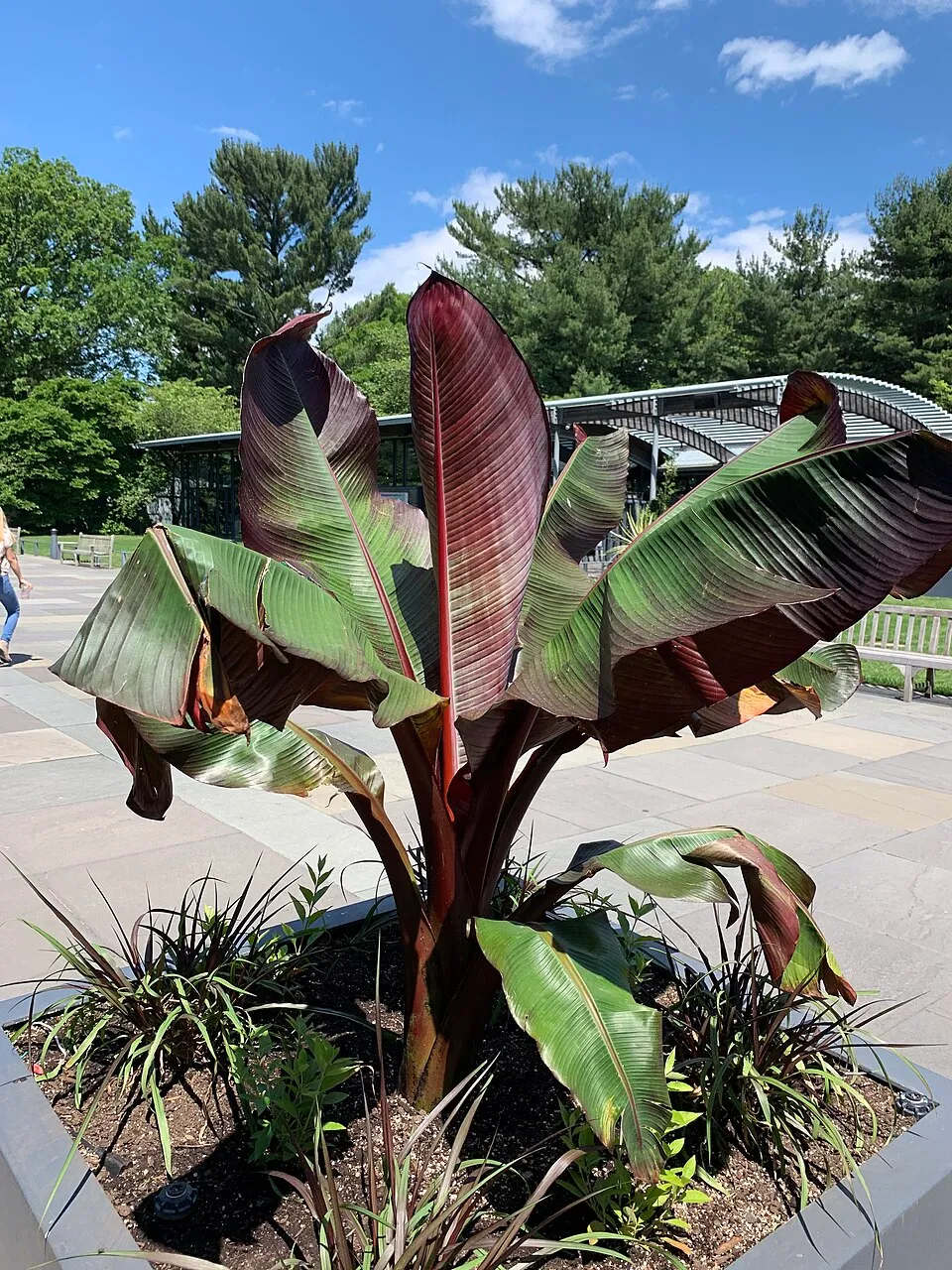
Ensete ventricosum 'Maurelii', commonly known as the Red Abyssinian Banana or Red False Banana, is a striking perennial cultivar within the Musaceae family, renowned for its dramatic ornamental foliage. This cultivar is derived from the species Ensete ventricosum, which is native to the subtropical regions of East Africa, particularly Ethiopia, where it is a significant staple food crop. 'Maurelii' distinguishes itself with exceptionally large, paddle-shaped leaves that can reach lengths of up to 3 feet and widths of 1.5 feet, displaying a captivating range of deep burgundy, purple, and reddish tints, especially pronounced on new growth and leaf axils.
The intensity of this coloration can vary with light exposure, making it a dynamic visual accent. Its robust pseudostem, often referred to as a stipe, can grow up to 12 inches in diameter and supports the impressive canopy. While the species Ensete ventricosum can grow quite large in its natural habitat, the 'Maurelii' cultivar typically reaches a more manageable height of 6 to 10 feet when cultivated indoors or in temperate climates.
Though flowering is rare in indoor settings, mature plants may produce banana-like yellow flowers, followed by dry, inedible fruits for the cultivar, contrasting with the edible fruits and starchy pseudostem of its wild counterpart. This plant's impressive stature and vibrant coloration make it a popular choice for tropical gardens, as an accent plant, or as a magnificent container specimen in colder regions.
Trusted Scientific References
1. Authoritative external sources for Ensete ventricosum Maurelii
1.1 Wikipedia — Ensete ventricosum Maurelii
1.2 Kew POWO (Plants of the World Online)
1.3 PubMed — peer-reviewed research
1.4 NCBI Taxonomy Browser
1.5 GBIF — Global Biodiversity
1.6Ensete Maurelii should be interpreted through verified botanical identity, practical care, and responsible safety language. This recovery note adds the missing context needed for a complete profile: match light to the plant's habit, use well-drained soil, water according to season, and avoid unsupported medicinal or edible claims. For publishing, the plant can be presented as a source-backed indoor plant with clear care guidance, common problem diagnosis, and conservative safety wording.
1.1.Ensete Maurelii — Key Features
- ✓ <strong>Striking Burgundy</strong> — Purple Foliage — The most prominent feature, offering a dramatic visual appeal.
- ✓ <strong>Large, Lanceolate Leaves</strong> — Can grow several feet long, creating an impressive canopy.
- ✓ <strong>Robust Pseudostem</strong> — Forms a sturdy base, contributing to the plant's architectural form.
- ✓ <strong>Tropical Aesthetic</strong> — Instantly transforms any space into an exotic, vibrant environment.
- ✓ <strong>Adaptable to Container Growth</strong> — Thrives in large pots, allowing for flexible placement and indoor relocation.
- ✓ <strong>Significant Indoor Height</strong> — Can reach 6-10 feet tall indoors under optimal conditions.
- ✓ <strong>Native to Ethiopia (species)</strong> — Cultivar derived from a plant with rich cultural and agricultural significance.
- ✓ <strong>Member of the Musaceae Family</strong> — Related to bananas, but distinct in its growth and fruit characteristics.
- ✓ <strong>Rarely Flowers Indoors</strong> — May produce banana-like yellow flowers after several years of maturity.
- ✓ <strong>Drought Intolerant</strong> — Requires consistent moisture for optimal health and appearance.
1.2.Ensete Maurelii — Quick Summary
- ✓ Ensete Maurelii is a stunning ornamental Red Abyssinian Banana cultivar.
- ✓ Features dramatic burgundy-purple, large lanceolate leaves.
- ✓ Primarily grown as a tropical accent plant or indoor specimen.
- ✓ Requires warm, humid conditions and consistent moisture.
- ✓ Edible fruit and starchy pseudostem are characteristics of the parent species, Ensete ventricosum.
- ✓ Adds a vibrant, exotic touch to any space.
2.Ensete Maurelii — Scientific Identity
3.Ensete Maurelii — Quick Facts
4.Ensete Maurelii — Appearance & Identification
5.Ensete Maurelii — Native Habitat
6.Ensete Maurelii — Water Requirements
- ✓ Light Requirements — Thrives in full sun to partial shade; ensure some protection from intense afternoon sun to prevent leaf scorch, especially in hotter climates.
- ✓ Soil & Drainage — Requires a rich, well-draining potting mix. A blend of peat, sand, and loam, or a high-quality tropical plant mix, is ideal to prevent waterlogging.
- ✓ Watering — Keep soil consistently moist but not waterlogged. Water regularly, especially during warm growing seasons, and reduce frequency in cooler months.
- ✓ Humidity — Prefers high humidity, mimicking its native subtropical environment. Mist leaves frequently or place the plant near a humidifier, particularly indoors.
- ✓ Temperature — Best grown in warm conditions, ideally between 65-80°F (18-27°C). Protect from frost, as it is highly sensitive to cold temperatures.
- ✓ Fertilization — Feed monthly during the growing season (spring to fall) with a balanced liquid fertilizer to support its rapid growth and large foliage.
- ✓ Container Growth — Excellent for container cultivation; use a large pot with ample drainage holes to accommodate its substantial root system and allow for indoor relocation during cold periods.
- ✓ Propagation — Primarily propagated by division of suckers, though seed propagation is possible but typically slow and less common for this specific cultivar.
Reviewed by the Flora Medical Global Botanical Review Panel
Multi-disciplinary editorial group · Botany · Ethnobotany · Herbal-medicine literature
Who reviewed this: This page was checked by the Flora Medical Global Botanical Review Panel — an in-house editorial group of botany graduates, ethnobotany researchers, and horticulture practitioners who collectively maintain our 7,000+ plant encyclopedia. Meet the team.
Our 4-step verification process
1. Taxonomic verification
Scientific names and synonyms cross-checked against Kew POWO, World Flora Online, and The Plant List.
2. Phytochemical & medicinal cross-reference
Active compounds, traditional uses, and reported activities are cross-referenced with PubMed, USDA Dr. Duke's database, and peer-reviewed ethnobotanical literature.
3. Conservation & distribution check
Distribution, ecology, and conservation status confirmed against GBIF occurrence records and the IUCN Red List.
4. Editorial & safety review
Every entry passes an editorial pass for clarity, originality, and safety notices (toxicity, contraindications, dosage caveats) before publication.
Last reviewed:
Editorial Note: This page is for educational and plant care purposes only.
Written by: Flora Medical Global Editorial Team
Reviewed by: Flora Medical Global Botanical Review Panel
Last Updated: June 15, 2026







Ensete Maurelii — Comments & Community Reviews
Rate this plant