

Care Disclaimer: Plant care recommendations are general guidelines based on common growing conditions. Individual results may vary based on your local environment, climate, and care routine. If your plant is toxic, keep it away from children and pets, and consult a veterinarian if accidental ingestion occurs.
1.Epiphyllum Anguliger — Overview
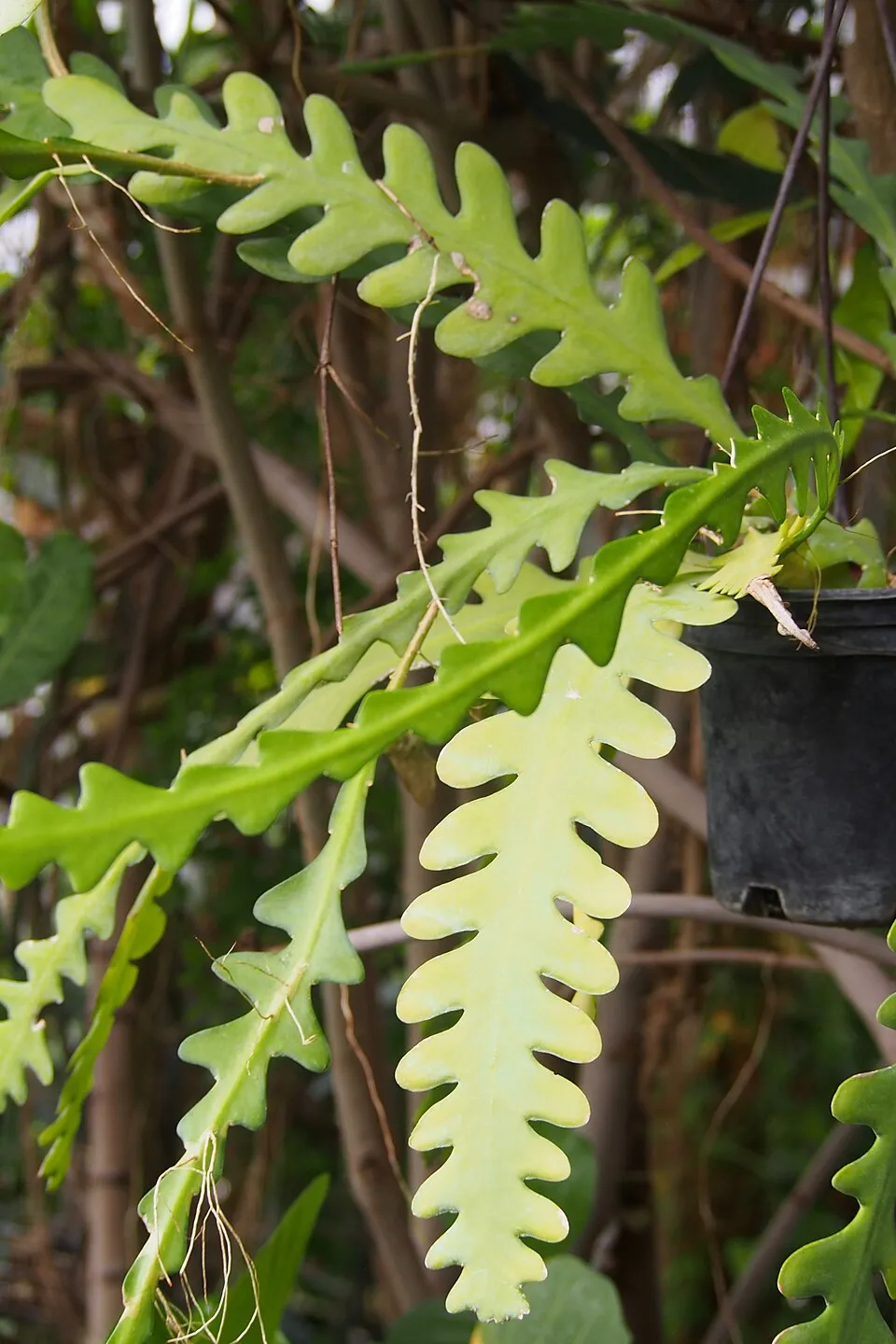
Epiphyllum anguliger, widely recognized as the zig-zag cactus or fishbone cactus, is a unique epiphytic succulent belonging to the Cactaceae family. It is indigenous to the tropical rainforests of Central America, predominantly found clinging to tree trunks and branches in Mexico, where it thrives in humid, shaded canopy environments. This species typically exhibits a sprawling or trailing growth habit, reaching lengths of 1–3 feet (30–90 cm).
Its most distinctive feature is its flattened, segmented stems, which can grow up to 12 inches (30 cm) long and display a remarkable zig-zag or fishbone-like morphology with shallow grooves along their edges. These green, fleshy stems are adept at storing water, contributing to the plant's drought tolerance despite its rainforest origins.
When in bloom, Epiphyllum anguliger produces large, highly fragrant white or pale yellow flowers, often measuring up to 12 inches (30 cm) in diameter. These trumpet-shaped blossoms are famously nocturnal, opening at night and releasing a sweet, heavy aroma to attract their primary pollinators, which include moths and bats. The ephemeral beauty of these flowers, lasting only a few hours, adds to their allure.
While lacking traditional bark, the stems possess a slightly waxy texture. As an epiphyte, it absorbs moisture from the air and nutrients from decaying organic matter, adapting perfectly to its arboreal habitat. Its non-spiny, eye-catching morphology and spectacular night-blooming flowers distinguish it within the broader cactus family, making it a prized ornamental plant globally.
Trusted Scientific References
1. Authoritative external sources for Epiphyllum anguliger
1.1 Wikipedia — Epiphyllum anguliger
1.2 Kew POWO (Plants of the World Online)
1.3 PubMed — peer-reviewed research
1.4 NCBI Taxonomy Browser
1.5 GBIF — Global Biodiversity
1.6Epiphyllum Anguliger should be interpreted through verified botanical identity, practical care, and responsible safety language. This recovery note adds the missing context needed for a complete profile: match light to the plant's habit, use well-drained soil, water according to season, and avoid unsupported medicinal or edible claims. For publishing, the plant can be presented as a source-backed indoor plant with clear care guidance, common problem diagnosis, and conservative safety wording.
1.1.Epiphyllum Anguliger — Key Features
- ✓ <strong>Distinctive Zig</strong> — Zag Stems — Unique flattened stems with deeply lobed, angular edges.
- ✓ <strong>Epiphytic Growth Habit</strong> — Naturally grows on trees, absorbing moisture and nutrients from the air and host.
- ✓ <strong>Night</strong> — Blooming Flowers — Produces large, highly fragrant white or pale yellow flowers that open nocturnally.
- ✓ <strong>Tropical Rainforest Native</strong> — Adapted to humid, shaded environments of Central American rainforests.
- ✓ <strong>Ornamental Value</strong> — Highly prized as a houseplant for its unique morphology and spectacular blooms.
- ✓ <strong>Soothing Topical Properties</strong> — Traditional use for calming skin irritations and minor burns.
- ✓ <strong>Non</strong> — Spiny Cactus — Lacks the typical sharp spines of many cactus species, making it safe to handle.
- ✓ <strong>Drought Tolerant</strong> — Succulent stems store water, allowing it to withstand periods of dryness.
- ✓ <strong>Low Maintenance</strong> — Relatively easy to care for, making it suitable for beginners.
- ✓ <strong>Attracts Nocturnal Pollinators</strong> — Flowers designed to attract moths and bats in its natural habitat.
1.2.Epiphyllum Anguliger — Quick Summary
- ✓ Epiphyllum anguliger is an epiphytic cactus known for its distinctive zig-zag stems and fragrant night-blooming flowers.
- ✓ Native to Central American rainforests, it thrives in humid, indirect light conditions.
- ✓ Traditionally used topically for its soothing, cooling, and depurative properties on skin irritations.
- ✓ Key chemical constituents include polysaccharides, flavonoids, and phenolic acids, contributing to its potential skin benefits.
- ✓ Cultivation requires well-draining soil, high humidity, and bright, indirect light.
- ✓ Safety profile emphasizes external use only, with patch testing recommended due to limited internal safety data.
2.Epiphyllum Anguliger — Scientific Identity
3.Epiphyllum Anguliger — Quick Facts
4.Epiphyllum Anguliger — Appearance & Identification
5.Epiphyllum Anguliger — Native Habitat
6.Epiphyllum Anguliger — Water Requirements
- ✓ Potting Mix — Use a well-draining, airy potting mix, ideally a blend of orchid bark, perlite, and peat moss or coco coir, mimicking its epiphytic habitat.
- ✓ Light Requirements — Provide bright, indirect light; avoid direct harsh sunlight which can scorch the delicate stems of the Epiphyllum anguliger.
- ✓ Watering Schedule — Water thoroughly when the top 1-2 inches of soil are dry, then allow excess water to drain completely; reduce watering in winter.
- ✓ Humidity — Maintain high humidity levels, ideally 60-80%, by misting regularly or placing the pot on a pebble tray with water.
- ✓ Temperature — Keep temperatures between 60-80°F (15-27°C); protect from cold drafts and temperatures below 50°F (10°C).
- ✓ Fertilization — Feed with a balanced liquid fertilizer diluted to half strength every 2-4 weeks during the growing season (spring and summer).
- ✓ Support — As a trailing plant, Epiphyllum anguliger benefits from hanging baskets or elevated positions where its stems can cascade freely.
- ✓ Pruning — Prune to maintain shape and encourage bushier growth, removing any damaged or yellowing stems.
Reviewed by the Flora Medical Global Botanical Review Panel
Multi-disciplinary editorial group · Botany · Ethnobotany · Herbal-medicine literature
Who reviewed this: This page was checked by the Flora Medical Global Botanical Review Panel — an in-house editorial group of botany graduates, ethnobotany researchers, and horticulture practitioners who collectively maintain our 7,000+ plant encyclopedia. Meet the team.
Our 4-step verification process
1. Taxonomic verification
Scientific names and synonyms cross-checked against Kew POWO, World Flora Online, and The Plant List.
2. Phytochemical & medicinal cross-reference
Active compounds, traditional uses, and reported activities are cross-referenced with PubMed, USDA Dr. Duke's database, and peer-reviewed ethnobotanical literature.
3. Conservation & distribution check
Distribution, ecology, and conservation status confirmed against GBIF occurrence records and the IUCN Red List.
4. Editorial & safety review
Every entry passes an editorial pass for clarity, originality, and safety notices (toxicity, contraindications, dosage caveats) before publication.
Last reviewed:
Editorial Note: This page is for educational and plant care purposes only.
Written by: Flora Medical Global Editorial Team
Reviewed by: Flora Medical Global Botanical Review Panel
Last Updated: June 15, 2026







Epiphyllum Anguliger — Comments & Community Reviews
Rate this plant