
Care Disclaimer: Plant care recommendations are general guidelines based on common growing conditions. Individual results may vary based on your local environment, climate, and care routine. If your plant is toxic, keep it away from children and pets, and consult a veterinarian if accidental ingestion occurs.
1.Epipremnum Manjula — Overview
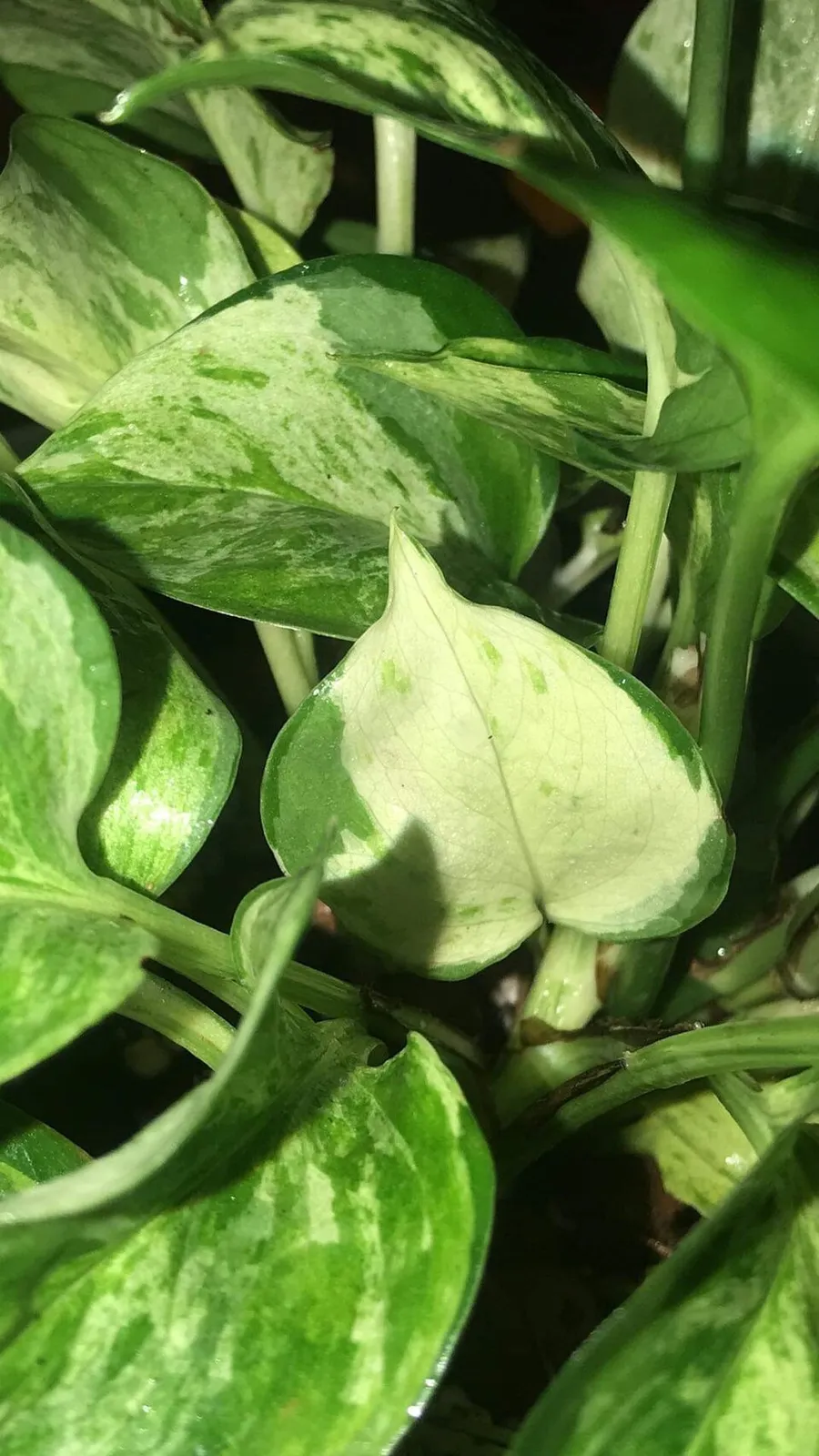
Epipremnum aureum 'Manjula', commonly known as Manjula pothos, is a highly esteemed ornamental cultivar originating from the diverse genus Epipremnum, which is a member of the Araceae family. This specific variety is celebrated for its distinctive variegated foliage and robust vining growth habit. Morphologically, the Manjula pothos exhibits large, heart-shaped leaves, typically measuring between 10 to 18 centimeters (4 to 7 inches) in length, characterized by an intricate mosaic of white, cream, silver, and various shades of green. The variegation patterns are unique to each leaf, often presenting as swirls and splashes from the midrib to the margins, with a glossy, subtly puckered surface that enhances its aesthetic appeal.
The stems are slender, herbaceous, and flexible, displaying a greenish-brown hue, lacking any significant bark texture. While it can be trained to climb with support, it is more commonly cultivated to trail or cascade gracefully from hanging baskets or shelves, reaching lengths of up to 60 centimeters (24 inches) indoors. In its native habitat, the species Epipremnum aureum originates from the tropical rainforests of the Solomon Islands and other parts of Southeast Asia, where it thrives as a vigorous epiphyte or terrestrial creeper, scrambling over rocks and tree trunks. The 'Manjula' cultivar, like its parent species, is adapted to warm, humid environments, making it an ideal indoor plant.
Taxonomically, it is classified under the genus Epipremnum, which is part of the larger Araceae family, known for its diverse range of monocotyledonous plants, many of which contain calcium oxalate crystals. Historically, while the species Epipremnum aureum holds some cultural significance in various regions as a symbol of good luck or prosperity, the 'Manjula' cultivar is primarily valued for its exceptional ornamental qualities and its recognized capacity to contribute to improved indoor air quality, a characteristic shared with its parent species.
Trusted Scientific References
1. Authoritative external sources for Epipremnum aureum Manjula
1.1 Wikipedia — Epipremnum aureum Manjula
1.2 Kew POWO (Plants of the World Online)
1.3 PubMed — peer-reviewed research
1.4 NCBI Taxonomy Browser
1.5 GBIF — Global Biodiversity
1.1.Epipremnum Manjula — Key Features
- ✓ <strong>Distinctive Variegation</strong> — Features unique splashes of white, cream, and green on heart-shaped leaves.
- ✓ <strong>Heart</strong> — shaped Foliage — Leaves are characteristically cordate, providing a classic ornamental appeal.
- ✓ <strong>Vining Growth Habit</strong> — Naturally trails or climbs, suitable for hanging baskets or trellises.
- ✓ <strong>Low Maintenance</strong> — Relatively easy to care for, tolerant of some neglect.
- ✓ <strong>Indoor Air Purifier</strong> — Effectively removes common indoor air pollutants.
- ✓ <strong>Adaptable to Light Conditions</strong> — Thrives in bright, indirect light but can tolerate lower light levels.
- ✓ <strong>Tropical Origin</strong> — Prefers warm temperatures and moderate to high humidity.
- ✓ <strong>Non</strong> — Flowering Indoors — Primarily grown for its foliage, rarely flowers in cultivation.
- ✓ <strong>Toxic to Ingest</strong> — Contains calcium oxalate crystals, making it harmful if consumed.
- ✓ <strong>Easy Propagation</strong> — Readily roots from stem cuttings, allowing for easy reproduction.
1.2.Epipremnum Manjula — Quick Summary
- ✓ Epipremnum aureum 'Manjula' is an ornamental, variegated pothos cultivar.
- ✓ Known for distinctive white, cream, and green heart-shaped leaves.
- ✓ Excellent for indoor air purification and aesthetic enhancement.
- ✓ Requires bright, indirect light, well-draining soil, and moderate humidity.
- ✓ All parts of the plant are toxic if ingested due to calcium oxalate crystals.
- ✓ Easy to care for and propagate, making it a popular houseplant choice.
2.Epipremnum Manjula — Scientific Identity
3.Epipremnum Manjula — Quick Facts
4.Epipremnum Manjula — Appearance & Identification
5.Epipremnum Manjula — Native Habitat
6.Epipremnum Manjula — Water Requirements
- ✓ Light — Provide bright, indirect light; direct harsh sun can scorch leaves and diminish variegation, while too low light may cause variegation to fade.
- ✓ Soil — Use a well-draining, loose potting mix, ideally a loamy soil amended with perlite or orchid bark to ensure adequate aeration and prevent waterlogging.
- ✓ Watering — Allow the top 2-3 inches of soil to dry out between waterings; consistent moisture is preferred, but avoid overwatering to prevent root rot.
- ✓ Temperature and Humidity — Maintain standard indoor temperatures between 18-29°C (65-85°F) and ideally provide moderate to high humidity (50-70%) for optimal growth, especially in dry climates.
- ✓ Fertilization — Feed monthly during the active growing season (spring and summer) with a balanced liquid fertilizer diluted to half strength; reduce or cease feeding in fall and winter.
- ✓ Pruning — Prune leggy vines to encourage bushier growth and maintain desired shape; regular trimming can also rejuvenate older plants and remove yellowing leaves.
- ✓ Propagation — Easily propagated by stem cuttings placed in water or directly into moist potting mix; ensure each cutting has at least one node for root development.
- ✓ Repotting — Repot when the plant becomes root-bound, typically every 1-2 years, moving to a pot one size larger with fresh potting mix to support continued growth.
Reviewed by the Flora Medical Global Botanical Review Panel
Multi-disciplinary editorial group · Botany · Ethnobotany · Herbal-medicine literature
Who reviewed this: This page was checked by the Flora Medical Global Botanical Review Panel — an in-house editorial group of botany graduates, ethnobotany researchers, and horticulture practitioners who collectively maintain our 7,000+ plant encyclopedia. Meet the team.
Our 4-step verification process
1. Taxonomic verification
Scientific names and synonyms cross-checked against Kew POWO, World Flora Online, and The Plant List.
2. Phytochemical & medicinal cross-reference
Active compounds, traditional uses, and reported activities are cross-referenced with PubMed, USDA Dr. Duke's database, and peer-reviewed ethnobotanical literature.
3. Conservation & distribution check
Distribution, ecology, and conservation status confirmed against GBIF occurrence records and the IUCN Red List.
4. Editorial & safety review
Every entry passes an editorial pass for clarity, originality, and safety notices (toxicity, contraindications, dosage caveats) before publication.
Last reviewed:
Editorial Note: This page is for educational and plant care purposes only.
Written by: Flora Medical Global Editorial Team
Reviewed by: Flora Medical Global Botanical Review Panel
Last Updated: June 15, 2026







Epipremnum Manjula — Comments & Community Reviews
Rate this plant