
Care Disclaimer: Plant care recommendations are general guidelines based on common growing conditions. Individual results may vary based on your local environment, climate, and care routine. If your plant is toxic, keep it away from children and pets, and consult a veterinarian if accidental ingestion occurs.
1.Fan Palm — Overview
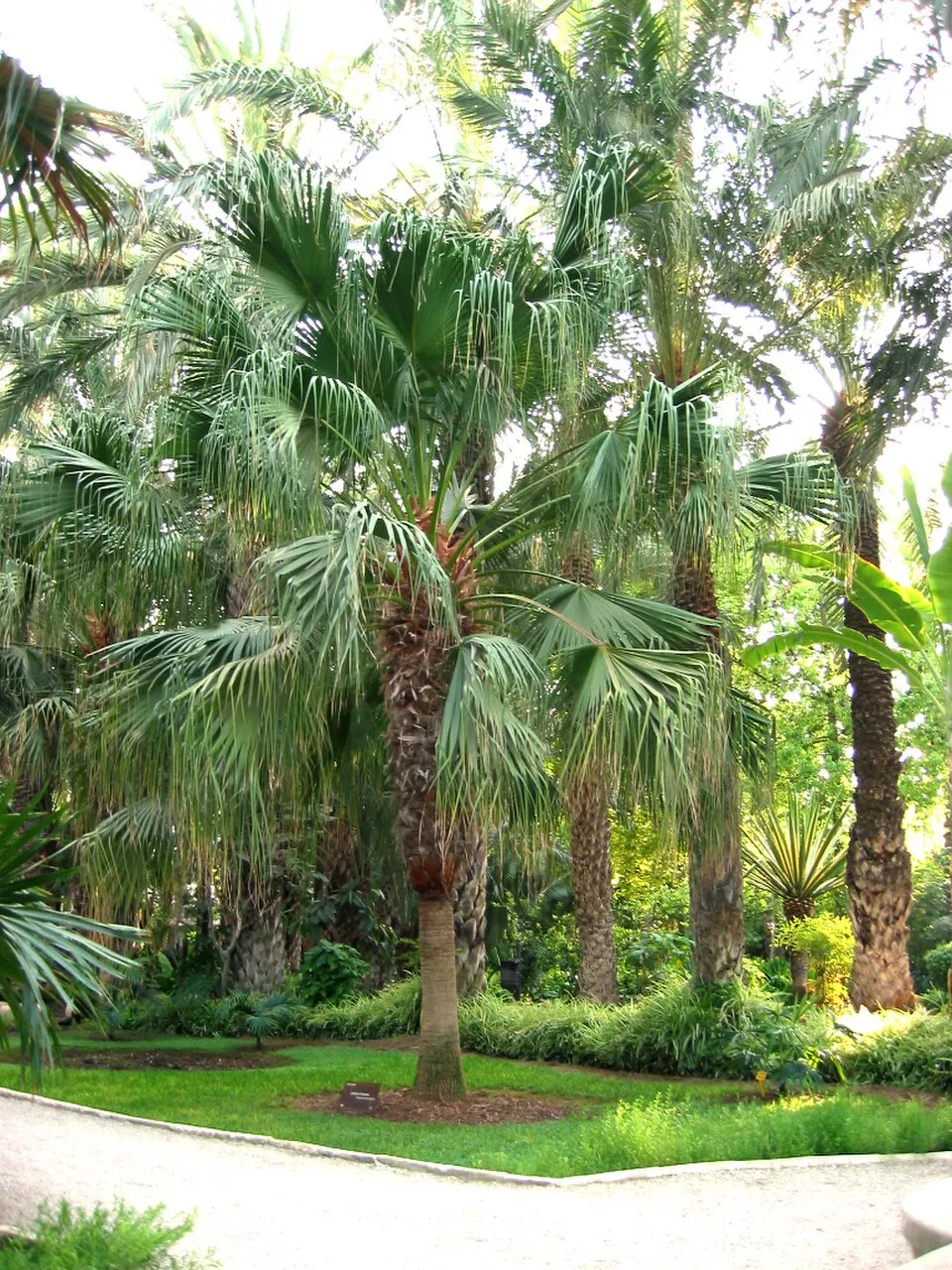
The Fan Palm, scientifically known as Livistona chinensis, is a magnificent and resilient member of the Arecaceae family, native to the tropical and subtropical regions of East Asia, encompassing China, Taiwan, and Japan. This species is celebrated not only for its ornamental grandeur but also for its historical utility and ecological contributions. Botanically, Livistona chinensis is characterized by a solitary, often stout trunk that can reach impressive heights of up to 15 meters in its natural environment, though it typically remains more modest when cultivated. Its most striking feature, lending to its common name, is its large, costapalmate leaves.
These leaves are deeply divided into numerous stiff, segmented leaflets that elegantly radiate from a central petiole, creating a distinctive fan-like silhouette. Young petioles are typically armed with sharp, recurved teeth, which tend to smooth out as the plant matures. The Fan Palm exhibits a slow growth rate, contributing to its remarkable longevity, often thriving for many decades and becoming a cherished, focal specimen in diverse landscapes and interiorscapes. Culturally, Livistona chinensis holds symbolic meaning in various Asian traditions, representing resilience, prosperity, and endurance.
Its graceful form and architectural presence make it a popular choice for enhancing urban biodiversity, providing shade, and contributing to aesthetic appeal. Historically, its durable leaves have been extensively used for weaving into practical items such as fans, hats, and baskets, a craft that persists in certain regions.
Trusted Scientific References
1. Authoritative external sources for Livistona chinensis
1.1 Wikipedia — Livistona chinensis
1.2 Kew POWO (Plants of the World Online)
1.3 PubMed — peer-reviewed research
1.4 NCBI Taxonomy Browser
1.5 GBIF — Global Biodiversity
1.6Fan Palm should be interpreted through verified botanical identity, practical care, and responsible safety language. This recovery note adds the missing context needed for a complete profile: match light to the plant's habit, use well-drained soil, water according to season, and avoid unsupported medicinal or edible claims. For publishing, the plant can be presented as a source-backed indoor plant with clear care guidance, common problem diagnosis, and conservative safety wording.
1.1.Fan Palm — Key Features
- ✓ <strong>Costapalmate Leaves</strong> — Distinctive fan-shaped leaves radiating from a central petiole.
- ✓ <strong>Native to East Asia</strong> — Indigenous to China, Taiwan, and Japan.
- ✓ <strong>Arecaceae Family</strong> — Member of the palm family.
- ✓ <strong>Traditional Chinese Medicine Use</strong> — Historically applied in TCM for various ailments, notably cancer.
- ✓ <strong>Rich Phytochemistry</strong> — Contains significant levels of flavonoids, triterpenoids, and phenolic acids.
- ✓ <strong>Antioxidant Activity</strong> — Strong capacity to neutralize free radicals and reduce oxidative stress.
- ✓ <strong>Anti</strong> — inflammatory Properties — Demonstrated ability to mitigate inflammatory responses.
- ✓ <strong>Anti</strong> — tumor Potential — Explored for antiproliferative and antiangiogenic effects.
- ✓ <strong>Long</strong> — lived Plant — Slow growth rate contributes to decades of longevity.
- ✓ <strong>Ornamental and Utilitarian</strong> — Widely cultivated for beauty and leaf products.
1.2.Fan Palm — Quick Summary
- ✓ Livistona chinensis is the Fan Palm, a majestic East Asian palm.
- ✓ Valued ornamentally and for its fan-like leaves.
- ✓ Traditional Chinese Medicine (TCM) uses for cancer.
- ✓ Rich in flavonoids, triterpenoids, and phenolic acids.
- ✓ Exhibits antioxidant, anti-inflammatory, and anti-tumor potential.
- ✓ Requires careful dosage and professional consultation due to potential interactions.
2.Fan Palm — Scientific Identity
3.Fan Palm — Quick Facts
4.Fan Palm — Appearance & Identification
5.Fan Palm — Native Habitat
6.Fan Palm — Water Requirements
- ✓ Light Requirements — Thrives in full sun to partial shade; young plants benefit from some protection from intense afternoon sun.
- ✓ Soil Preference — Prefers well-draining, fertile soil with a slightly acidic to neutral pH (6.0-7.5); good aeration is crucial.
- ✓ Watering Schedule — Requires consistent moisture, especially during warm months, but avoid waterlogging; allow the topsoil to dry slightly between waterings.
- ✓ Temperature and Humidity — Best suited for tropical and subtropical climates, tolerating temperatures down to -4°C for short periods; appreciates high humidity.
- ✓ Propagation — Primarily propagated by seeds, which can take several months to germinate; division is not practical due to its solitary trunk.
- ✓ Fertilization — Feed regularly during the growing season (spring and summer) with a balanced, slow-release palm fertilizer rich in micronutrients like magnesium and potassium.
- ✓ Pruning — Only prune dead or damaged fronds close to the trunk, ensuring not to cut into the trunk itself.
- ✓ Pest and Disease Management — Generally robust, but watch for common palm pests like spider mites, mealybugs, and scale insects, especially in dry indoor conditions.
Reviewed by the Flora Medical Global Botanical Review Panel
Multi-disciplinary editorial group · Botany · Ethnobotany · Herbal-medicine literature
Who reviewed this: This page was checked by the Flora Medical Global Botanical Review Panel — an in-house editorial group of botany graduates, ethnobotany researchers, and horticulture practitioners who collectively maintain our 7,000+ plant encyclopedia. Meet the team.
Our 4-step verification process
1. Taxonomic verification
Scientific names and synonyms cross-checked against Kew POWO, World Flora Online, and The Plant List.
2. Phytochemical & medicinal cross-reference
Active compounds, traditional uses, and reported activities are cross-referenced with PubMed, USDA Dr. Duke's database, and peer-reviewed ethnobotanical literature.
3. Conservation & distribution check
Distribution, ecology, and conservation status confirmed against GBIF occurrence records and the IUCN Red List.
4. Editorial & safety review
Every entry passes an editorial pass for clarity, originality, and safety notices (toxicity, contraindications, dosage caveats) before publication.
Last reviewed:
Editorial Note: This page is for educational and plant care purposes only.
Written by: Flora Medical Global Editorial Team
Reviewed by: Flora Medical Global Botanical Review Panel
Last Updated: June 15, 2026







Fan Palm — Comments & Community Reviews
Rate this plant