

Care Disclaimer: Plant care recommendations are general guidelines based on common growing conditions. Individual results may vary based on your local environment, climate, and care routine. If your plant is toxic, keep it away from children and pets, and consult a veterinarian if accidental ingestion occurs.
1.Ficus Petiolaris — Overview
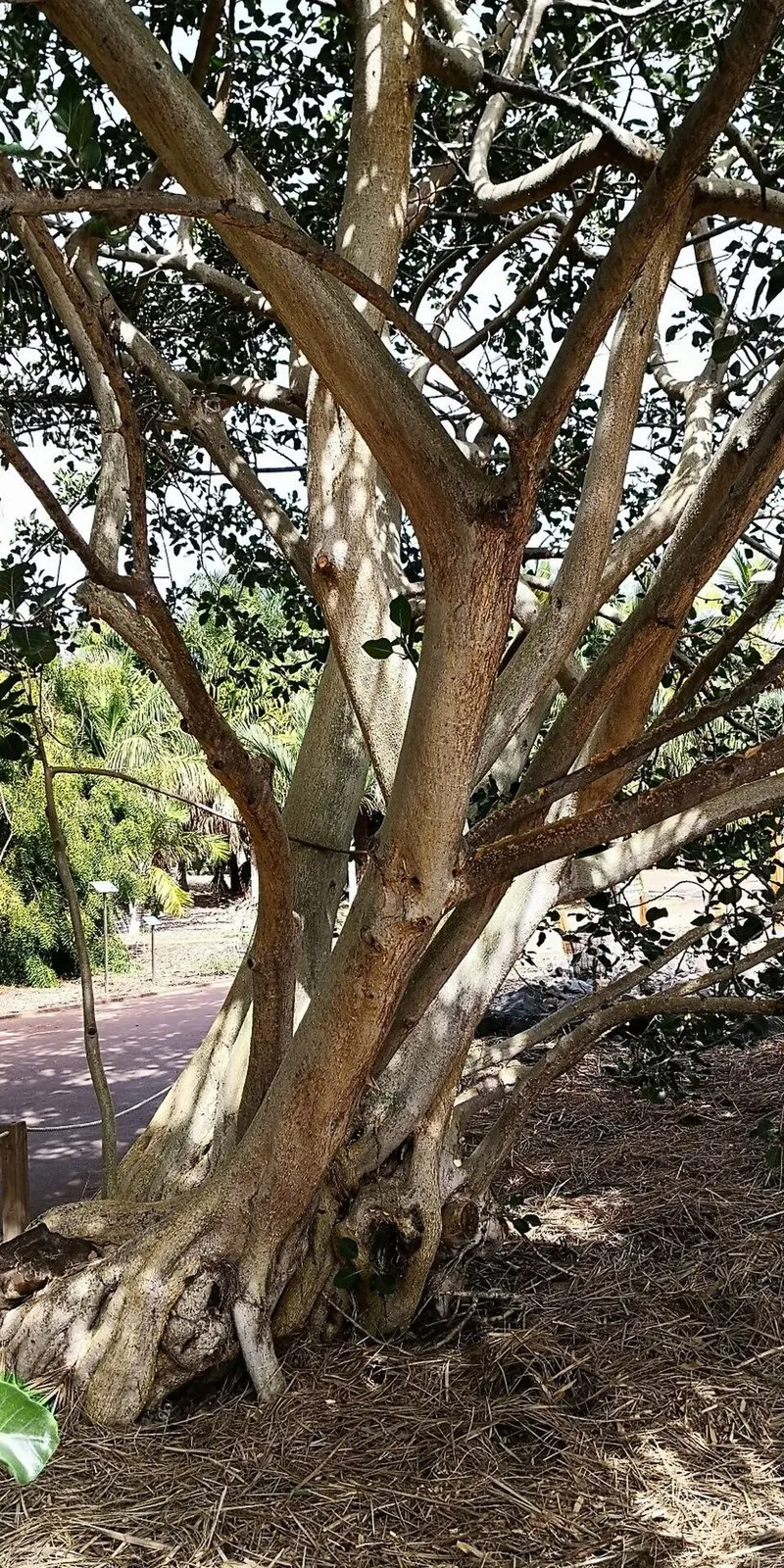
Ficus petiolaris, commonly known as the Rock Fig or Amole, is a distinctive member of the Moraceae family, showcasing remarkable adaptations to arid environments. Native to the rocky canyons and desert ecosystems of Baja California Sur, Baja California, Sonora, and Sinaloa in Mexico, this species thrives in dry woodlands and exposed rocky outcrops. It often begins its life as a lithophyte or epiphyte, establishing itself on rocks or other plants before developing its iconic form. The most striking feature of Ficus petiolaris is its dramatically swollen, caudiciform trunk, which can reach up to 1 meter (3 feet) in height and substantial width.
This caudex serves as a crucial water storage organ, enabling the plant to endure prolonged drought conditions characteristic of its native habitat. The bark is smooth and often peels in thin layers, revealing shades from pale gray to light brown, with younger bark sometimes exhibiting reddish tinges, enhancing its visual appeal. Its leaves are distinctively heart-shaped (cordate), typically measuring 8 to 12 cm (3 to 5 inches) in length, with a glossy green upper surface. A key identifying characteristic is the prominent, often vibrant pink to reddish venation that beautifully contrasts with the leaf lamina, especially in younger leaves or those exposed to bright light.
Like other Ficus species, its minute flowers are encased within a specialized structure called a syconium, which matures into the fig fruit. These hidden flowers are pollinated by specific fig wasps, a symbiotic relationship vital for the species' reproduction. Beyond its ornamental value as a sculptural plant for arid landscaping and bonsai, Ficus petiolaris holds cultural significance in its native regions, with the name 'Amole' often referencing soap-like properties derived from its sap or bark, highlighting its traditional utility.
Trusted Scientific References
1. Authoritative external sources for Ficus petiolaris
1.1 Wikipedia — Ficus petiolaris
1.2 Kew POWO (Plants of the World Online)
1.3 PubMed — peer-reviewed research
1.4 NCBI Taxonomy Browser
1.5 GBIF — Global Biodiversity
1.1.Ficus Petiolaris — Key Features
- ✓ <strong>Caudiciform Trunk</strong> — Dramatically swollen trunk for water storage, characteristic of desert adaptation.
- ✓ <strong>Cordate Leaves</strong> — Heart-shaped leaves with glossy green lamina and striking pink to reddish venation.
- ✓ <strong>Lithophytic/Epiphytic Growth</strong> — Often starts growing on rocks or other plants in its juvenile stage.
- ✓ <strong>Drought Tolerance</strong> — Highly adapted to arid environments, requiring minimal water once established.
- ✓ <strong>Syconium Fruit</strong> — Produces inconspicuous flowers enclosed within a specialized fig structure, pollinated by fig wasps.
- ✓ <strong>Traditional Medicinal Uses</strong> — Employed in Mexican and African ethnomedicine for various ailments, including wounds, fever, and parasites.
- ✓ <strong>Rich Phytochemistry</strong> — Contains a wide array of bioactive compounds like phenolics, terpenoids, and flavonoids.
- ✓ <strong>Ornamental Value</strong> — Highly prized as a sculptural plant for arid landscaping and bonsai enthusiasts.
- ✓ <strong>'Amole' Designation</strong> — Cultural name reflecting its traditional use, often linked to soap-like properties.
- ✓ <strong>Resilience</strong> — Known for its hardiness and ability to thrive in challenging, dry conditions.
1.2.Ficus Petiolaris — Quick Summary
- ✓ Ficus petiolaris, the Rock Fig, is known for its caudiciform trunk and distinctive heart-shaped leaves with reddish veins.
- ✓ Native to Mexico, it thrives in arid, rocky environments, showcasing remarkable drought adaptation.
- ✓ Traditionally used for ailments like rheumatism, fever, wounds, and intestinal parasites in ethnomedicine.
- ✓ Rich in phenolic compounds, terpenoids, and flavonoids, contributing to its antioxidant and antimicrobial properties.
- ✓ Lacks rigorous clinical trials, necessitating caution and professional guidance for medicinal use.
- ✓ Valued ornamentally for its unique sculptural form and ease of care in arid landscapes.
2.Ficus Petiolaris — Scientific Identity
3.Ficus Petiolaris — Quick Facts
4.Ficus Petiolaris — Appearance & Identification
5.Ficus Petiolaris — Native Habitat
6.Ficus Petiolaris — Water Requirements
- ✓ Sunlight — Ficus petiolaris thrives in full sun exposure, requiring at least 6-8 hours of direct sunlight daily for optimal growth and caudex development.
- ✓ Soil — Plant in well-draining, gritty soil mixes, ideally a succulent or cactus blend, to prevent root rot, as it is highly sensitive to excessive moisture.
- ✓ Watering — Water thoroughly but infrequently, allowing the soil to dry out completely between waterings, especially during its dormant winter period.
- ✓ Temperature — Prefers warm temperatures, ideally between 65-90°F (18-32°C), and should be protected from frost, as it is not cold-hardy.
- ✓ Propagation — Can be propagated from seeds or stem cuttings, though seed propagation is common for developing a prominent caudex.
- ✓ Fertilization — Fertilize sparingly during the growing season (spring and summer) with a balanced, diluted liquid fertilizer, typically once a month.
- ✓ Pruning — Minimal pruning is usually required, primarily for shaping or removing dead/damaged branches, best done in late winter or early spring.
Reviewed by the Flora Medical Global Botanical Review Panel
Multi-disciplinary editorial group · Botany · Ethnobotany · Herbal-medicine literature
Who reviewed this: This page was checked by the Flora Medical Global Botanical Review Panel — an in-house editorial group of botany graduates, ethnobotany researchers, and horticulture practitioners who collectively maintain our 7,000+ plant encyclopedia. Meet the team.
Our 4-step verification process
1. Taxonomic verification
Scientific names and synonyms cross-checked against Kew POWO, World Flora Online, and The Plant List.
2. Phytochemical & medicinal cross-reference
Active compounds, traditional uses, and reported activities are cross-referenced with PubMed, USDA Dr. Duke's database, and peer-reviewed ethnobotanical literature.
3. Conservation & distribution check
Distribution, ecology, and conservation status confirmed against GBIF occurrence records and the IUCN Red List.
4. Editorial & safety review
Every entry passes an editorial pass for clarity, originality, and safety notices (toxicity, contraindications, dosage caveats) before publication.
Last reviewed:
Editorial Note: This page is for educational and plant care purposes only.
Written by: Flora Medical Global Editorial Team
Reviewed by: Flora Medical Global Botanical Review Panel
Last Updated: June 15, 2026







Ficus Petiolaris — Comments & Community Reviews
Rate this plant