
Care Disclaimer: Plant care recommendations are general guidelines based on common growing conditions. Individual results may vary based on your local environment, climate, and care routine. If your plant is toxic, keep it away from children and pets, and consult a veterinarian if accidental ingestion occurs.
1.Ficus Shivereana — Overview
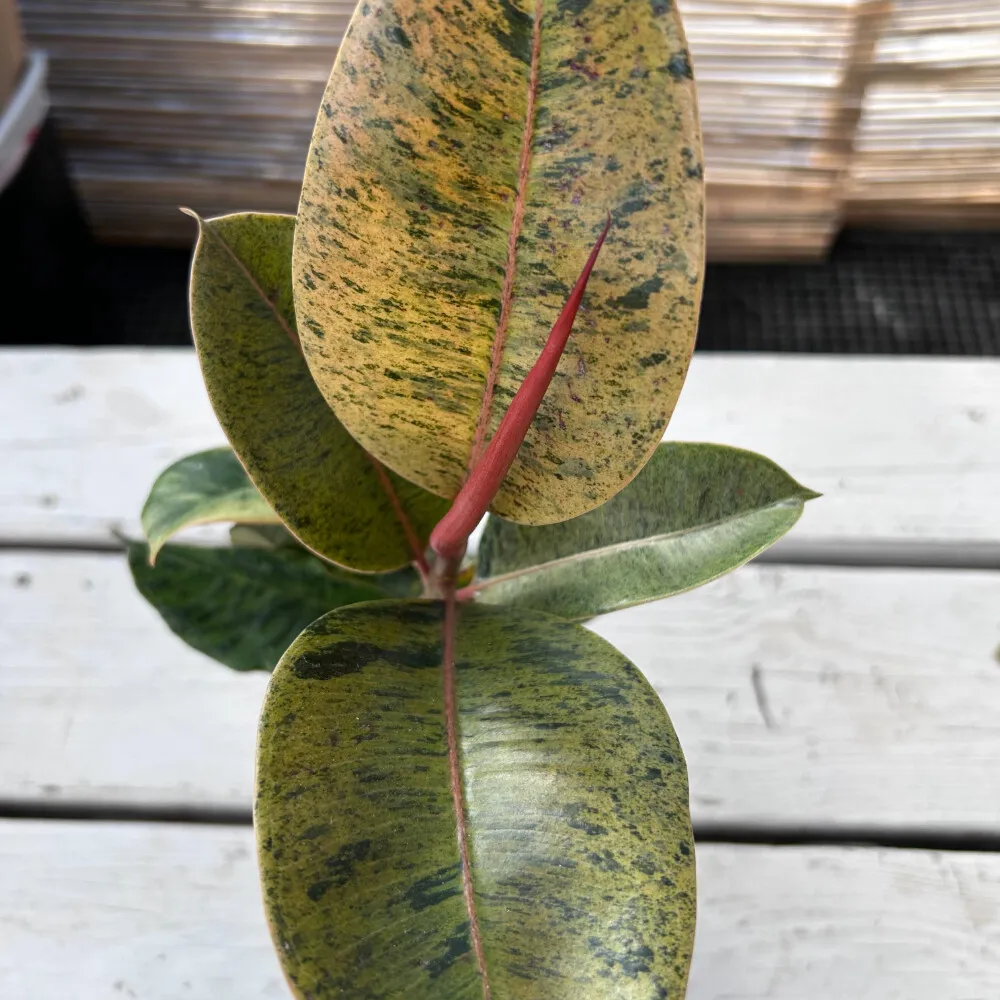
Ficus elastica 'Shivereana', widely recognized as the Moonshine Rubber Plant, is a captivating cultivar celebrated for its exceptionally attractive and distinctive foliage. This evergreen perennial, originating from the tropical and subtropical regions of Southeast Asia, thrives in warm, humid environments, making it an ideal indoor specimen. Its large, ovate leaves, often reaching up to 10 inches in length, display a mesmerizing mottled pattern of cream, pale green, and lime green, creating a vibrant visual impact. The leaves are characteristically glossy and smooth, enhancing their aesthetic appeal.
When cultivated indoors with appropriate care, 'Shivereana' typically attains a height of 3 to 6 feet, though it can grow larger in optimal conditions. The plant's bark is robust, brown, and subtly rugged, lending it a sturdy and established appearance. While the Ficus genus is known to produce small, inconspicuous syconium flowers, these are rarely observed in indoor settings, as the plant is primarily valued for its ornamental leaves. As it matures, Ficus elastica 'Shivereana' may develop aerial roots from its stems, adding another layer of unique architectural interest.
Its hybrid nature contributes to its unique leaf variegation, making it a highly sought-after decorative plant for homes and offices. Beyond its beauty, this plant is also recognized for its capacity to enhance indoor air quality.
Trusted Scientific References
1. Authoritative external sources for Ficus elastica Shivereana
1.1 Wikipedia — Ficus elastica Shivereana
1.2 Kew POWO (Plants of the World Online)
1.3 PubMed — peer-reviewed research
1.4 NCBI Taxonomy Browser
1.5 GBIF — Global Biodiversity
1.6Ficus Shivereana should be interpreted through verified botanical identity, practical care, and responsible safety language. This recovery note adds the missing context needed for a complete profile: match light to the plant's habit, use well-drained soil, water according to season, and avoid unsupported medicinal or edible claims. For publishing, the plant can be presented as a source-backed indoor plant with clear care guidance, common problem diagnosis, and conservative safety wording.
1.1.Ficus Shivereana — Key Features
- ✓ <strong>Striking Variegated Foliage</strong> — Unique cream and lime green mottled leaves.
- ✓ <strong>Indoor Air Purification</strong> — Filters common volatile organic compounds.
- ✓ <strong>Tropical Evergreen Perennial</strong> — Thrives in warm, humid indoor conditions.
- ✓ <strong>Moderate Growth Rate</strong> — Reaches 3-6 feet indoors with proper care.
- ✓ <strong>Develops Aerial Roots</strong> — Adds unique architectural interest as it matures.
- ✓ <strong>Low</strong> — to-Moderate Maintenance — Requires consistent care but generally hardy.
- ✓ <strong>Aesthetically Pleasing</strong> — Enhances decor in homes and offices.
- ✓ <strong>Contains Irritant Latex</strong> — Milky sap is toxic if ingested and can cause skin irritation.
- ✓ <strong>Hybrid Cultivar</strong> — A distinctive variety of the common Ficus elastica.
- ✓ <strong>Adaptable to Pots</strong> — Grows well in containers, making it suitable for indoor cultivation.
1.2.Ficus Shivereana — Quick Summary
- ✓ Striking variegated ornamental plant, ideal for indoor aesthetics.
- ✓ Recognized for its ability to purify indoor air by filtering VOCs.
- ✓ Contains milky latex that is an irritant and toxic if ingested by pets or humans.
- ✓ Requires bright, indirect light, consistent watering, and high humidity for optimal growth.
- ✓ Traditional uses of Ficus elastica latex include anti-inflammatory and wound healing properties, applied topically.
- ✓ Relatively low-maintenance houseplant once its specific environmental needs are met.
2.Ficus Shivereana — Scientific Identity
3.Ficus Shivereana — Quick Facts
4.Ficus Shivereana — Appearance & Identification
5.Ficus Shivereana — Native Habitat
6.Ficus Shivereana — Water Requirements
- ✓ Light — Provide bright, indirect light; direct sunlight can scorch leaves and diminish variegation.
- ✓ Soil — Use a well-drained, aerated potting mix, ideally amended with perlite or orchid bark to prevent waterlogging.
- ✓ Watering — Water thoroughly when the top half of the soil is dry; allow excess water to drain completely to avoid root rot.
- ✓ Humidity — Maintain high humidity, preferably above 50%; consider using a humidifier or pebble tray.
- ✓ Temperature — Thrives in stable temperatures between 60-80°F (15-27°C), avoiding cold drafts.
- ✓ Fertilizer — Feed with a balanced liquid houseplant fertilizer diluted to half strength monthly during spring and summer.
- ✓ Pruning — Prune in spring or summer to maintain shape and size, removing up to 25% of growth; wear gloves due to latex.
- ✓ Repotting — Repot annually or when root-bound, moving to a pot one size larger with fresh soil.
Reviewed by the Flora Medical Global Botanical Review Panel
Multi-disciplinary editorial group · Botany · Ethnobotany · Herbal-medicine literature
Who reviewed this: This page was checked by the Flora Medical Global Botanical Review Panel — an in-house editorial group of botany graduates, ethnobotany researchers, and horticulture practitioners who collectively maintain our 7,000+ plant encyclopedia. Meet the team.
Our 4-step verification process
1. Taxonomic verification
Scientific names and synonyms cross-checked against Kew POWO, World Flora Online, and The Plant List.
2. Phytochemical & medicinal cross-reference
Active compounds, traditional uses, and reported activities are cross-referenced with PubMed, USDA Dr. Duke's database, and peer-reviewed ethnobotanical literature.
3. Conservation & distribution check
Distribution, ecology, and conservation status confirmed against GBIF occurrence records and the IUCN Red List.
4. Editorial & safety review
Every entry passes an editorial pass for clarity, originality, and safety notices (toxicity, contraindications, dosage caveats) before publication.
Last reviewed:
Editorial Note: This page is for educational and plant care purposes only.
Written by: Flora Medical Global Editorial Team
Reviewed by: Flora Medical Global Botanical Review Panel
Last Updated: June 15, 2026







Ficus Shivereana — Comments & Community Reviews
Rate this plant