
Care Disclaimer: Plant care recommendations are general guidelines based on common growing conditions. Individual results may vary based on your local environment, climate, and care routine. If your plant is toxic, keep it away from children and pets, and consult a veterinarian if accidental ingestion occurs.
1.Ficus Triangularis — Overview
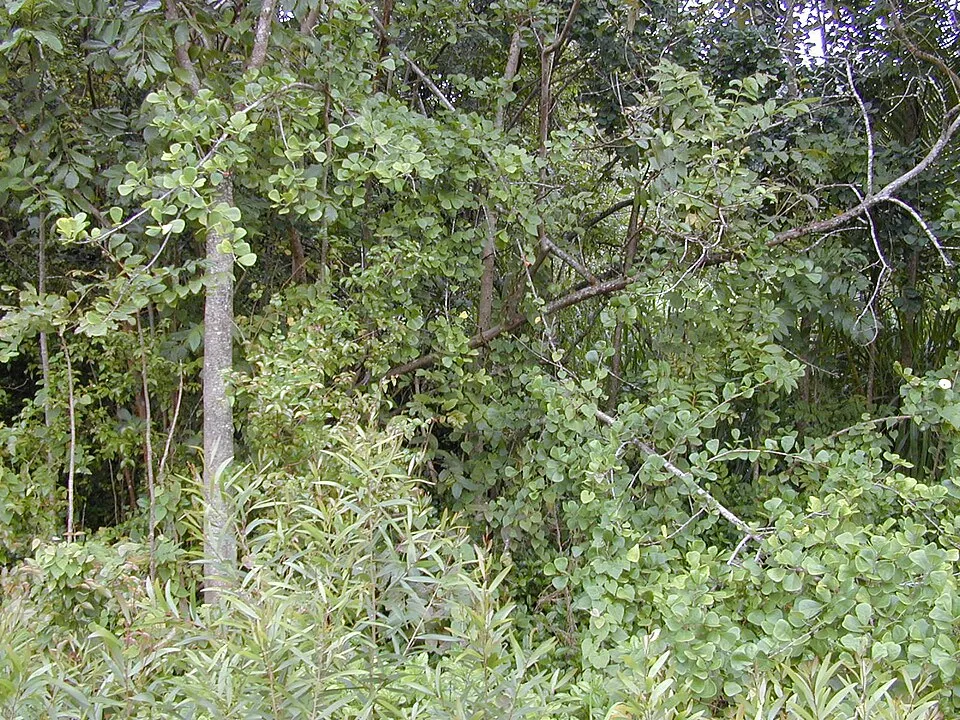
Ficus triangularis, affectionately known as the Triangle-leaf Fig or Sweetheart Plant, is an evergreen shrub or small tree celebrated for its distinctive foliage. Native to the tropical and subtropical regions of Southern Africa, particularly thriving across South Africa, this species is a proud member of the Moraceae family, which also encompasses other notable fig species and mulberries.
In its natural rainforest understory habitat, Ficus triangularis can ascend to several meters, forming a robust presence. However, when cultivated indoors, it typically maintains a more manageable size, usually between 3 to 6 feet, making it a highly favored ornamental houseplant.
The most striking morphological characteristic of Ficus triangularis is its unique leaves, which are distinctly triangular to heart-shaped. These glossy green leaves measure approximately 3 to 6 inches (7-15 cm) in length and possess subtly undulate or wavy margins, enhancing their aesthetic appeal. The bark of mature specimens is generally smooth and exhibits a light grey hue, providing an elegant contrast to the vibrant green leaves.
A characteristic feature shared with many Ficus species is the milky white latex sap that exudes when the stems or leaves are damaged. While its true flowers are inconspicuous, enclosed within the specialized fig structure known as a syconium, it produces small, typically inedible figs. These figs are less commonly observed in indoor cultivation but are vital for reproduction in the wild, often relying on specific fig wasps for pollination.
The plant develops a fibrous root system, which can be extensive in natural settings for firm anchorage, and forms a robust root ball suitable for container growth when potted. Ficus triangularis thrives in bright, indirect sunlight and consistently high humidity, reflecting its tropical origins, and can be sensitive to dry air and abrupt environmental shifts.
Trusted Scientific References
1. Authoritative external sources for Ficus triangularis
1.1 Wikipedia — Ficus triangularis
1.2 Kew POWO (Plants of the World Online)
1.3 PubMed — peer-reviewed research
1.4 NCBI Taxonomy Browser
1.5 GBIF — Global Biodiversity
1.1.Ficus Triangularis — Key Features
- ✓ <strong>Distinctive triangular to heart</strong> — shaped, glossy green leaves with subtle wavy margins.
- ✓ <strong>Evergreen shrub or</strong> — Evergreen shrub or small tree, typically grown as an indoor ornamental plant.
- ✓ <strong>Native to tropical</strong> — Native to tropical and subtropical Southern Africa, particularly South Africa.
- ✓ <strong>Produces a milky</strong> — Produces a milky white latex sap that is irritating to skin and toxic if ingested.
- ✓ <strong>Relatively low</strong> — maintenance compared to some other Ficus species, making it a popular choice.
- ✓ <strong>Adaptable to indoor</strong> — Adaptable to indoor cultivation, reaching manageable sizes of 3-6 feet when potted.
- ✓ <strong>Can be trained</strong> — Can be trained and shaped into elegant bonsai specimens, showcasing its structural beauty.
- ✓ <strong>Prefers bright, indirect</strong> — Prefers bright, indirect light and consistently high humidity, mimicking its natural habitat.
- ✓ <strong>Exhibits inconspicuous flowers</strong> — Exhibits inconspicuous flowers enclosed within characteristic fig structures (syconia).
- ✓ <strong>Less prone to</strong> — Less prone to dropping leaves compared to some other Ficus, provided care is consistent.
1.2.Ficus Triangularis — Quick Summary
- ✓ Ficus triangularis is an ornamental evergreen shrub known for its unique triangular or heart-shaped leaves.
- ✓ Native to Southern Africa, it's a popular, relatively easy-care indoor houseplant.
- ✓ It produces a milky white latex sap that is toxic if ingested and can cause skin irritation.
- ✓ Thrives in bright, indirect light and high humidity, sensitive to environmental changes.
- ✓ Primarily valued for its aesthetic appeal, not for documented medicinal uses specific to this species.
- ✓ Can be cultivated as a striking bonsai specimen or a decorative indoor plant.
2.Ficus Triangularis — Scientific Identity
3.Ficus Triangularis — Quick Facts
4.Ficus Triangularis — Appearance & Identification
5.Ficus Triangularis — Native Habitat
6.Ficus Triangularis — Water Requirements
- ✓ Light — Provide bright, indirect sunlight; direct harsh sun can scorch leaves, while too little light causes leggy growth.
- ✓ Watering — Water thoroughly until water drains from the bottom, then allow the top half of the soil to dry out completely before re-watering to prevent root rot.
- ✓ Soil — Plant in a well-draining potting mix, ideally one formulated for houseplants, to ensure proper aeration and moisture retention.
- ✓ Humidity — Prefers consistently high humidity; misting regularly or placing near a humidifier can prevent dry leaf edges.
- ✓ Fertilization — Feed every four weeks during the growing season (spring and summer) with a balanced liquid indoor plant fertilizer diluted to half strength.
- ✓ Temperature & Drafts — Maintain stable room temperatures (65-80°F / 18-27°C) and protect from cold drafts from windows, doors, or air conditioning vents.
- ✓ Pruning — Trim to shape or manage size by cutting above a leaf node; remove any dead, yellowing, or damaged leaves and stems.
- ✓ Relocation — Avoid frequent relocation as Ficus triangularis, like other Ficus, can be sensitive to changes in its environment and may drop leaves.
Reviewed by the Flora Medical Global Botanical Review Panel
Multi-disciplinary editorial group · Botany · Ethnobotany · Herbal-medicine literature
Who reviewed this: This page was checked by the Flora Medical Global Botanical Review Panel — an in-house editorial group of botany graduates, ethnobotany researchers, and horticulture practitioners who collectively maintain our 7,000+ plant encyclopedia. Meet the team.
Our 4-step verification process
1. Taxonomic verification
Scientific names and synonyms cross-checked against Kew POWO, World Flora Online, and The Plant List.
2. Phytochemical & medicinal cross-reference
Active compounds, traditional uses, and reported activities are cross-referenced with PubMed, USDA Dr. Duke's database, and peer-reviewed ethnobotanical literature.
3. Conservation & distribution check
Distribution, ecology, and conservation status confirmed against GBIF occurrence records and the IUCN Red List.
4. Editorial & safety review
Every entry passes an editorial pass for clarity, originality, and safety notices (toxicity, contraindications, dosage caveats) before publication.
Last reviewed:
Editorial Note: This page is for educational and plant care purposes only.
Written by: Flora Medical Global Editorial Team
Reviewed by: Flora Medical Global Botanical Review Panel
Last Updated: June 15, 2026







Ficus Triangularis — Comments & Community Reviews
Rate this plant