
Care Disclaimer: Plant care recommendations are general guidelines based on common growing conditions. Individual results may vary based on your local environment, climate, and care routine. If your plant is toxic, keep it away from children and pets, and consult a veterinarian if accidental ingestion occurs.
1.Fittonia Pink Star — Overview
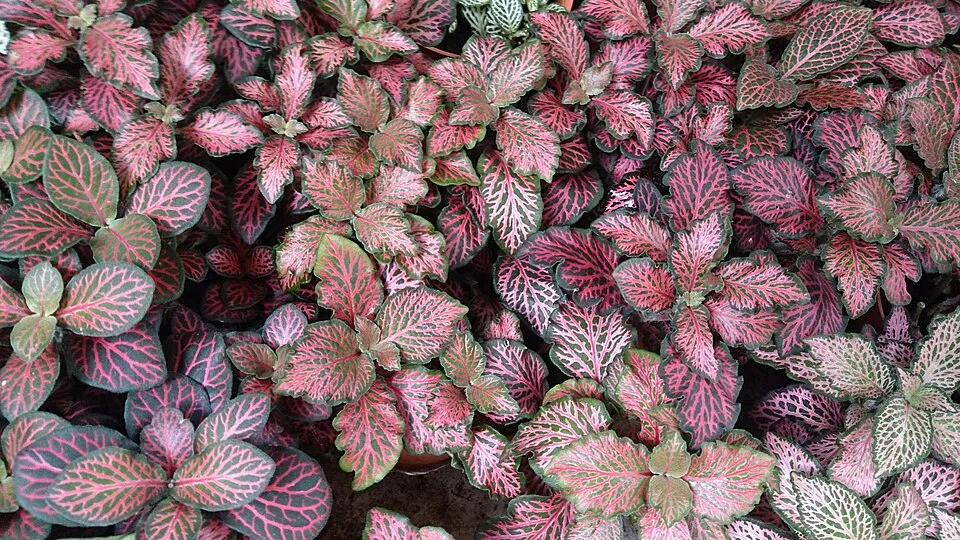
Fittonia Pink Star, scientifically known as Fittonia albivenis pink, is a captivating perennial herbaceous plant belonging to the Acanthaceae family. This cultivar is particularly prized for its striking foliage, featuring deep olive-green, ovate leaves, typically measuring 5-10 cm in length, intricately adorned with vibrant pink venation that creates a mesmerizing mosaic pattern.
The plant usually maintains a compact, creeping evergreen habit, reaching a modest height of 20-30 cm and spreading up to 45 cm, making it an excellent choice for ground cover or small container cultivation. Its slender stems may exhibit a soft, hairy texture, and they readily root where they touch the soil, facilitating its spreading growth.
While Fittonia Pink Star does produce small, inconspicuous tubular white flowers on slender spikes, its primary ornamental appeal lies in its distinctive leaves. Native to the tropical rainforests of South America, particularly Peru, it naturally thrives in warm, highly humid environments with filtered or indirect light, adapting well to the understory conditions.
The genus name, Fittonia, honors two botanical authors, Elizabeth and Sarah Mary Fitton, while 'albivenis' refers to the characteristic white (or in this cultivar, pink) veins. Its adaptability to lower light levels and preference for consistent moisture make it a popular choice for indoor environments, terrariums, and shaded interiorscapes, enhancing its common names such as Jewel Plant, Mosaic Plant, and Nerve Plant.
Trusted Scientific References
1. Authoritative external sources for Fittonia albivenis pink
1.1 Wikipedia — Fittonia albivenis pink
1.2 Kew POWO (Plants of the World Online)
1.3 PubMed — peer-reviewed research
1.4 NCBI Taxonomy Browser
1.5 GBIF — Global Biodiversity
1.6Fittonia Pink Star should be interpreted through verified botanical identity, practical care, and responsible safety language. This recovery note adds the missing context needed for a complete profile: match light to the plant's habit, use well-drained soil, water according to season, and avoid unsupported medicinal or edible claims. For publishing, the plant can be presented as a source-backed indoor plant with clear care guidance, common problem diagnosis, and conservative safety wording.
1.1.Fittonia Pink Star — Key Features
- ✓ <strong>Striking Pink Veining</strong> — Features vivid pink patterns contrasting against deep green leaves, creating a unique mosaic effect.
- ✓ <strong>Compact Growth Habit</strong> — Low-growing and spreading, making it perfect for small spaces, terrariums, and as ground cover.
- ✓ <strong>High Humidity Preference</strong> — Thrives in moist, humid conditions, reflecting its native rainforest habitat.
- ✓ <strong>Indirect Light Lover</strong> — Prefers shaded areas and indirect light, an ideal choice for indoor settings where direct sun is limited.
- ✓ <strong>Air Purifying Qualities</strong> — Contributes to healthier indoor air by absorbing common pollutants, enhancing living environments.
- ✓ <strong>Non</strong> — Toxic for Pets — Considered safe for households with dogs, cats, and horses, offering peace of mind for pet owners.
- ✓ <strong>Ornamental Value</strong> — Primarily cultivated for its exceptional aesthetic appeal and decorative foliage, rather than its modest blooms.
- ✓ <strong>Easy Propagation</strong> — Creeping stems readily root when in contact with soil, allowing for simple and effective propagation.
- ✓ <strong>"Dramatic Wilter"</strong> — Exhibits noticeable wilting when thirsty, providing a clear signal for watering, with quick recovery.
- ✓ <strong>Traditional Topical Use</strong> — Historically applied in folk medicine as a poultice for minor skin irritations and discomfort.
1.2.Fittonia Pink Star — Quick Summary
- ✓ Fittonia Pink Star is a vibrant, pink-veined tropical houseplant.
- ✓ Renowned for its striking ornamental foliage and compact growth.
- ✓ Thrives in high humidity and indirect light, ideal for indoor environments.
- ✓ Offers indirect health benefits through air purification and aesthetic calming.
- ✓ Generally non-toxic to humans and common household pets.
- ✓ Traditional uses include topical application for minor skin irritations.
2.Fittonia Pink Star — Scientific Identity
3.Fittonia Pink Star — Quick Facts
4.Fittonia Pink Star — Appearance & Identification
5.Fittonia Pink Star — Native Habitat
6.Fittonia Pink Star — Water Requirements
- ✓ Light — Provide bright to medium indirect light; direct sunlight can scorch the delicate leaves of Fittonia Pink Star.
- ✓ Water — Keep the soil consistently moist but never waterlogged; dramatic wilting indicates thirst, but the plant recovers quickly after watering.
- ✓ Humidity — Requires high humidity, mimicking its tropical rainforest habitat; misting, pebble trays, or a humidifier are beneficial.
- ✓ Temperature — Thrives in average to cool room temperatures, ideally between 18-24°C (65-75°F); avoid cold drafts.
- ✓ Soil — Plant in well-drained, peat-based potting mix to ensure adequate moisture retention without waterlogging.
- ✓ Pruning — Pinch back leggy stems regularly to encourage bushier growth and maintain a compact, full appearance.
- ✓ Propagation — Easily propagated from stem cuttings, as the creeping stems readily root in moist soil or water.
- ✓ Pests & Diseases — Monitor for common houseplant pests like spider mites, mealybugs, and scale; susceptible to root rot if overwatered and leaf spot in overly humid conditions.
Reviewed by the Flora Medical Global Botanical Review Panel
Multi-disciplinary editorial group · Botany · Ethnobotany · Herbal-medicine literature
Who reviewed this: This page was checked by the Flora Medical Global Botanical Review Panel — an in-house editorial group of botany graduates, ethnobotany researchers, and horticulture practitioners who collectively maintain our 7,000+ plant encyclopedia. Meet the team.
Our 4-step verification process
1. Taxonomic verification
Scientific names and synonyms cross-checked against Kew POWO, World Flora Online, and The Plant List.
2. Phytochemical & medicinal cross-reference
Active compounds, traditional uses, and reported activities are cross-referenced with PubMed, USDA Dr. Duke's database, and peer-reviewed ethnobotanical literature.
3. Conservation & distribution check
Distribution, ecology, and conservation status confirmed against GBIF occurrence records and the IUCN Red List.
4. Editorial & safety review
Every entry passes an editorial pass for clarity, originality, and safety notices (toxicity, contraindications, dosage caveats) before publication.
Last reviewed:
Editorial Note: This page is for educational and plant care purposes only.
Written by: Flora Medical Global Editorial Team
Reviewed by: Flora Medical Global Botanical Review Panel
Last Updated: June 15, 2026







Fittonia Pink Star — Comments & Community Reviews
Rate this plant