
Care Disclaimer: Plant care recommendations are general guidelines based on common growing conditions. Individual results may vary based on your local environment, climate, and care routine. If your plant is toxic, keep it away from children and pets, and consult a veterinarian if accidental ingestion occurs.
1.Fittonia Verschaffeltii — Overview
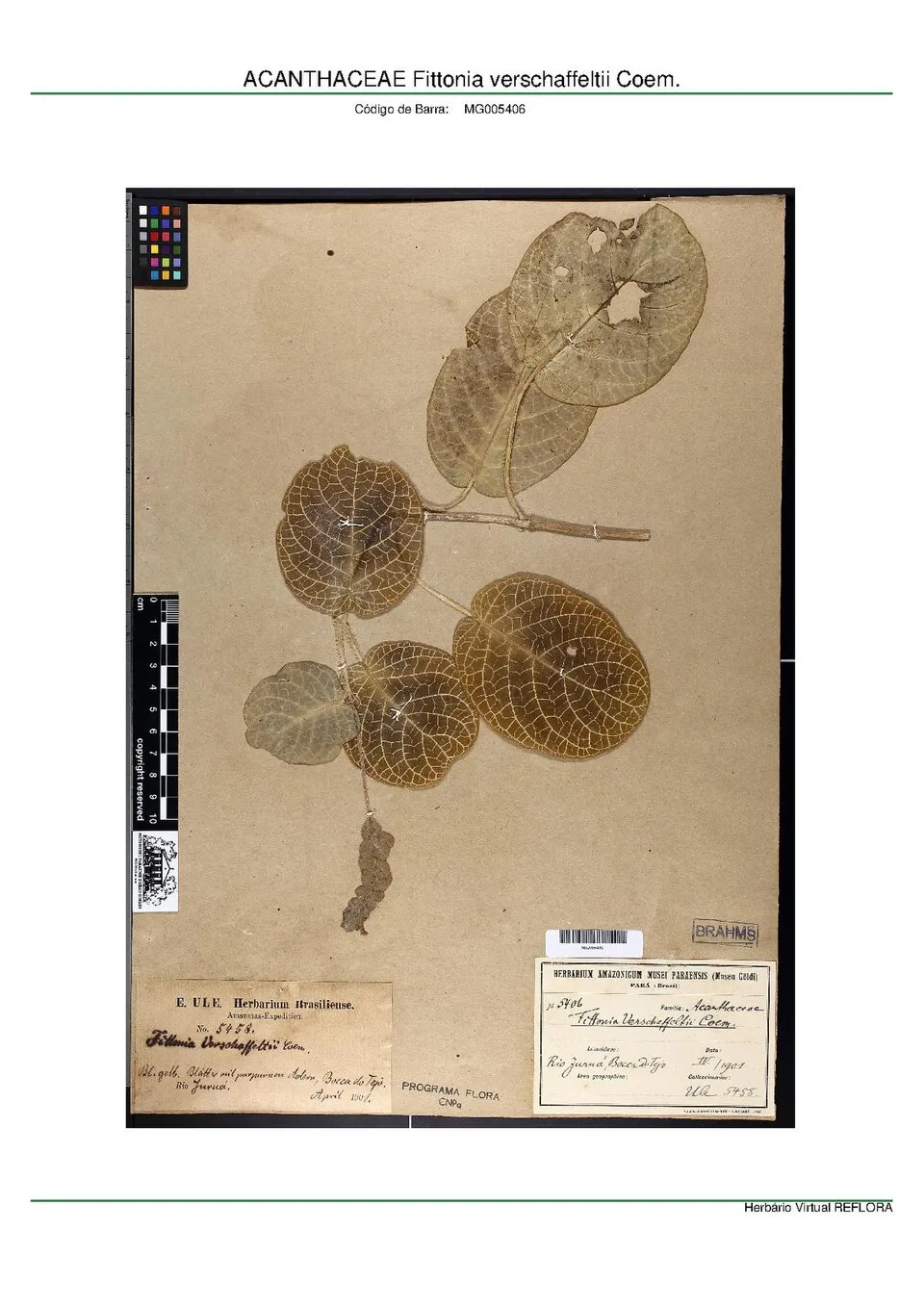
Fittonia verschaffeltii, commonly known as the Nerve Plant or Mosaic Plant, is a captivating evergreen perennial herbaceous plant celebrated for its striking foliage. Typically reaching a modest height of 15 to 30 centimeters (6 to 12 inches) with a wider trailing spread of 30 to 45 centimeters (12 to 18 inches), it forms a lush mat of delicate stems. The plant's ovate to elliptical leaves, measuring approximately 4 to 10 centimeters (1.5 to 4 inches) long and 2 to 5 centimeters (0.8 to 2 inches) wide, are its most distinctive feature.
They display a rich green backdrop intricately adorned with a prominent, contrasting venation pattern in vivid white, pink, or red, resembling a delicate net or mosaic. Unlike many plants, Fittonia possesses non-woody stems, exhibiting a creeping growth habit ideal for groundcover in frost-free zones or as an exquisite terrarium specimen and tabletop plant indoors. While its primary allure is its vibrant leaves, Fittonia may occasionally produce small, inconspicuous, tubular white or reddish-white flowers, typically in the summer.
Native to the humid tropical rainforests of Peru, Fittonia verschaffeltii thrives in consistently moist, well-draining, organically rich soil and prefers the dappled, indirect light conditions characteristic of its understory habitat. Taxonomically, it belongs to the Acanthaceae family, a diverse group known for both ornamental and medicinal species.
Trusted Scientific References
1. Authoritative external sources for Fittonia verschaffeltii
1.1 Wikipedia — Fittonia verschaffeltii
1.2 Kew POWO (Plants of the World Online)
1.3 PubMed — peer-reviewed research
1.4 NCBI Taxonomy Browser
1.5 GBIF — Global Biodiversity
1.6Fittonia Verschaffeltii should be interpreted through verified botanical identity, practical care, and responsible safety language. This recovery note adds the missing context needed for a complete profile: match light to the plant's habit, use well-drained soil, water according to season, and avoid unsupported medicinal or edible claims. For publishing, the plant can be presented as a source-backed indoor plant with clear care guidance, common problem diagnosis, and conservative safety wording.
1.1.Fittonia Verschaffeltii — Key Features
- ✓ <strong>Striking Foliage</strong> — Vivid white, pink, or red venation creates a distinct mosaic pattern on green leaves.
- ✓ <strong>Compact & Creeping Growth</strong> — Ideal for terrariums, dish gardens, and groundcover in tropical climates.
- ✓ <strong>Humidity Dependent</strong> — Thrives in high humidity, mimicking its rainforest native habitat.
- ✓ <strong>'Fainting Plant' Trait</strong> — Exhibits dramatic wilting when underwatered, recovering quickly upon rehydration.
- ✓ <strong>Indirect Light Preference</strong> — Prefers bright, indirect light, avoiding harsh direct sunlight.
- ✓ <strong>Evergreen Perennial</strong> — Provides year-round ornamental appeal with its vibrant leaves.
- ✓ <strong>Acanthaceae Family Member</strong> — Part of a diverse botanical family known for showy foliage and some medicinal uses.
- ✓ <strong>Native to Peru</strong> — Originates from the understory of South American tropical rainforests.
- ✓ <strong>Low Maintenance (with attention)</strong> — Responds well to consistent care, making it rewarding for indoor gardeners.
- ✓ <strong>Air Purifying Qualities</strong> — Contributes to a healthier indoor environment by potentially filtering air toxins.
1.2.Fittonia Verschaffeltii — Quick Summary
- ✓ Fittonia verschaffeltii, or Nerve Plant, is a tropical ornamental known for its striking, veined foliage.
- ✓ Native to Peruvian rainforests, it thrives in high humidity and indirect light.
- ✓ Famous for its dramatic wilting (fainting) when dry, quickly recovering upon watering.
- ✓ Primarily cultivated as a houseplant for terrariums and indoor decor due to its compact, creeping habit.
- ✓ Contains potential beneficial compounds like flavonoids and phenolics, with traditional uses for skin and respiratory support.
- ✓ Requires consistent moisture and high humidity, making it somewhat temperamental for indoor growers.
2.Fittonia Verschaffeltii — Scientific Identity
3.Fittonia Verschaffeltii — Quick Facts
4.Fittonia Verschaffeltii — Appearance & Identification
5.Fittonia Verschaffeltii — Native Habitat
6.Fittonia Verschaffeltii — Water Requirements
- ✓ Light — Provide bright, indirect light; north-facing windows or diffused light are ideal. Avoid direct sun, which can scorch leaves.
- ✓ Soil — Use a moist but well-draining, peat- or coco coir-based potting mix with a slightly acidic pH.
- ✓ Watering — Keep soil consistently moist but never waterlogged. Allow the top inch to dry slightly before rewatering. Dramatic wilting indicates thirst.
- ✓ Temperature & Humidity — Maintain temperatures around 21°C (70°F) and high humidity (60-80%). Use a humidifier or grow in a terrarium/bathroom.
- ✓ Fertilization — During the growing season (spring to fall), feed weekly with a weak, balanced liquid fertilizer diluted to half strength.
- ✓ Pruning — Pinch off leggy stems and insignificant flower buds to encourage a fuller, bushier growth habit.
- ✓ Propagation — Easily propagated from stem-tip cuttings in late spring or early summer, rooting in moist soil within 2-3 weeks.
- ✓ Repotting — Repot annually in spring into a slightly larger pot with fresh potting mix to prevent compaction and ensure nutrient availability.
Reviewed by the Flora Medical Global Botanical Review Panel
Multi-disciplinary editorial group · Botany · Ethnobotany · Herbal-medicine literature
Who reviewed this: This page was checked by the Flora Medical Global Botanical Review Panel — an in-house editorial group of botany graduates, ethnobotany researchers, and horticulture practitioners who collectively maintain our 7,000+ plant encyclopedia. Meet the team.
Our 4-step verification process
1. Taxonomic verification
Scientific names and synonyms cross-checked against Kew POWO, World Flora Online, and The Plant List.
2. Phytochemical & medicinal cross-reference
Active compounds, traditional uses, and reported activities are cross-referenced with PubMed, USDA Dr. Duke's database, and peer-reviewed ethnobotanical literature.
3. Conservation & distribution check
Distribution, ecology, and conservation status confirmed against GBIF occurrence records and the IUCN Red List.
4. Editorial & safety review
Every entry passes an editorial pass for clarity, originality, and safety notices (toxicity, contraindications, dosage caveats) before publication.
Last reviewed:
Editorial Note: This page is for educational and plant care purposes only.
Written by: Flora Medical Global Editorial Team
Reviewed by: Flora Medical Global Botanical Review Panel
Last Updated: June 15, 2026







Fittonia Verschaffeltii — Comments & Community Reviews
Rate this plant