

Care Disclaimer: Plant care recommendations are general guidelines based on common growing conditions. Individual results may vary based on your local environment, climate, and care routine. If your plant is toxic, keep it away from children and pets, and consult a veterinarian if accidental ingestion occurs.
1.Fukien Tea Bonsai — Overview
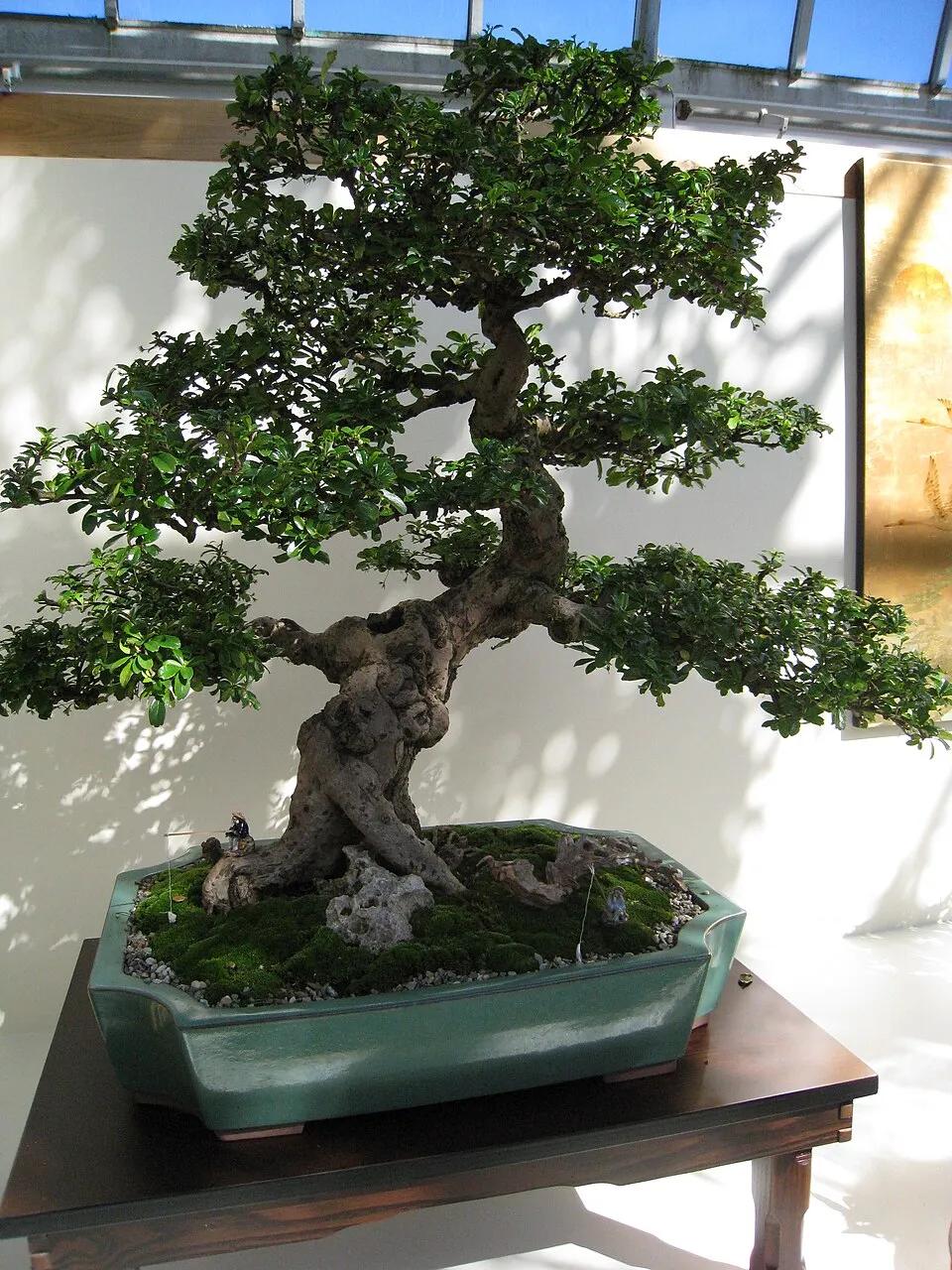
The Fukien Tea Bonsai, scientifically known as Carmona microphylla, is a distinguished member of the Boraginaceae family, renowned for its ornamental and traditional medicinal attributes. This evergreen shrub, typically cultivated to reach heights of 30 to 60 centimeters as a bonsai, can grow up to 3 meters in its native habitat. Its small, glossy, dark green oval leaves, measuring between 2 to 5 centimeters, feature a leathery texture with a notched or dented tip and often display tiny white hairs on their surface.
Throughout the year, Carmona microphylla produces delicate, star-shaped white flowers, approximately 1 centimeter in diameter, which bloom in clusters of two to six. These blossoms are frequently followed by small, round red fruits, about 4 to 6 millimeters across, each containing a stone core with up to four seeds. The bark transitions from a smooth brownish-gray in younger specimens to a more fissured texture as the plant matures, adding to its aesthetic appeal.
Native to the humid, subtropical regions of Southeast Asia, including the Fujian province of China, Japan, Indonesia, Taiwan, and Australia, Fukien Tea thrives in well-drained, acidic soils found in mountainous areas up to 1000 meters above sea level. Its taxonomic classification places it as the sole species within the genus Carmona, closely related to Ehretia within the Ehretioideae subfamily.
The plant's compact stature, robust growth, and decorative qualities make it exceptionally popular among bonsai enthusiasts and as an indoor ornamental plant globally, particularly for Penjing in China.
Trusted Scientific References
1. Authoritative external sources for Carmona microphylla bonsai
1.1 Wikipedia — Carmona microphylla bonsai
1.2 Kew POWO (Plants of the World Online)
1.3 PubMed — peer-reviewed research
1.4 NCBI Taxonomy Browser
1.5 GBIF — Global Biodiversity
1.6Fukien Tea Bonsai should be interpreted through verified botanical identity, practical care, and responsible safety language. This recovery note adds the missing context needed for a complete profile: match light to the plant's habit, use well-drained soil, water according to season, and avoid unsupported medicinal or edible claims. For publishing, the plant can be presented as a source-backed indoor plant with clear care guidance, common problem diagnosis, and conservative safety wording.
1.1.Fukien Tea Bonsai — Key Features
- ✓ <strong>Botanical Name</strong> — Carmona microphylla, belonging to the Boraginaceae family.
- ✓ <strong>Origin</strong> — Native to Southeast Asia, particularly the Fujian province of China.
- ✓ <strong>Distinctive Foliage</strong> — Features small, glossy, dark green oval leaves with a leathery texture.
- ✓ <strong>Ornamental Value</strong> — Highly prized as an indoor bonsai and decorative plant.
- ✓ <strong>Medicinal History</strong> — Traditionally used in TCM for digestive ailments and stress reduction.
- ✓ <strong>White Flowers</strong> — Produces tiny, star-shaped white flowers that can bloom year-round.
- ✓ <strong>Red Berries</strong> — Develops small, round, red fruits after flowering.
- ✓ <strong>Evergreen Shrub</strong> — Retains its foliage throughout the year, offering continuous greenery.
- ✓ <strong>Adaptable Bonsai</strong> — Responds well to pruning and wiring, allowing for various artistic forms.
- ✓ <strong>Subtropical Nature</strong> — Thrives in warm, humid environments, sensitive to cold.
1.2.Fukien Tea Bonsai — Quick Summary
- ✓ Fukien Tea Bonsai (Carmona microphylla) is a popular ornamental and traditional medicinal plant.
- ✓ Valued in TCM for its digestive support and calming properties.
- ✓ Contains diverse phytochemicals including flavonoids and phenolic acids.
- ✓ Requires specific indoor care as a bonsai, thriving in warm, humid conditions with bright light.
- ✓ Primarily ornamental but recognized for historical herbal applications in Southeast Asia.
- ✓ Caution is advised for medicinal use, especially during pregnancy, lactation, or when on medications.
2.Fukien Tea Bonsai — Scientific Identity
3.Fukien Tea Bonsai — Quick Facts
4.Fukien Tea Bonsai — Appearance & Identification
5.Fukien Tea Bonsai — Native Habitat
6.Fukien Tea Bonsai — Water Requirements
- ✓ Placement — As an indoor bonsai, place it next to a window to ensure ample natural light; can be moved outdoors in very warm, non-frosty climates during summer.
- ✓ Temperature — Thrives in stable temperatures around 20°C (70°F); avoid significant temperature drops, especially below 10°C.
- ✓ Humidity — Requires high humidity; compensate for dry indoor air (especially in winter) by placing the pot on a tray filled with wet gravel or foamed clay.
- ✓ Watering — Water generously when the soil surface begins to dry out; critical to keep moist but avoid constant saturation, which can harm the roots.
- ✓ Fertilizing — Use solid organic fertilizer for its sensitive roots from spring to autumn; liquid fertilizers can be applied in carefully measured doses to moist soil.
- ✓ Repotting — Repot every two years in early spring, exercising caution with its delicate root system during root pruning.
- ✓ Soil — Utilize a well-draining yet moisture-retentive soil mix, such as Akadama blended with humus and pumice, to prevent both drought and excessive wetness.
Reviewed by the Flora Medical Global Botanical Review Panel
Multi-disciplinary editorial group · Botany · Ethnobotany · Herbal-medicine literature
Who reviewed this: This page was checked by the Flora Medical Global Botanical Review Panel — an in-house editorial group of botany graduates, ethnobotany researchers, and horticulture practitioners who collectively maintain our 7,000+ plant encyclopedia. Meet the team.
Our 4-step verification process
1. Taxonomic verification
Scientific names and synonyms cross-checked against Kew POWO, World Flora Online, and The Plant List.
2. Phytochemical & medicinal cross-reference
Active compounds, traditional uses, and reported activities are cross-referenced with PubMed, USDA Dr. Duke's database, and peer-reviewed ethnobotanical literature.
3. Conservation & distribution check
Distribution, ecology, and conservation status confirmed against GBIF occurrence records and the IUCN Red List.
4. Editorial & safety review
Every entry passes an editorial pass for clarity, originality, and safety notices (toxicity, contraindications, dosage caveats) before publication.
Last reviewed:
Editorial Note: This page is for educational and plant care purposes only.
Written by: Flora Medical Global Editorial Team
Reviewed by: Flora Medical Global Botanical Review Panel
Last Updated: June 15, 2026







Fukien Tea Bonsai — Comments & Community Reviews
Rate this plant