
Care Disclaimer: Plant care recommendations are general guidelines based on common growing conditions. Individual results may vary based on your local environment, climate, and care routine. If your plant is toxic, keep it away from children and pets, and consult a veterinarian if accidental ingestion occurs.
1.Genlisea — Overview
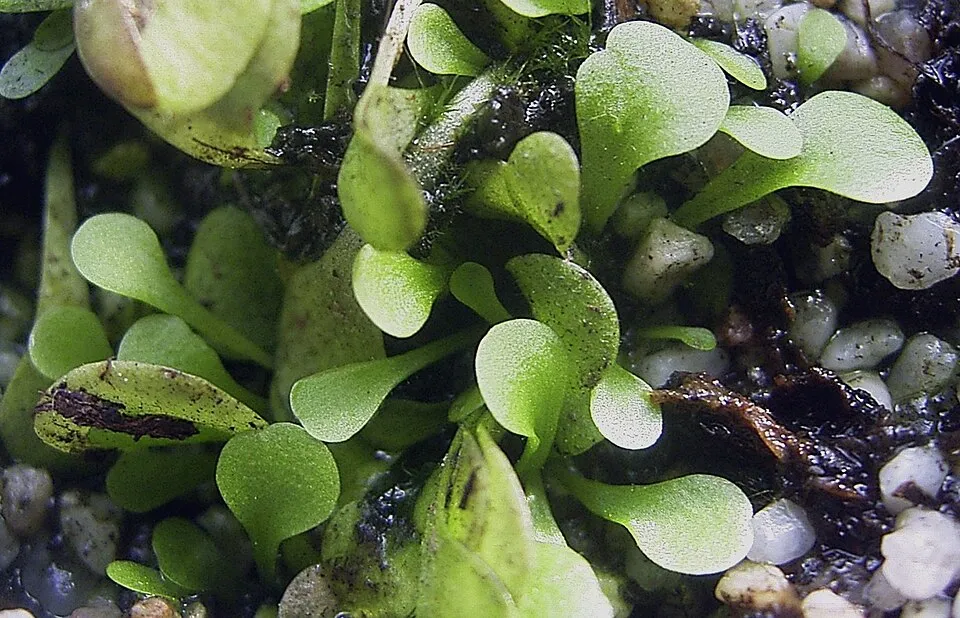
Genlisea violacea, commonly known as the Violet Land-bladderwort, is a captivating terrestrial carnivorous plant belonging to the Lentibulariaceae family. Native to diverse regions of South America, particularly Brazil, Venezuela, and Colombia, it thrives in moist, nutrient-poor environments such as boggy savannas and damp, sandy soils. This species typically forms a compact basal rosette of small, spatulate to elliptical green leaves on the surface, which are generally petiolate and can reach up to 2 cm in total length.
Its most extraordinary feature lies beneath the soil: a complex system of specialized subterranean leaves modified into Y-shaped or corkscrew-like traps, which can extend several centimeters deep. These intricate traps consist of two tightly twisted helical branches, each lined with inward-pointing hairs, leading to a central digestion chamber called a utricle. This sophisticated mechanism is expertly designed to lure, capture, and digest microscopic soil invertebrates, including protozoa, nematodes, and rotifers, providing essential nutrients in its challenging habitat.
The plant also produces delicate, often solitary, violet or purple flowers, resembling small Viola blooms, atop a slender, unbranched scape that rises a few centimeters above the foliage. Its remarkable carnivorous adaptation enables Genlisea violacea to flourish where other plants struggle due to low nutrient availability, making it a subject of significant botanical interest and a prized specimen among carnivorous plant enthusiasts.
Trusted Scientific References
1. Authoritative external sources for Genlisea violacea
1.1 Wikipedia — Genlisea violacea
1.2 Kew POWO (Plants of the World Online)
1.3 PubMed — peer-reviewed research
1.4 NCBI Taxonomy Browser
1.5 GBIF — Global Biodiversity
1.6Genlisea should be interpreted through verified botanical identity, practical care, and responsible safety language. This recovery note adds the missing context needed for a complete profile: match light to the plant's habit, use well-drained soil, water according to season, and avoid unsupported medicinal or edible claims. For publishing, the plant can be presented as a source-backed indoor plant with clear care guidance, common problem diagnosis, and conservative safety wording.
1.1.Genlisea — Key Features
- ✓ <strong>Carnivorous Plant</strong> — Captures small soil-dwelling invertebrates using specialized underground traps for nutrient acquisition.
- ✓ <strong>Unique Trapping Mechanism</strong> — Features Y-shaped or corkscrew-like subterranean leaves with helical canals designed for prey capture.
- ✓ <strong>Subterranean Traps</strong> — Its primary prey capture organs are located entirely beneath the soil surface, an unusual adaptation.
- ✓ <strong>Nutrient</strong> — Poor Soil Adaptation — Thrives in boggy, nutrient-deficient substrates, utilizing carnivory to supplement its diet.
- ✓ <strong>Delicate Violet Flowers</strong> — Produces small, typically violet or purple flowers on a slender scape that rises above the foliage.
- ✓ <strong>High Humidity Requirement</strong> — Prefers consistently humid conditions, making it well-suited for terrarium cultivation.
- ✓ <strong>Sensitive to Minerals</strong> — Requires pure water sources like distilled, rainwater, or RO water, as it is intolerant of tap water minerals.
- ✓ <strong>Rosette Growth Form</strong> — Forms a basal rosette of spatulate or elliptical green leaves on the surface.
- ✓ <strong>Aquatic/Bog Habitat</strong> — Naturally occurs in wet environments such as bogs, swamps, and damp savannas.
- ✓ <strong>Horticultural Interest</strong> — Prized by carnivorous plant collectors and enthusiasts for its unusual biology and delicate beauty.
1.2.Genlisea — Quick Summary
- ✓ Genlisea violacea is a perennial, herbaceous carnivorous plant in the Lentibulariaceae family, noted for its unique subterranean Y-shaped traps that ensnare soil invertebrates.
- ✓ Native to South America, it thrives in consistently moist, nutrient-poor substrates like peat/sand mixes, requiring high humidity and moderate light.
- ✓ It is intolerant of mineral-rich water, necessitating distilled, rainwater, or reverse osmosis water for successful cultivation.
- ✓ While producing delicate violet flowers and offering significant horticultural and biological interest, it possesses no known medicinal or edible uses and is considered non-toxic.
- ✓ Its primary value lies in its fascinating adaptations to nutrient-scarce environments and its appeal to carnivorous plant enthusiasts.
2.Genlisea — Scientific Identity
3.Genlisea — Quick Facts
4.Genlisea — Appearance & Identification
5.Genlisea — Native Habitat
6.Genlisea — Water Requirements
- ✓ Substrate — Requires a highly acidic, nutrient-poor medium like a mix of peat moss and sand or perlite (1:1 or 2:1 ratio), or live/unmilled dead Sphagnum moss.
- ✓ Watering — Maintain consistently moist to wet conditions; bottom watering is highly recommended, keeping the pot in a shallow tray of water.
- ✓ Water Type — Exclusively use distilled water, rainwater, or reverse osmosis (RO) water, as it is extremely sensitive to minerals and salts found in tap water.
- ✓ Light — Thrives in moderate, bright indirect light, often under 50% shade cloth; avoid intense, direct sunlight which can scorch the delicate leaves.
- ✓ Temperature & Humidity — Prefers warm temperatures (18-35°C / 65-95°F) and high humidity, making it ideal for terrariums or humid bog gardens; sensitive to frost.
- ✓ Fertilization — Strictly avoid all forms of fertilizer, as its carnivorous adaptations provide sufficient nutrients in its poor soil.
- ✓ Propagation — Can be propagated from trap cuttings (most successful for G. violacea), or leaf cuttings (more challenging); seeds can be sown on wet Sphagnum.
- ✓ Maintenance — Monitor for overgrowing Sphagnum moss and gently pull it back to prevent the plant from being buried; ensure good air circulation in high humidity.
Reviewed by the Flora Medical Global Botanical Review Panel
Multi-disciplinary editorial group · Botany · Ethnobotany · Herbal-medicine literature
Who reviewed this: This page was checked by the Flora Medical Global Botanical Review Panel — an in-house editorial group of botany graduates, ethnobotany researchers, and horticulture practitioners who collectively maintain our 7,000+ plant encyclopedia. Meet the team.
Our 4-step verification process
1. Taxonomic verification
Scientific names and synonyms cross-checked against Kew POWO, World Flora Online, and The Plant List.
2. Phytochemical & medicinal cross-reference
Active compounds, traditional uses, and reported activities are cross-referenced with PubMed, USDA Dr. Duke's database, and peer-reviewed ethnobotanical literature.
3. Conservation & distribution check
Distribution, ecology, and conservation status confirmed against GBIF occurrence records and the IUCN Red List.
4. Editorial & safety review
Every entry passes an editorial pass for clarity, originality, and safety notices (toxicity, contraindications, dosage caveats) before publication.
Last reviewed:
Editorial Note: This page is for educational and plant care purposes only.
Written by: Flora Medical Global Editorial Team
Reviewed by: Flora Medical Global Botanical Review Panel
Last Updated: June 15, 2026







Genlisea — Comments & Community Reviews
Rate this plant