

Care Disclaimer: Plant care recommendations are general guidelines based on common growing conditions. Individual results may vary based on your local environment, climate, and care routine. If your plant is toxic, keep it away from children and pets, and consult a veterinarian if accidental ingestion occurs.
1.Gloriosum Philodendron — Overview
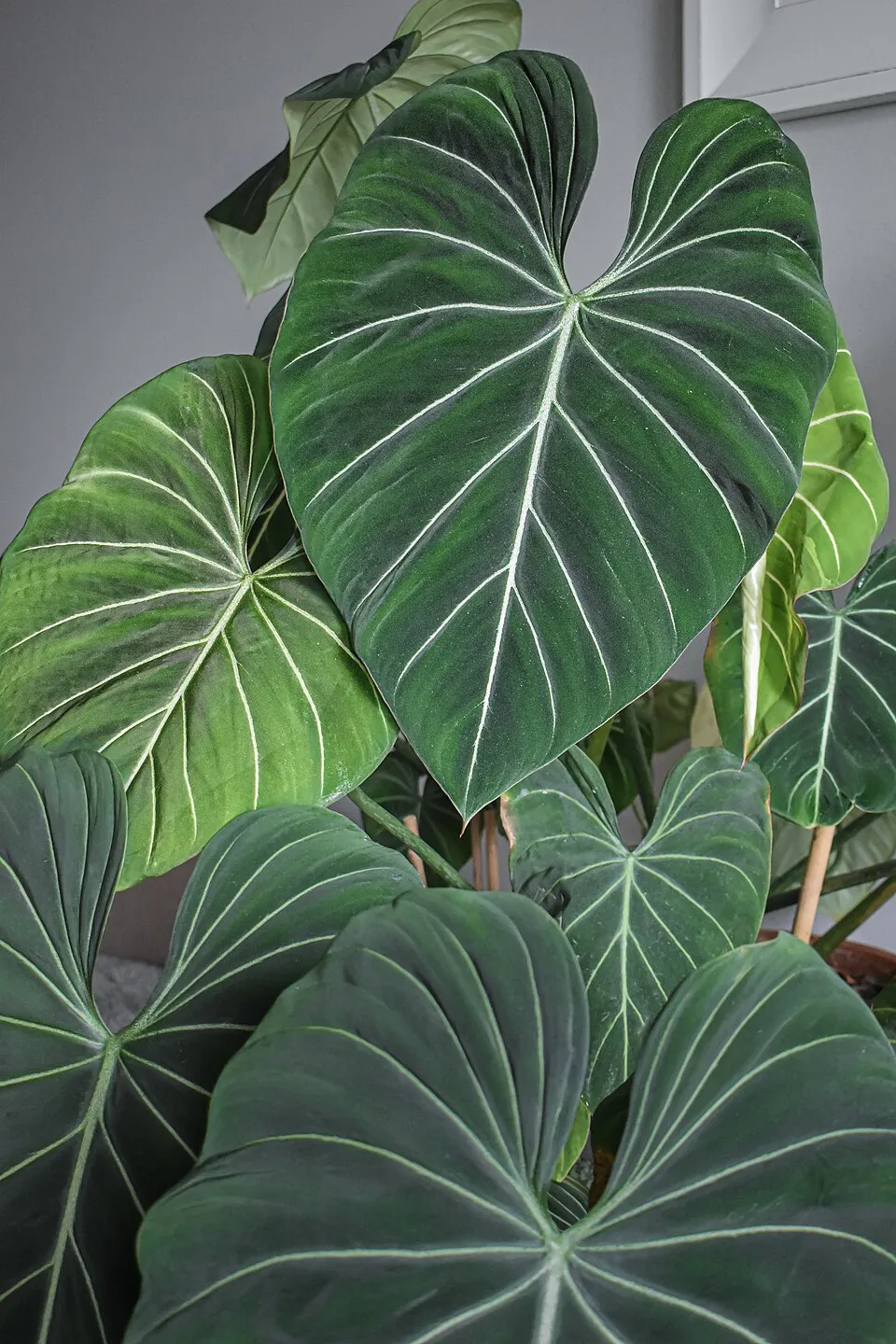
Philodendron gloriosum, commonly known as Gloriosum Philodendron, is an exquisite terrestrial aroid celebrated predominantly for its magnificent ornamental value rather than direct medicinal applications, though its aesthetic presence undoubtedly contributes to human well-being. This distinguished species is indigenous to the humid, tropical rainforests of Colombia, where it thrives in the dappled light of the understory, benefiting from the consistent warmth and high humidity characteristic of its native habitat. Morphologically, Philodendron gloriosum is instantly recognizable by its spectacular, deeply veined, heart-shaped (cordate) leaves, which can achieve substantial dimensions, frequently extending to 30-40 cm in length and 20-30 cm in width. The foliage exhibits a rich, dark green coloration, dramatically contrasted by prominent, almost silvery-white to pale green venation that forms an intricate, reticulated pattern across the velvety leaf lamina. The abaxial (underside) surface of the leaf typically maintains a lighter green hue.
Distinct from many epiphytic philodendrons that climb, P. gloriosum displays a creeping, rhizomatous growth habit, with its thick, cylindrical stems trailing horizontally along the forest floor. These stems are often covered with fine, velvety hairs, imparting a unique tactile quality, and they readily root at the nodes as the plant spreads. When cultivated indoors, it typically maintains a more compact stature, reaching heights of 60-90 cm, making it a highly favored specimen for interior landscaping. Its fibrous and relatively shallow root system is adept at nutrient uptake from the rich leaf litter and organic matter prevalent on the forest floor.
As a member of the vast Araceae family, which encompasses diverse genera such as Monstera, Anthurium, and Colocasia, P. gloriosum shares specific botanical characteristics, including the production of an inflorescence known as a spadix, elegantly encircled by a modified leaf called a spathe. In its natural environment and under optimal conditions, it produces small, creamy-white to pale green inflorescences, although flowering is a rare occurrence in indoor cultivation.
Trusted Scientific References
1. Authoritative external sources for Philodendron gloriosum
1.1 Wikipedia — Philodendron gloriosum
1.2 Kew POWO (Plants of the World Online)
1.3 PubMed — peer-reviewed research
1.4 NCBI Taxonomy Browser
1.5 GBIF — Global Biodiversity
1.1.Gloriosum Philodendron — Key Features
- ✓ <strong>Velvety Leaf Texture</strong> — Distinctive soft, matte finish on the adaxial surface of its leaves.
- ✓ <strong>Prominent White Venation</strong> — Striking, almost silvery-white veins create a captivating pattern against dark green foliage.
- ✓ <strong>Cordate Leaf Shape</strong> — Characteristically large, heart-shaped leaves, a signature of the species' beauty.
- ✓ <strong>Creeping Terrestrial Habit</strong> — Grows horizontally along the ground, rooting at nodes, rather than climbing.
- ✓ <strong>Large Foliage</strong> — Leaves can reach impressive sizes, often up to 90 cm (3 feet) in length in ideal conditions.
- ✓ <strong>Native to Colombia</strong> — Indigenous to the tropical rainforests of South America, preferring humid, shaded environments.
- ✓ <strong>Araceae Family Member</strong> — Belongs to the Aroid family, sharing features like a spadix and spathe inflorescence.
- ✓ <strong>Ornamental Value</strong> — Highly sought after in horticulture for its exceptional beauty and decorative appeal.
- ✓ <strong>Toxic by Ingestion</strong> — Contains calcium oxalate crystals, making all plant parts irritating and toxic if consumed.
- ✓ <strong>Adaptable Houseplant</strong> — Can be successfully cultivated indoors with proper care for light, humidity, and soil conditions.
1.2.Gloriosum Philodendron — Quick Summary
- ✓ Philodendron gloriosum is a stunning terrestrial aroid, highly prized for its large, velvety, heart-shaped leaves with prominent white venation.
- ✓ Native to the understory of Colombian rainforests, it thrives in high humidity and indirect light.
- ✓ It exhibits a unique creeping, rhizomatous growth habit, spreading along the ground.
- ✓ All parts of the plant are toxic due to the presence of irritating calcium oxalate crystals.
- ✓ Primarily valued for its exceptional ornamental appeal and its contribution to biophilic indoor environments.
- ✓ Requires consistent care regarding light, water, humidity, and temperature to flourish as a houseplant.
2.Gloriosum Philodendron — Scientific Identity
3.Gloriosum Philodendron — Quick Facts
4.Gloriosum Philodendron — Appearance & Identification
5.Gloriosum Philodendron — Native Habitat
6.Gloriosum Philodendron — Water Requirements
- ✓ Light — Provide bright, indirect light; direct sunlight can scorch the velvety leaves of Philodendron gloriosum.
- ✓ Soil — Use a well-draining, airy, peat-based potting mix, ideally with a slightly acidic to neutral pH, enriched with perlite or orchid bark.
- ✓ Water — Water thoroughly when the top 1-2 inches of soil feel dry to the touch; ensure excellent drainage to prevent root rot.
- ✓ Humidity — Prefers high humidity (50-60% or higher); misting, using a pebble tray, or placing near a humidifier is highly beneficial.
- ✓ Temperature — Maintain consistent temperatures between 18-29°C (65-85°F); protect from cold drafts and temperatures below 15°C.
- ✓ Fertilization — Feed with a balanced, liquid fertilizer diluted to half strength every 4-6 weeks during the spring and summer growing seasons.
- ✓ Pruning — Prune only to remove yellowing or damaged leaves, or to manage size and shape, using sterile pruning shears to prevent disease.
- ✓ Repotting — Repot every 2-3 years, or when the plant becomes root-bound, into a pot one size larger to accommodate its creeping growth habit.
Reviewed by the Flora Medical Global Botanical Review Panel
Multi-disciplinary editorial group · Botany · Ethnobotany · Herbal-medicine literature
Who reviewed this: This page was checked by the Flora Medical Global Botanical Review Panel — an in-house editorial group of botany graduates, ethnobotany researchers, and horticulture practitioners who collectively maintain our 7,000+ plant encyclopedia. Meet the team.
Our 4-step verification process
1. Taxonomic verification
Scientific names and synonyms cross-checked against Kew POWO, World Flora Online, and The Plant List.
2. Phytochemical & medicinal cross-reference
Active compounds, traditional uses, and reported activities are cross-referenced with PubMed, USDA Dr. Duke's database, and peer-reviewed ethnobotanical literature.
3. Conservation & distribution check
Distribution, ecology, and conservation status confirmed against GBIF occurrence records and the IUCN Red List.
4. Editorial & safety review
Every entry passes an editorial pass for clarity, originality, and safety notices (toxicity, contraindications, dosage caveats) before publication.
Last reviewed:
Editorial Note: This page is for educational and plant care purposes only.
Written by: Flora Medical Global Editorial Team
Reviewed by: Flora Medical Global Botanical Review Panel
Last Updated: June 15, 2026







Gloriosum Philodendron — Comments & Community Reviews
Rate this plant