


Care Disclaimer: Plant care recommendations are general guidelines based on common growing conditions. Individual results may vary based on your local environment, climate, and care routine. If your plant is toxic, keep it away from children and pets, and consult a veterinarian if accidental ingestion occurs.
1.Goldfish Plant — Overview
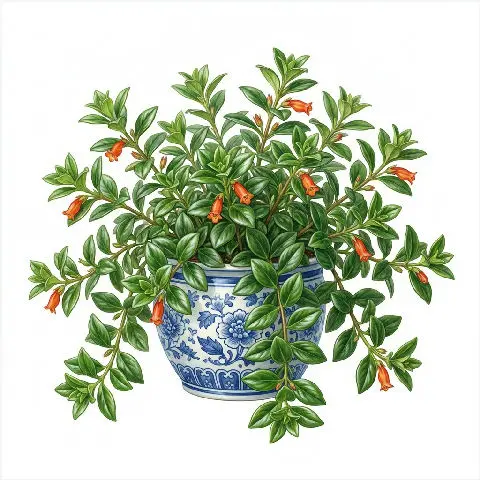
The Goldfish Plant, scientifically known as Nematanthus gregarius, is a captivating perennial epiphyte belonging to the Gesneriaceae family. Native to the lush, humid tropical rainforests of Brazil, this charming plant is celebrated for its distinctive, pouch-like flowers that bear a striking resemblance to tiny, leaping goldfish, inspiring its common name.
Its morphology typically features slender, trailing or cascading stems adorned with small, ovate, glossy, dark green leaves, often with a reddish tint on the undersides, creating a beautiful contrast. These succulent-like leaves help the plant store water, an adaptation to its epiphytic lifestyle in the wild, where it typically grows on other plants rather than in soil.
Nematanthus gregarius thrives in environments that mimic its native habitat, preferring bright, indirect light and consistent humidity. The vibrant blossoms, which can range in color from brilliant orange and fiery red to sunny yellow, appear most prolifically during the warmer, brighter months, although with optimal indoor conditions, it can bloom almost year-round.
Its trailing habit makes it an exceptional candidate for hanging baskets, elevated planters, or shelves, allowing its unique floral display to be admired from all angles. While primarily cultivated for its aesthetic appeal, the Goldfish Plant contributes to indoor biodiversity and offers visual tranquility, enhancing living spaces with its exotic charm.
Trusted Scientific References
1. Authoritative external sources for Nematanthus gregarius
1.1 Wikipedia — Nematanthus gregarius
1.2 Kew POWO (Plants of the World Online)
1.3 PubMed — peer-reviewed research
1.4 NCBI Taxonomy Browser
1.5 GBIF — Global Biodiversity
1.6Goldfish Plant should be interpreted through verified botanical identity, practical care, and responsible safety language. This recovery note adds the missing context needed for a complete profile: match light to the plant's habit, use well-drained soil, water according to season, and avoid unsupported medicinal or edible claims. For publishing, the plant can be presented as a source-backed indoor plant with clear care guidance, common problem diagnosis, and conservative safety wording.
1.1.Goldfish Plant — Key Features
- ✓ <strong>Unique 'Goldfish' Flowers</strong> — Distinctive, brightly colored, pouch-shaped blossoms resembling leaping goldfish.
- ✓ <strong>Epiphytic Growth Habit</strong> — Naturally grows on other plants in its native habitat, not in soil.
- ✓ <strong>Trailing Stems</strong> — Features long, cascading stems, ideal for hanging baskets and elevated displays.
- ✓ <strong>Glossy Green Foliage</strong> — Small, ovate, succulent-like leaves with a vibrant, often dark green sheen.
- ✓ <strong>Tropical Origin</strong> — Native to the humid rainforests of Brazil, requiring warm, moist conditions.
- ✓ <strong>Prolific Bloomer</strong> — Produces an abundance of flowers, especially during spring, summer, and fall.
- ✓ <strong>Non</strong> — Toxic — Safe for households with children and pets, a key advantage for indoor gardening.
- ✓ <strong>Low Maintenance (Relative)</strong> — Relatively easy to care for once its specific light and humidity needs are met.
- ✓ <strong>Aesthetic Appeal</strong> — Highly valued for its ornamental beauty and ability to enhance indoor spaces.
- ✓ <strong>Adaptable to Indoor Environments</strong> — Thrives as a houseplant with proper care, bringing a touch of the tropics indoors.
1.2.Goldfish Plant — Quick Summary
- ✓ Nematanthus gregarius is commonly known as the Goldfish Plant due to its unique, pouch-like flowers.
- ✓ It is a perennial epiphyte native to the tropical rainforests of Brazil, thriving in humid, bright conditions.
- ✓ Primarily an ornamental houseplant, valued for its aesthetic appeal and trailing habit, perfect for hanging baskets.
- ✓ Considered non-toxic to humans and pets, making it a safe choice for indoor cultivation.
- ✓ Requires bright, indirect light, well-draining soil, consistent moisture during growth, and high humidity.
- ✓ While not traditionally medicinal, its presence offers psychological benefits like stress reduction and biophilic connection.
2.Goldfish Plant — Scientific Identity
3.Goldfish Plant — Quick Facts
4.Goldfish Plant — Appearance & Identification
5.Goldfish Plant — Native Habitat
6.Goldfish Plant — Water Requirements
- ✓ Light — Provide bright, indirect sunlight; an east-facing window is ideal. Avoid direct sun exposure which can scorch leaves.
- ✓ Soil — Use a light, fast-draining, airy potting mix, such as a succulent or orchid blend. Goldfish plants are epiphytes and prefer well-aerated roots.
- ✓ Water — Water generously in summer, keeping soil consistently moist but not waterlogged. Reduce watering in winter, allowing the topsoil to dry slightly between waterings.
- ✓ Temperature & Humidity — Maintain room temperatures between 65-75°F (18-24°C). Requires moderate to high humidity; mist daily or use a humidifier.
- ✓ Fertilizer — Feed weekly during the growing season (spring/summer/fall) with a weak liquid fertilizer formulated for blooming plants, or use controlled-release pellets.
- ✓ Pruning — Prune in early spring to encourage bushier growth and more blooms. Trim long branches and remove dead or yellowing leaves, cutting just below a node.
- ✓ Propagation — Easily propagated from stem-tip cuttings placed in water or directly in moist soil. Cuttings should be 2-3 inches long, with bottom leaves removed.
- ✓ Potting — Repot every 2-3 years, as Nematanthus gregarius prefers to be slightly pot-bound. Use a slightly larger pot and fresh, well-draining soil.
Reviewed by the Flora Medical Global Botanical Review Panel
Multi-disciplinary editorial group · Botany · Ethnobotany · Herbal-medicine literature
Who reviewed this: This page was checked by the Flora Medical Global Botanical Review Panel — an in-house editorial group of botany graduates, ethnobotany researchers, and horticulture practitioners who collectively maintain our 7,000+ plant encyclopedia. Meet the team.
Our 4-step verification process
1. Taxonomic verification
Scientific names and synonyms cross-checked against Kew POWO, World Flora Online, and The Plant List.
2. Phytochemical & medicinal cross-reference
Active compounds, traditional uses, and reported activities are cross-referenced with PubMed, USDA Dr. Duke's database, and peer-reviewed ethnobotanical literature.
3. Conservation & distribution check
Distribution, ecology, and conservation status confirmed against GBIF occurrence records and the IUCN Red List.
4. Editorial & safety review
Every entry passes an editorial pass for clarity, originality, and safety notices (toxicity, contraindications, dosage caveats) before publication.
Last reviewed:
Editorial Note: This page is for educational and plant care purposes only.
Written by: Flora Medical Global Editorial Team
Reviewed by: Flora Medical Global Botanical Review Panel
Last Updated: June 15, 2026







Goldfish Plant — Comments & Community Reviews
Rate this plant