
Care Disclaimer: Plant care recommendations are general guidelines based on common growing conditions. Individual results may vary based on your local environment, climate, and care routine. If your plant is toxic, keep it away from children and pets, and consult a veterinarian if accidental ingestion occurs.
1.Graptosedum Bronze — Overview
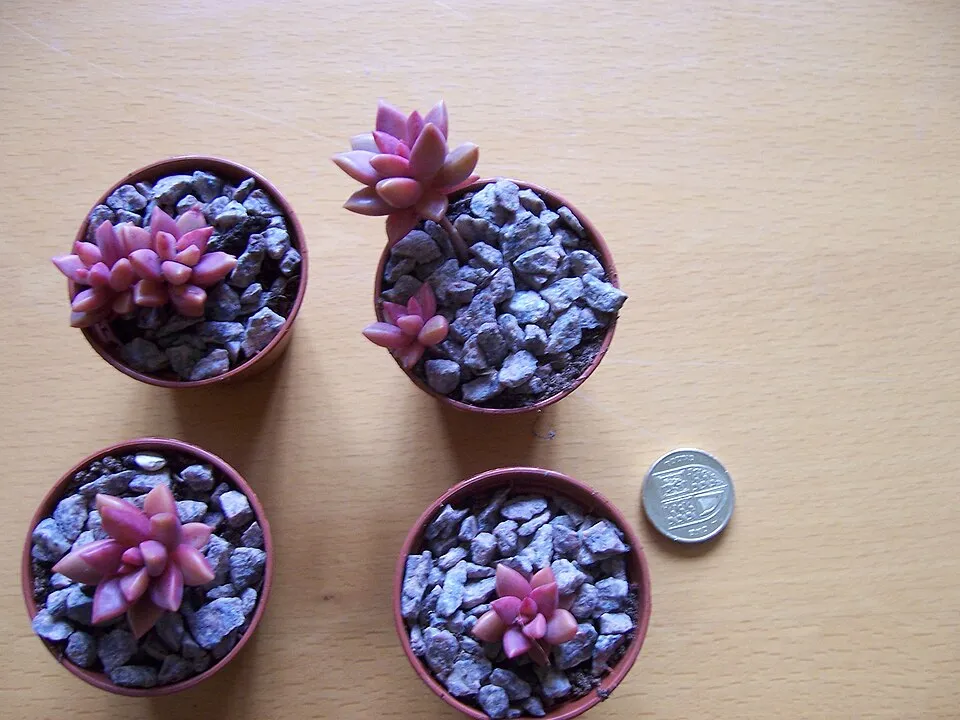
Graptosedum Bronze, scientifically designated as x Graptosedum 'Bronze' (often also known as x Graptosedum 'Vera Higgins'), is an exquisite intergeneric succulent hybrid within the diverse Crassulaceae family. This captivating plant is a deliberate cross between the elegant Graptopetalum paraguayense and the charming Sedum stahlii, skillfully combining desirable ornamental traits from both parent species. Morphologically, it forms a compact, low-growing rosette-forming succulent, typically reaching a modest height of 15 to 30 centimeters (6 to 12 inches) with a similar spread. Its defining characteristic lies in its densely arranged rosettes, each approximately 5 to 10 centimeters (2 to 4 inches) in diameter, composed of thick, turgid, spoon-shaped leaves.
The foliage exhibits a remarkable chromatic range, shifting from a soft bronze-green when grown in partial shade to a vibrant, deep copper, maroon, or even reddish-purple under ample bright, indirect sunlight or mild environmental stress, such as cooler temperatures. This intensity of the bronze hue, particularly along the leaf margins and tips, is its primary aesthetic allure. The stems are smooth, relatively slender yet robust, and develop a trailing or cascading habit as the plant matures, making it an excellent choice for hanging baskets or as an attractive groundcover in suitable arid landscapes. While primarily cultivated for its striking foliage, x Graptosedum 'Bronze' does produce delicate, star-shaped flowers.
These blooms typically emerge in spring or early summer on slender, upright stalks that can extend up to 25 centimeters (10 inches) above the foliage. The flowers usually display a pale yellow to creamy white coloration, often adorned with subtle reddish markings at the petal tips, arranged in loose clusters. The root system is fibrous and shallow, an adaptation for efficient absorption of surface moisture and anchorage in well-drained, often rocky substrates. As a horticultural hybrid, x Graptosedum 'Bronze' does not possess a natural geographic distribution; instead, it is widely cultivated globally by succulent enthusiasts.
Trusted Scientific References
1. Authoritative external sources for Graptosedum Bronze
1.1 Wikipedia — Graptosedum Bronze
1.2 Kew POWO (Plants of the World Online)
1.3 PubMed — peer-reviewed research
1.4 NCBI Taxonomy Browser
1.5 GBIF — Global Biodiversity
1.1.Graptosedum Bronze — Key Features
- ✓ <strong>Botanical Name</strong> — x Graptosedum 'Bronze' (also widely known as x Graptosedum 'Vera Higgins').
- ✓ <strong>Family</strong> — Crassulaceae, commonly referred to as the stonecrop or orpine family.
- ✓ <strong>Parentage</strong> — An intergeneric hybrid resulting from a cross between Graptopetalum paraguayense and Sedum stahlii.
- ✓ <strong>Foliage</strong> — Characterized by fleshy, spoon-shaped leaves arranged in attractive, dense rosettes.
- ✓ <strong>Coloration</strong> — Displays a remarkable range from bronze-green to deep copper, maroon, or reddish-purple, with color intensity increasing under bright light.
- ✓ <strong>Growth Habit</strong> — Exhibits a compact, low-growing form with stems that tend to trail or cascade as the plant matures.
- ✓ <strong>Flowers</strong> — Produces delicate, star-shaped blooms in pale yellow to creamy white, often with subtle reddish tips, typically in spring or early summer.
- ✓ <strong>Hardiness</strong> — Suitable for USDA Plant Hardiness Zones 8b-11, requiring protection from frost and freezing temperatures.
- ✓ <strong>Drought Tolerance</strong> — Possesses high drought tolerance due to its succulent nature and CAM photosynthesis, making it water-efficient.
- ✓ <strong>Propagation</strong> — Extremely easy to propagate from individual leaf cuttings or stem cuttings, ensuring simple multiplication of plants.
1.2.Graptosedum Bronze — Quick Summary
- ✓ Striking succulent hybrid known for its vibrant bronze to reddish-purple foliage.
- ✓ A cross between Graptopetalum paraguayense and Sedum stahlii, belonging to the Crassulaceae family.
- ✓ Low-maintenance, highly drought-tolerant, and ideal for xeriscaping and container gardening.
- ✓ Foliage color intensifies significantly with ample bright sunlight and cooler temperatures.
- ✓ Primarily an ornamental plant with no documented traditional medicinal uses or specific therapeutic claims.
- ✓ Propagates easily from both leaf and stem cuttings, making it popular for sharing and expanding collections.
2.Graptosedum Bronze — Scientific Identity
3.Graptosedum Bronze — Quick Facts
4.Graptosedum Bronze — Appearance & Identification
5.Graptosedum Bronze — Native Habitat
6.Graptosedum Bronze — Water Requirements
- ✓ Light Requirements — Thrives in bright, indirect sunlight to partial shade; ample light exposure significantly enhances its vibrant bronze and reddish coloration, while insufficient light can lead to etiolation.
- ✓ Soil Composition — Requires a well-draining succulent or cactus potting mix, ideally amended with pumice, perlite, or coarse sand to ensure rapid water drainage and prevent root rot.
- ✓ Watering Schedule — Water thoroughly only when the soil is completely dry to the touch, then allow it to dry out fully before the next watering; significantly reduce watering frequency during its winter dormancy.
- ✓ Temperature and Hardiness — Best suited for USDA Zones 8b-11, tolerating temperatures down to 15-25°F (approx. -9 to -4°C), but it is not frost-tolerant and must be protected from freezing conditions.
- ✓ Propagation Techniques — Easily propagated from individual leaf cuttings or stem cuttings; allow cuttings to callus for several days in a dry, shaded area before planting in dry, well-draining soil.
- ✓ Fertilization — Fertilize sparingly during the active growing season (spring and summer) with a diluted succulent-specific or balanced liquid fertilizer, typically once or twice a year at most.
- ✓ Container and Repotting — Prefers pots with adequate drainage holes; repot only when the plant becomes root-bound, typically every 2-3 years, to refresh the soil and provide space for continued growth.
Reviewed by the Flora Medical Global Botanical Review Panel
Multi-disciplinary editorial group · Botany · Ethnobotany · Herbal-medicine literature
Who reviewed this: This page was checked by the Flora Medical Global Botanical Review Panel — an in-house editorial group of botany graduates, ethnobotany researchers, and horticulture practitioners who collectively maintain our 7,000+ plant encyclopedia. Meet the team.
Our 4-step verification process
1. Taxonomic verification
Scientific names and synonyms cross-checked against Kew POWO, World Flora Online, and The Plant List.
2. Phytochemical & medicinal cross-reference
Active compounds, traditional uses, and reported activities are cross-referenced with PubMed, USDA Dr. Duke's database, and peer-reviewed ethnobotanical literature.
3. Conservation & distribution check
Distribution, ecology, and conservation status confirmed against GBIF occurrence records and the IUCN Red List.
4. Editorial & safety review
Every entry passes an editorial pass for clarity, originality, and safety notices (toxicity, contraindications, dosage caveats) before publication.
Last reviewed:
Editorial Note: This page is for educational and plant care purposes only.
Written by: Flora Medical Global Editorial Team
Reviewed by: Flora Medical Global Botanical Review Panel
Last Updated: June 15, 2026







Graptosedum Bronze — Comments & Community Reviews
Rate this plant