
Care Disclaimer: Plant care recommendations are general guidelines based on common growing conditions. Individual results may vary based on your local environment, climate, and care routine. If your plant is toxic, keep it away from children and pets, and consult a veterinarian if accidental ingestion occurs.
1.Graptoveria Opalina — Overview
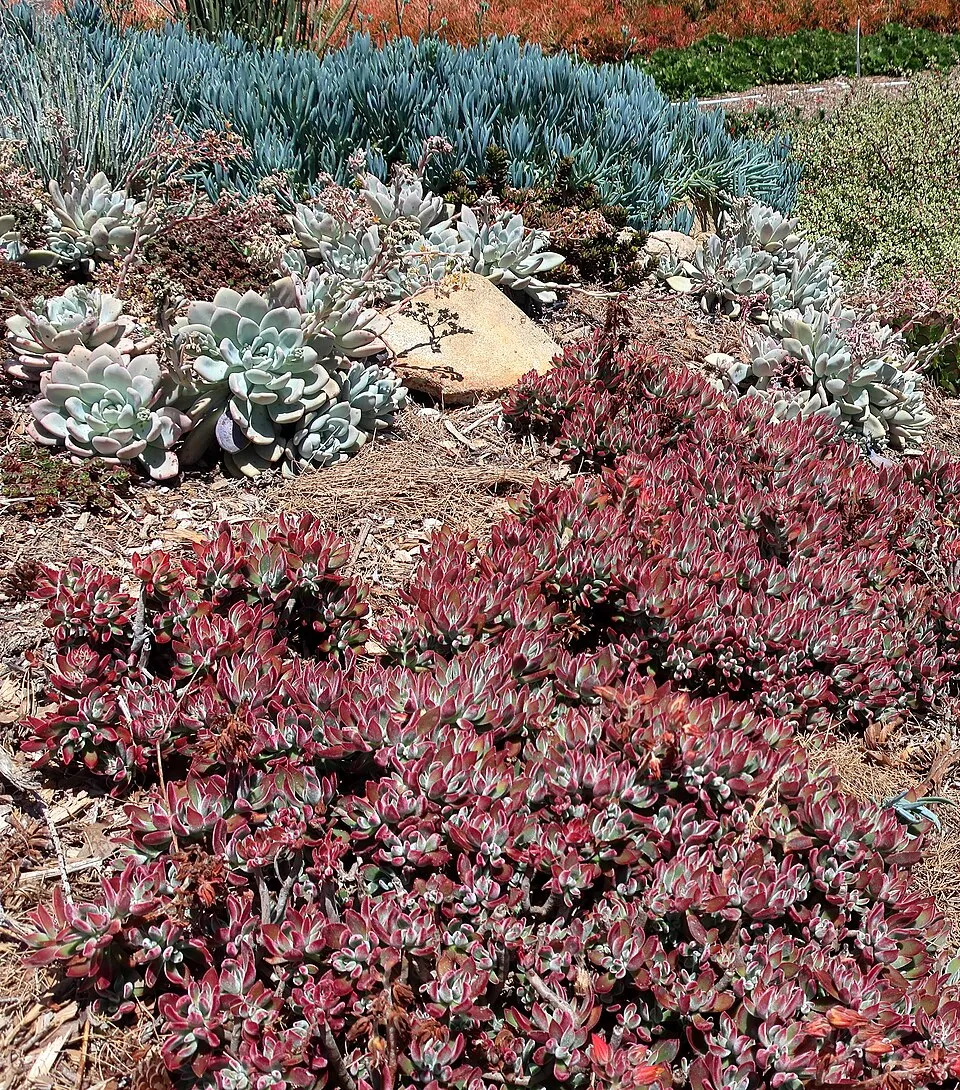
Graptoveria Opalina is a horticultural triumph, a captivating succulent hybrid meticulously created from the cross between the robust Graptopetalum amethystinum and the elegant Echeveria colorata. This exquisite plant is a proud member of the expansive Crassulaceae family, a lineage celebrated for its remarkable diversity of water-storing succulent flora. It typically develops into a compact, strikingly symmetrical rosette, achieving a mature diameter of 15 to 20 cm (6 to 8 inches) and a height of 15 to 30 cm (6 to 12 inches). The leaves are the quintessential feature of Graptoveria Opalina—plump, distinctly obovate to spatulate in form, and often gracefully recurved, which imparts a full, rounded aesthetic to the entire rosette. Each fleshy leaf can extend up to 6 cm (2.4 inches) in length and is adorned with a unique, ethereal pastel coloration, ranging from a soft, powdery blue-green to delicate shades of teal or lavender.
When subjected to ample bright sunlight or cooler temperatures, the margins and tips of these leaves often develop a charming pinkish blush, enhancing its visual allure. A fine, powdery farina—a natural epicuticular wax—envelops the leaf surface, contributing to its frosted appearance and serving as a crucial protective barrier against intense solar radiation and excessive water loss, a hallmark adaptation characteristic of many desert-dwelling plants. The stem remains short and stout, largely obscured by the dense foliage, only elongating marginally with advanced age or etiolation. Its fibrous, shallow root system is expertly adapted for efficient absorption of water from superficial soil layers, typical of its succulent relatives. During late spring to early summer, Graptoveria Opalina delights with charming floral displays.
These emerge on tall, slender, arching stalks that can gracefully extend over 30 cm (12 inches) above the foliage. The inflorescence comprises numerous small, star-shaped flowers, predominantly showcasing hues of coral-pink, orange, or yellow, frequently accented with contrasting darker tips or centers, creating a delightful visual spectacle against the plant's cool-toned leaves. As a hybrid, Graptoveria Opalina does not possess a natural wild geographic distribution but is extensively cultivated worldwide for its ornamental value. Its inherent ease of care and striking aesthetic appeal have firmly established it as a highly favored choice for both indoor gardening and xeriscape designs. Trusted Scientific Refer ...[CURRENT TEXT EXISTS: 2713 chars]
1.1.Graptoveria Opalina — Key Features
- ✓ <strong>Captivating Pastel Coloration</strong> — Ranging from blue-green to lavender with pink accents.
- ✓ <strong>Distinctive Farina Coating</strong> — A powdery wax layer protecting leaves from sun and water loss.
- ✓ <strong>Compact Rosette Formation</strong> — Forms a symmetrical, visually appealing central rosette.
- ✓ <strong>Charming Floral Displays</strong> — Produces star-shaped coral-pink, orange, or yellow flowers on tall stalks.
- ✓ <strong>Drought</strong> — Tolerant Nature — Highly adapted to arid conditions, requiring infrequent watering.
- ✓ <strong>Low Maintenance Plant</strong> — Ideal for busy gardeners due to its minimal care requirements.
- ✓ <strong>Generally Non</strong> — Toxic — Safe for households with children and pets.
- ✓ <strong>Versatile Ornamental Use</strong> — Perfect for containers, rock gardens, and indoor displays.
- ✓ <strong>Summer Dormant Growth Habit</strong> — Reduces activity during the hottest part of the year.
- ✓ <strong>Hybrid Vigor</strong> — Combines desirable traits from its parent species for robust growth and beauty.
1.2.Graptoveria Opalina — Quick Summary
- ✓ Graptoveria Opalina is a striking succulent hybrid (Graptopetalum amethystinum x Echeveria colorata).
- ✓ Features plump, pastel blue-green leaves with a pink blush and protective farina.
- ✓ Requires full sun to partial shade, well-draining soil, and minimal watering (soak and dry).
- ✓ Not cold hardy; best grown in containers or warm climates (Zone 9a+).
- ✓ Easily propagated from offsets and stem cuttings, making it a popular choice for enthusiasts.
- ✓ Generally non-toxic and primarily valued for its ornamental beauty and ease of care.
2.Graptoveria Opalina — Scientific Identity
3.Graptoveria Opalina — Quick Facts
4.Graptoveria Opalina — Appearance & Identification
5.Graptoveria Opalina — Native Habitat
6.Graptoveria Opalina — Water Requirements
- ✓ Light Requirements — Provide full sun to partial shade; at least 6 hours of bright, indirect light is ideal for vibrant coloration.
- ✓ Watering Regime — Employ the 'soak and dry' method, allowing the soil to dry out completely between waterings to prevent root rot.
- ✓ Soil Composition — Plant in a well-draining succulent or cactus potting mix, ideally with added perlite or pumice for aeration.
- ✓ Temperature Tolerance — Not cold hardy; protect from temperatures below 20°F (-6.7°C) and bring indoors in colder climates.
- ✓ Container vs. Ground — Suitable for containers, rock gardens, or hanging baskets, especially where cold protection is necessary.
- ✓ Dormancy — Graptoveria Opalina is typically summer dormant, requiring reduced watering during the hottest months.
- ✓ Fertilization — Fertilize sparingly during the spring growing season with a diluted, balanced succulent fertilizer, typically once a month.
Reviewed by the Flora Medical Global Botanical Review Panel
Multi-disciplinary editorial group · Botany · Ethnobotany · Herbal-medicine literature
Who reviewed this: This page was checked by the Flora Medical Global Botanical Review Panel — an in-house editorial group of botany graduates, ethnobotany researchers, and horticulture practitioners who collectively maintain our 7,000+ plant encyclopedia. Meet the team.
Our 4-step verification process
1. Taxonomic verification
Scientific names and synonyms cross-checked against Kew POWO, World Flora Online, and The Plant List.
2. Phytochemical & medicinal cross-reference
Active compounds, traditional uses, and reported activities are cross-referenced with PubMed, USDA Dr. Duke's database, and peer-reviewed ethnobotanical literature.
3. Conservation & distribution check
Distribution, ecology, and conservation status confirmed against GBIF occurrence records and the IUCN Red List.
4. Editorial & safety review
Every entry passes an editorial pass for clarity, originality, and safety notices (toxicity, contraindications, dosage caveats) before publication.
Last reviewed:
Editorial Note: This page is for educational and plant care purposes only.
Written by: Flora Medical Global Editorial Team
Reviewed by: Flora Medical Global Botanical Review Panel
Last Updated: June 15, 2026







Graptoveria Opalina — Comments & Community Reviews
Rate this plant