
Care Disclaimer: Plant care recommendations are general guidelines based on common growing conditions. Individual results may vary based on your local environment, climate, and care routine. If your plant is toxic, keep it away from children and pets, and consult a veterinarian if accidental ingestion occurs.
1.Gymnocalycium Baldianum — Overview
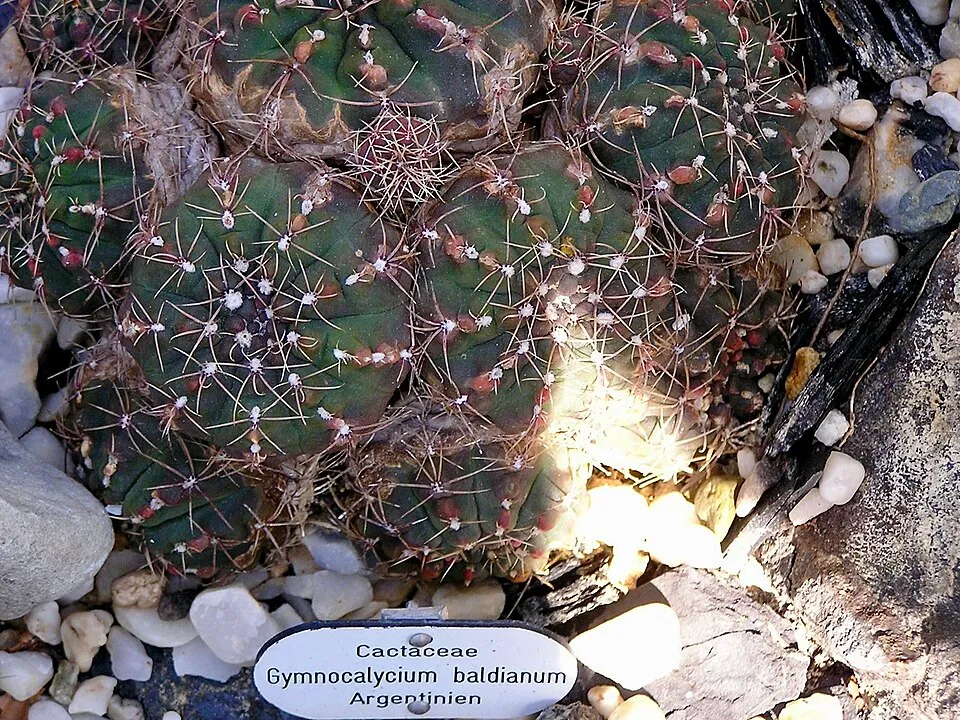
Gymnocalycium baldianum, commonly known as the bald cacti or dwarf chin cactus, is a captivating member of the Cactaceae family, renowned for its aesthetic appeal rather than its medicinal applications. This species typically forms a solitary, globular to short-cylindrical stem, reaching modest dimensions of 10 to 15 centimeters (4 to 6 inches) in height and spreading about 15 to 20 centimeters (6 to 8 inches) wide. Its distinctive morphology is characterized by 5 to 7 prominent, somewhat undulated ribs that give the plant a ridged, segmented appearance. Each rib is adorned with small, slender spines, typically less than 1 centimeter long, emerging from the areoles.
The epidermis of Gymnocalycium baldianum presents a vibrant green hue, which can intensify to beautiful red or purple tones when exposed to bright, direct sunlight, adding to its ornamental value. This species produces striking, funnel-shaped blooms measuring approximately 5 to 8 centimeters (2 to 3 inches) in diameter, showcasing a spectrum of colors including shades of pink, red, or white. These magnificent flowers typically emerge from the plant's apex during late spring to early summer, creating a stunning contrast against its body. Native to the semi-arid regions of Argentina, particularly in the provinces of Catamarca and La Rioja, Gymnocalycium baldianum is well-adapted to thrive in well-draining, sandy or gravelly soils.
Taxonomically, it belongs to the genus Gymnocalycium, a group celebrated for its diverse adaptations to arid environments and often referred to as 'chin cacti' due to the protuberances below their areoles. In cultivation, it is a favored choice for novice growers due to its manageable size, reliable flowering, and relatively low maintenance requirements, preferring moderate light and infrequent watering.
Trusted Scientific References
1. Authoritative external sources for Gymnocalycium baldianum
1.1 Wikipedia — Gymnocalycium baldianum
1.2 Kew POWO (Plants of the World Online)
1.3 PubMed — peer-reviewed research
1.4 NCBI Taxonomy Browser
1.5 GBIF — Global Biodiversity
1.1.Gymnocalycium Baldianum — Key Features
- ✓ <strong>Globular to Short</strong> — Cylindrical Stem — Distinctive body shape, typically 10-15 cm tall.
- ✓ <strong>Prominent Ribs</strong> — Features 5-7 pronounced, often undulated ribs.
- ✓ <strong>Small, Slender Spines</strong> — Areoles bear spines usually less than 1 cm long.
- ✓ <strong>Vibrant Epidermis</strong> — Green body, developing red/purple tones in bright light.
- ✓ <strong>Striking Flowers</strong> — Produces 5-8 cm wide blooms in shades of pink, red, or white.
- ✓ <strong>Spring/Summer Blooms</strong> — Flowers typically appear from late spring to early summer.
- ✓ <strong>Native to Argentina</strong> — Indigenous to semi-arid regions of Catamarca and La Rioja.
- ✓ <strong>Easy to Cultivate</strong> — Considered low-maintenance, suitable for novice cactus growers.
- ✓ <strong>Drought Tolerant</strong> — Adapted to dry conditions, requiring infrequent watering.
- ✓ <strong>Ornamental Appeal</strong> — Highly valued for its aesthetic contribution to indoor and outdoor spaces.
1.2.Gymnocalycium Baldianum — Quick Summary
- ✓ Gymnocalycium baldianum is a small, globular cactus from Argentina, known for its striking red, pink, or white flowers.
- ✓ Primarily valued as an ornamental houseplant due to its ease of care and aesthetic appeal.
- ✓ Belongs to the Cactaceae family, characterized by ribbed stems and small spines.
- ✓ Folk medicine uses for *some* cacti exist, but specific scientific evidence for G. baldianum's medicinal properties is scarce.
- ✓ Requires well-draining soil, bright indirect light, and infrequent watering.
- ✓ Handling precautions are necessary due to small spines.
2.Gymnocalycium Baldianum — Scientific Identity
3.Gymnocalycium Baldianum — Quick Facts
4.Gymnocalycium Baldianum — Appearance & Identification
5.Gymnocalycium Baldianum — Native Habitat
6.Gymnocalycium Baldianum — Water Requirements
- ✓ Soil — Plant Gymnocalycium baldianum in a well-draining cactus or succulent mix, ideally with added perlite or pumice to prevent waterlogging.
- ✓ Light — Provide bright, indirect light; direct morning sun is beneficial, but protect from intense afternoon sun to prevent scorching, which can enhance epidermal coloration.
- ✓ Watering — Water thoroughly when the soil is completely dry, typically every 2-4 weeks during the growing season (spring/summer), and reduce significantly or stop in winter.
- ✓ Temperature — Thrives in temperatures between 18-28°C (65-82°F) and can tolerate brief drops to 5°C (41°F) in winter, but protect from frost.
- ✓ Fertilizing — Fertilize sparingly with a diluted, low-nitrogen cactus fertilizer once or twice during the active growing season.
- ✓ Repotting — Repot every 2-3 years or when root-bound, preferably in spring, ensuring the new pot has drainage holes and is only slightly larger.
- ✓ Pests and Diseases — Monitor for common cactus pests like mealybugs and spider mites; ensure good air circulation to prevent fungal issues, especially root rot from overwatering.
Reviewed by the Flora Medical Global Botanical Review Panel
Multi-disciplinary editorial group · Botany · Ethnobotany · Herbal-medicine literature
Who reviewed this: This page was checked by the Flora Medical Global Botanical Review Panel — an in-house editorial group of botany graduates, ethnobotany researchers, and horticulture practitioners who collectively maintain our 7,000+ plant encyclopedia. Meet the team.
Our 4-step verification process
1. Taxonomic verification
Scientific names and synonyms cross-checked against Kew POWO, World Flora Online, and The Plant List.
2. Phytochemical & medicinal cross-reference
Active compounds, traditional uses, and reported activities are cross-referenced with PubMed, USDA Dr. Duke's database, and peer-reviewed ethnobotanical literature.
3. Conservation & distribution check
Distribution, ecology, and conservation status confirmed against GBIF occurrence records and the IUCN Red List.
4. Editorial & safety review
Every entry passes an editorial pass for clarity, originality, and safety notices (toxicity, contraindications, dosage caveats) before publication.
Last reviewed:
Editorial Note: This page is for educational and plant care purposes only.
Written by: Flora Medical Global Editorial Team
Reviewed by: Flora Medical Global Botanical Review Panel
Last Updated: June 15, 2026







Gymnocalycium Baldianum — Comments & Community Reviews
Rate this plant