
Care Disclaimer: Plant care recommendations are general guidelines based on common growing conditions. Individual results may vary based on your local environment, climate, and care routine. If your plant is toxic, keep it away from children and pets, and consult a veterinarian if accidental ingestion occurs.
1.Gynura Aurantiaca — Overview
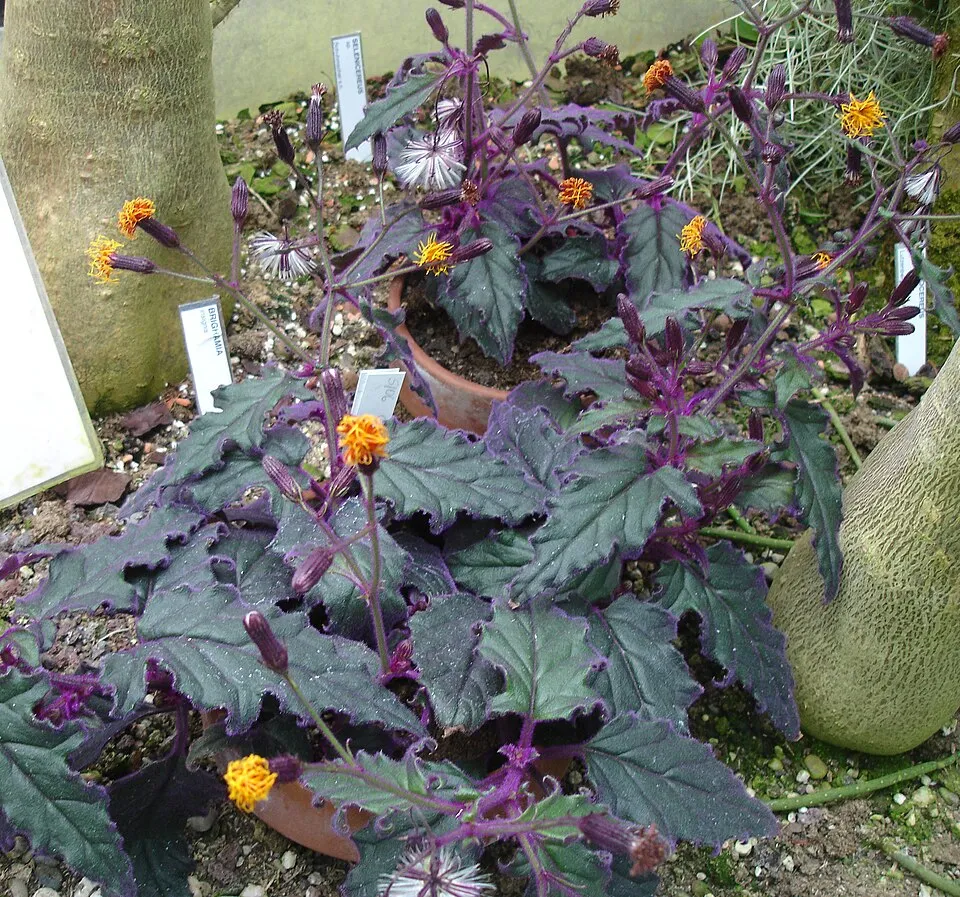
Gynura aurantiaca, popularly known as the velvet plant or purple passion plant, is a captivating perennial herb renowned for its striking ornamental appeal. This member of the Asteraceae family typically achieves a height of 30 to 60 cm (1 to 2 feet) and is characterized by its lush, ovate leaves. These leaves, which can span 10 to 15 cm (4 to 6 inches) in length, exhibit a unique velvety texture and a vibrant green upper surface, dramatically contrasted by their deep purple undersides.
The plant's visual allure is further enhanced by its small, tubular flowers, typically appearing in clusters and displaying a bright yellow or orange hue. Its stems are succulent, smooth, and green, contributing to its overall verdant appearance. Native to tropical regions of South-East Asia, Gynura aurantiaca flourishes in environments with well-drained soil rich in organic matter.
While highly prized as an indoor ornamental, its robust morphology and distinct coloration also hint at its potential traditional uses, making it a subject of interest beyond its aesthetic value. Its ease of cultivation in controlled indoor settings has solidified its status as a favorite among plant enthusiasts globally.
Trusted Scientific References
1. Authoritative external sources for Gynura aurantiaca
1.1 Wikipedia — Gynura aurantiaca
1.2 Kew POWO (Plants of the World Online)
1.3 PubMed — peer-reviewed research
1.4 NCBI Taxonomy Browser
1.5 GBIF — Global Biodiversity
1.6Gynura Aurantiaca should be interpreted through verified botanical identity, practical care, and responsible safety language. This recovery note adds the missing context needed for a complete profile: match light to the plant's habit, use well-drained soil, water according to season, and avoid unsupported medicinal or edible claims. For publishing, the plant can be presented as a source-backed indoor plant with clear care guidance, common problem diagnosis, and conservative safety wording.
1.7Gynura Aurantiaca (Gynura aurantiaca) is maintained in this recovery file as a complete indoor profile with practical care, safety, and identification context. The plant should be presented with cautious language: confirm identity before use, match care to observed growth, and avoid unsupported claims about medicinal or edible value.
1.1.Gynura Aurantiaca — Key Features
- ✓ <strong>Distinctive Velvety Foliage</strong> — Leaves are covered in fine purple hairs, giving them a unique texture and iridescent appearance.
- ✓ <strong>Vibrant Purple Undersides</strong> — A hallmark characteristic is the dramatic deep purple coloration on the underside of the leaves.
- ✓ <strong>Ornamental Appeal</strong> — Highly valued as an indoor houseplant for its striking visual impact.
- ✓ <strong>Traditional Medicinal Uses</strong> — Employed in various folk medicine systems for its health-supporting properties.
- ✓ <strong>Edible Leaves</strong> — Young leaves can be consumed as a leafy green vegetable in moderation.
- ✓ <strong>Easy to Cultivate</strong> — Considered relatively low-maintenance and adaptable to indoor environments.
- ✓ <strong>Yellow/Orange Flowers</strong> — Produces small, tubular flowers, though they can have an unpleasant aroma.
- ✓ <strong>Member of Asteraceae Family</strong> — Belongs to a large and diverse family known for many medicinal and edible plants.
- ✓ <strong>Succulent Stems</strong> — Features smooth, green, somewhat succulent stems, indicative of its tropical origins.
1.2.Gynura Aurantiaca — Quick Summary
- ✓ Gynura aurantiaca, the velvet plant, is an ornamental perennial from South-East Asia.
- ✓ Features striking green leaves with deep purple undersides and a velvety texture.
- ✓ Traditionally used for its potential diuretic, liver-supporting, and nutritional benefits.
- ✓ Requires bright indirect light, moderate watering, and warm temperatures for optimal growth.
- ✓ Contains beneficial compounds like flavonoids, phenolic acids, vitamins, and minerals.
- ✓ Generally safe in small culinary amounts, but large consumption may cause mild GI upset.
2.Gynura Aurantiaca — Scientific Identity
3.Gynura Aurantiaca — Quick Facts
4.Gynura Aurantiaca — Appearance & Identification
5.Gynura Aurantiaca — Native Habitat
6.Gynura Aurantiaca — Water Requirements
- ✓ Light — Provide bright, indirect light; direct sun can scorch leaves, while insufficient light diminishes purple coloration.
- ✓ Watering — Water regularly during spring and summer, keeping soil slightly damp; reduce watering in winter to prevent root rot.
- ✓ Humidity — Prefers moderate humidity; use a pebble tray or humidifier, but avoid misting leaves directly as they can become waterlogged.
- ✓ Temperature — Thrives in warm temperatures between 15-24°C (60-75°F); protect from extreme temperature fluctuations and drafts.
- ✓ Soil — Use well-drained potting mix enriched with organic matter to support healthy growth.
- ✓ Fertilization — Feed with a balanced, all-purpose liquid fertilizer at half strength twice a month during growing seasons, reducing to monthly in winter.
- ✓ Pruning — Pinch back leggy stems to encourage bushier growth and remove flowers if their strong odor is undesirable or to prolong leaf vibrancy.
- ✓ Propagation — Easily propagated from stem cuttings, which can be rooted in water or moist soil.
Reviewed by the Flora Medical Global Botanical Review Panel
Multi-disciplinary editorial group · Botany · Ethnobotany · Herbal-medicine literature
Who reviewed this: This page was checked by the Flora Medical Global Botanical Review Panel — an in-house editorial group of botany graduates, ethnobotany researchers, and horticulture practitioners who collectively maintain our 7,000+ plant encyclopedia. Meet the team.
Our 4-step verification process
1. Taxonomic verification
Scientific names and synonyms cross-checked against Kew POWO, World Flora Online, and The Plant List.
2. Phytochemical & medicinal cross-reference
Active compounds, traditional uses, and reported activities are cross-referenced with PubMed, USDA Dr. Duke's database, and peer-reviewed ethnobotanical literature.
3. Conservation & distribution check
Distribution, ecology, and conservation status confirmed against GBIF occurrence records and the IUCN Red List.
4. Editorial & safety review
Every entry passes an editorial pass for clarity, originality, and safety notices (toxicity, contraindications, dosage caveats) before publication.
Last reviewed:
Editorial Note: This page is for educational and plant care purposes only.
Written by: Flora Medical Global Editorial Team
Reviewed by: Flora Medical Global Botanical Review Panel
Last Updated: June 15, 2026







Gynura Aurantiaca — Comments & Community Reviews
Rate this plant