
Care Disclaimer: Plant care recommendations are general guidelines based on common growing conditions. Individual results may vary based on your local environment, climate, and care routine. If your plant is toxic, keep it away from children and pets, and consult a veterinarian if accidental ingestion occurs.
1.Haworthia Cooperi — Overview
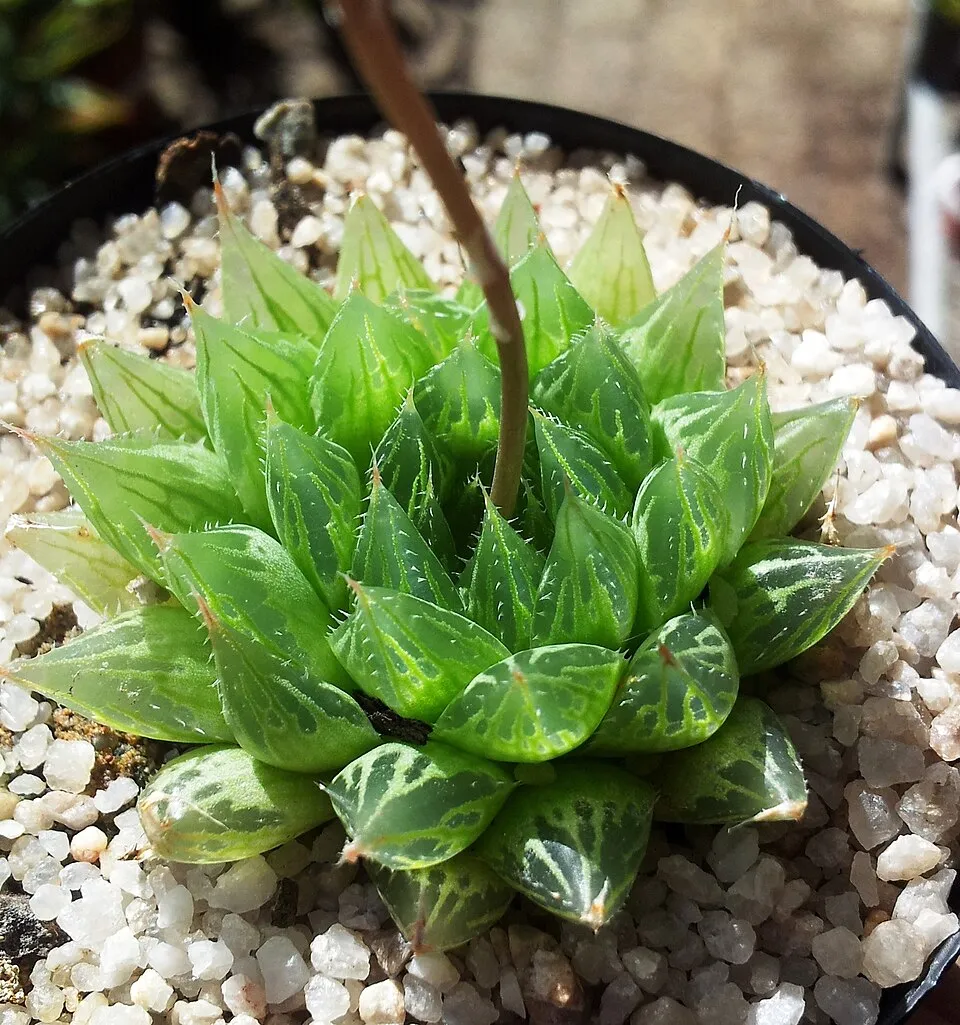
Haworthia cooperi, a captivating member of the Asphodelaceae family, is a small, compact succulent highly prized for its unique aesthetic appeal and resilience in indoor environments. This charming plant typically forms rosettes of thick, fleshy leaves, each measuring about 4 to 7 centimeters in length. A defining characteristic of Haworthia cooperi is the distinct translucent, window-like markings at the tapered tips of its leaves, which are a remarkable adaptation allowing light to penetrate to the photosynthetic tissues deep within the leaf, especially crucial in its native, often shaded, habitats.
The leaves vary from dark green to a bluish-green hue, influenced by light exposure, providing an attractive contrast to the creamy white, small tubular flowers that occasionally emerge on slender, elongated spikes up to 30 centimeters tall during the summer months. Native to the arid regions of South Africa, Haworthia cooperi is exceptionally well-adapted to drought conditions, thriving in well-drained soil and preferring bright, indirect sunlight. Its robust nature and minimal care requirements have cemented its popularity among houseplant enthusiasts, making it an excellent choice for terrariums, minimalist interior designs, and as a low-maintenance tabletop ornament.
Its classification within the Haworthia subgenus highlights its close botanical relationship to other popular succulent species.
Trusted Scientific References
1. Authoritative external sources for Haworthia cooperi
1.1 Wikipedia — Haworthia cooperi
1.2 Kew POWO (Plants of the World Online)
1.3 PubMed — peer-reviewed research
1.4 NCBI Taxonomy Browser
1.5 GBIF — Global Biodiversity
1.6Haworthia Cooperi should be interpreted through verified botanical identity, practical care, and responsible safety language. This recovery note adds the missing context needed for a complete profile: match light to the plant's habit, use well-drained soil, water according to season, and avoid unsupported medicinal or edible claims. For publishing, the plant can be presented as a source-backed indoor plant with clear care guidance, common problem diagnosis, and conservative safety wording.
1.1.Haworthia Cooperi — Key Features
- ✓ <strong>Translucent 'window' leaves</strong> — Unique leaf tips that allow light penetration for efficient photosynthesis.
- ✓ <strong>Compact rosette form</strong> — Grows in a tight, symmetrical rosette, ideal for small spaces and decorative arrangements.
- ✓ <strong>Low maintenance</strong> — Requires minimal care, making it suitable for beginners and busy individuals.
- ✓ <strong>Non</strong> — toxic to pets and humans — Safe for homes with animals and children.
- ✓ <strong>Drought tolerant</strong> — Highly adapted to arid conditions, forgiving of infrequent watering.
- ✓ <strong>Ornamental appeal</strong> — Highly decorative, enhancing modern interior aesthetics with its sculptural form.
- ✓ <strong>Air purification (minor)</strong> — Contributes subtly to cleaner indoor air quality by absorbing some pollutants.
- ✓ <strong>Resilient and adaptable</strong> — Thrives in various indoor conditions, demonstrating strong survival capabilities.
- ✓ <strong>Slow growing</strong> — Maintains its compact size and shape for extended periods with minimal pruning.
- ✓ <strong>Native to South Africa</strong> — Originates from the arid regions of Southern Africa, influencing its care requirements.
1.2.Haworthia Cooperi — Quick Summary
- ✓ Haworthia cooperi is a compact, ornamental succulent known for its translucent, fleshy leaves.
- ✓ It is highly valued for its low maintenance and aesthetic appeal in indoor settings.
- ✓ Considered non-toxic to humans and pets, making it a safe houseplant choice.
- ✓ Symbolizes resilience, purity, and calm, contributing to a tranquil home environment.
- ✓ While primarily ornamental, related succulents have traditional topical uses for skin soothing.
- ✓ Thrives in bright, indirect light and well-draining soil, requiring infrequent watering.
2.Haworthia Cooperi — Scientific Identity
3.Haworthia Cooperi — Quick Facts
4.Haworthia Cooperi — Appearance & Identification
5.Haworthia Cooperi — Native Habitat
6.Haworthia Cooperi — Water Requirements
- ✓ Light — Provide bright, indirect sunlight; avoid prolonged exposure to harsh direct sun, which can scorch the translucent leaves.
- ✓ Soil — Utilize a well-draining succulent or cactus potting mix, ensuring excellent aeration to prevent root rot.
- ✓ Watering — Water thoroughly when the soil is completely dry to the touch, then allow it to dry out fully before the next watering cycle, typically every 2-4 weeks depending on climate.
- ✓ Temperature — Maintain average room temperatures, ideally between 18-24°C (65-75°F); protect from frost as it is not cold-hardy.
- ✓ Humidity — Tolerates average to low indoor humidity levels; excessive humidity can lead to fungal issues or rot.
- ✓ Fertilization — Fertilize sparingly during the active growing season (spring and summer) with a diluted succulent-specific liquid fertilizer.
- ✓ Propagation — Easily propagated from offsets (pups) that grow around the base of the parent plant, or by carefully detached leaf cuttings, allowing them to callus before planting.
- ✓ Repotting — Repot only when the plant becomes root-bound, typically every 2-3 years, using fresh, well-draining soil and a slightly larger pot.
Reviewed by the Flora Medical Global Botanical Review Panel
Multi-disciplinary editorial group · Botany · Ethnobotany · Herbal-medicine literature
Who reviewed this: This page was checked by the Flora Medical Global Botanical Review Panel — an in-house editorial group of botany graduates, ethnobotany researchers, and horticulture practitioners who collectively maintain our 7,000+ plant encyclopedia. Meet the team.
Our 4-step verification process
1. Taxonomic verification
Scientific names and synonyms cross-checked against Kew POWO, World Flora Online, and The Plant List.
2. Phytochemical & medicinal cross-reference
Active compounds, traditional uses, and reported activities are cross-referenced with PubMed, USDA Dr. Duke's database, and peer-reviewed ethnobotanical literature.
3. Conservation & distribution check
Distribution, ecology, and conservation status confirmed against GBIF occurrence records and the IUCN Red List.
4. Editorial & safety review
Every entry passes an editorial pass for clarity, originality, and safety notices (toxicity, contraindications, dosage caveats) before publication.
Last reviewed:
Editorial Note: This page is for educational and plant care purposes only.
Written by: Flora Medical Global Editorial Team
Reviewed by: Flora Medical Global Botanical Review Panel
Last Updated: June 15, 2026







Haworthia Cooperi — Comments & Community Reviews
Rate this plant