
Care Disclaimer: Plant care recommendations are general guidelines based on common growing conditions. Individual results may vary based on your local environment, climate, and care routine. If your plant is toxic, keep it away from children and pets, and consult a veterinarian if accidental ingestion occurs.
1.Hoya Carnosa Compacta — Overview
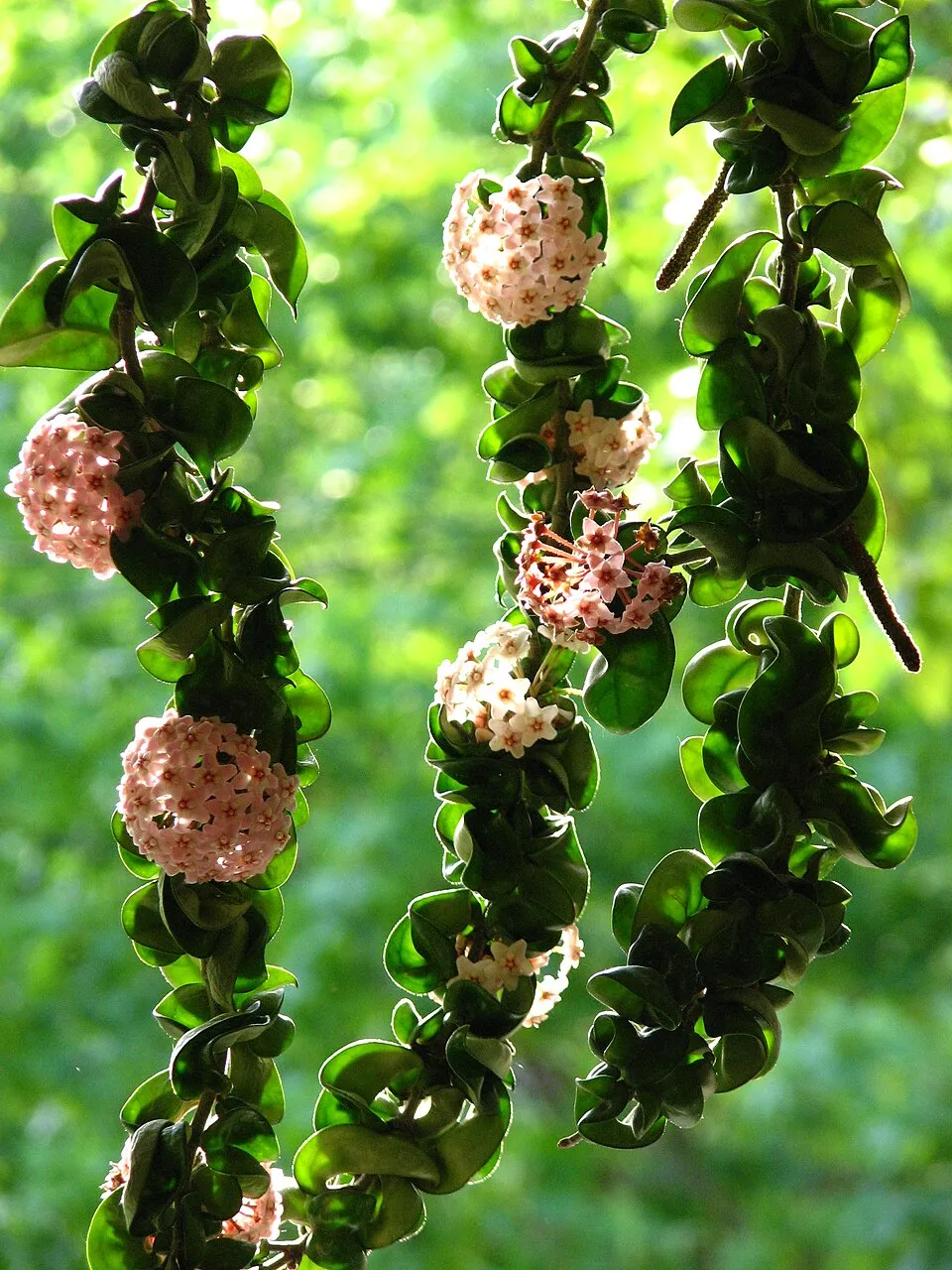
Hoya carnosa compacta, widely recognized as the Hindu Rope Plant or Krinkle Kurl Hoya, is an aesthetically distinct cultivar of the classic Hoya carnosa, belonging to the Apocynaceae family. This semi-succulent evergreen vine is celebrated for its uniquely thick, curled, and twisted leaves, which form dense, rope-like strands. Each glossy, dark green leaf typically measures between 2 to 4 inches in length and 1 to 2 inches in width, exhibiting a prominent waxy cuticle that aids in water retention, characteristic of many succulent species.
The plant's growth habit is trailing or climbing, reaching lengths of 1 to 3 feet when mature, making it an ideal candidate for hanging baskets or trellises. Under optimal conditions, this captivating Hoya produces clusters of delicate, star-shaped flowers, often appearing in shades of waxy pink or white with a darker center. These fragrant blooms, typically 0.5 to 1 inch across, emerge from mature stems called peduncles, which should not be removed as they re-bloom annually.
Native to tropical Asia, Hoya carnosa compacta thrives in warm, humid environments with bright, indirect light and well-draining soil, reflecting its epiphytic tendencies in its natural habitat where it often grows on trees. Its taxonomic placement within the Apocynaceae family, known for its diverse genera including milkweeds and oleanders, highlights its intricate floral structures and sap-producing characteristics.
Trusted Scientific References
1. Authoritative external sources for Hoya carnosa compacta
1.1 Wikipedia — Hoya carnosa compacta
1.2 Kew POWO (Plants of the World Online)
1.3 PubMed — peer-reviewed research
1.4 NCBI Taxonomy Browser
1.5 GBIF — Global Biodiversity
1.6Hoya Carnosa Compacta should be interpreted through verified botanical identity, practical care, and responsible safety language. This recovery note adds the missing context needed for a complete profile: match light to the plant's habit, use well-drained soil, water according to season, and avoid unsupported medicinal or edible claims. For publishing, the plant can be presented as a source-backed indoor plant with clear care guidance, common problem diagnosis, and conservative safety wording.
1.1.Hoya Carnosa Compacta — Key Features
- ✓ <strong>Distinctive Twisted Foliage</strong> — Leaves are curled and crinkled, creating a 'rope-like' appearance.
- ✓ <strong>Waxy, Succulent Leaves</strong> — Thick, glossy, dark green leaves with a waxy texture for water retention.
- ✓ <strong>Fragrant Star</strong> — Shaped Flowers — Produces clusters of waxy pink or white, sweet-smelling blooms.
- ✓ <strong>Air Purifying Qualities</strong> — Contributes to cleaner indoor air by absorbing toxins and releasing oxygen.
- ✓ <strong>Low Maintenance Houseplant</strong> — Relatively easy to care for, suitable for beginners.
- ✓ <strong>Epiphytic Growth Habit</strong> — Naturally grows on other plants in its native tropical habitat.
- ✓ <strong>Trailing or Climbing Vine</strong> — Ideal for hanging baskets or trained on supports.
- ✓ <strong>Long</strong> — Lived Perennial — Can thrive indoors for many years with proper care.
- ✓ <strong>Drought Tolerant</strong> — Semi-succulent nature allows it to withstand periods of dryness.
- ✓ <strong>Unique Ornamental Value</strong> — Highly prized for its unusual and attractive appearance.
1.2.Hoya Carnosa Compacta — Quick Summary
- ✓ Unique twisted, waxy foliage for ornamental appeal.
- ✓ Fragrant, star-shaped flowers emerge from peduncles.
- ✓ Contributes to indoor air purification and humidity.
- ✓ Requires bright, indirect light and well-draining soil.
- ✓ Mildly toxic if ingested, sap can cause skin irritation.
- ✓ Easy to care for, making it popular for indoor gardening.
2.Hoya Carnosa Compacta — Scientific Identity
3.Hoya Carnosa Compacta — Quick Facts
4.Hoya Carnosa Compacta — Appearance & Identification
5.Hoya Carnosa Compacta — Native Habitat
6.Hoya Carnosa Compacta — Water Requirements
- ✓ Light — Provide bright, indirect light for at least six hours daily; avoid prolonged direct afternoon sun to prevent leaf scorching.
- ✓ Soil — Use a fast-draining, airy potting mix, ideally amended with perlite and orchid bark to ensure excellent drainage and aeration.
- ✓ Watering — Water deeply when the top few inches of soil are completely dry; reduce frequency significantly during winter months.
- ✓ Humidity — Maintain moderate to high humidity levels; consider a humidifier or pebble tray, especially in dry indoor environments.
- ✓ Temperature — Keep consistently warm, well above 50°F (10°C); protect from sudden temperature fluctuations and cold drafts.
- ✓ Fertilization — Feed every couple of months during spring and summer with a light, potassium-rich fertilizer to encourage blooming.
- ✓ Pruning — Lightly prune in spring to remove leggy stems or dead growth, but avoid cutting off the peduncles where flowers emerge.
- ✓ Repotting — Repot infrequently, as Hoya carnosa compacta prefers to be root-bound; choose a slightly larger pot with good drainage only when necessary.
Reviewed by the Flora Medical Global Botanical Review Panel
Multi-disciplinary editorial group · Botany · Ethnobotany · Herbal-medicine literature
Who reviewed this: This page was checked by the Flora Medical Global Botanical Review Panel — an in-house editorial group of botany graduates, ethnobotany researchers, and horticulture practitioners who collectively maintain our 7,000+ plant encyclopedia. Meet the team.
Our 4-step verification process
1. Taxonomic verification
Scientific names and synonyms cross-checked against Kew POWO, World Flora Online, and The Plant List.
2. Phytochemical & medicinal cross-reference
Active compounds, traditional uses, and reported activities are cross-referenced with PubMed, USDA Dr. Duke's database, and peer-reviewed ethnobotanical literature.
3. Conservation & distribution check
Distribution, ecology, and conservation status confirmed against GBIF occurrence records and the IUCN Red List.
4. Editorial & safety review
Every entry passes an editorial pass for clarity, originality, and safety notices (toxicity, contraindications, dosage caveats) before publication.
Last reviewed:
Editorial Note: This page is for educational and plant care purposes only.
Written by: Flora Medical Global Editorial Team
Reviewed by: Flora Medical Global Botanical Review Panel
Last Updated: June 15, 2026







Hoya Carnosa Compacta — Comments & Community Reviews
Rate this plant