
Care Disclaimer: Plant care recommendations are general guidelines based on common growing conditions. Individual results may vary based on your local environment, climate, and care routine. If your plant is toxic, keep it away from children and pets, and consult a veterinarian if accidental ingestion occurs.
1.Hoya Krohniana — Overview
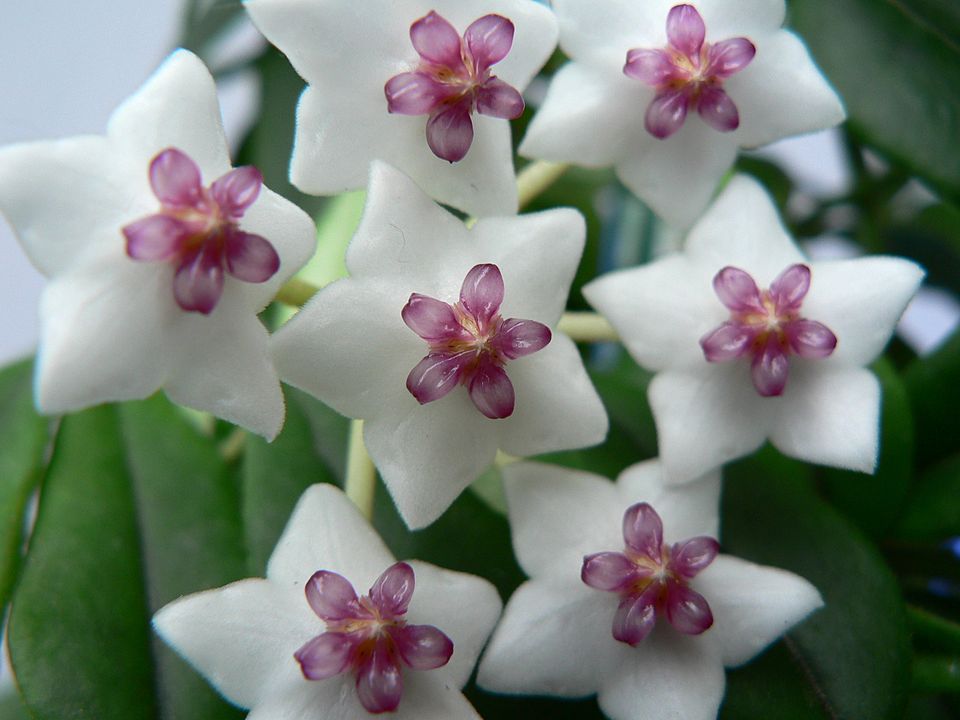
Hoya krohniana, affectionately known as the 'Heart-Leaf Lacunosa' before its distinct taxonomic recognition, is an enchanting species of wax plant native to the lush tropical rainforests of the Philippines. This vining epiphyte naturally clings to trees, showcasing a graceful trailing habit that also lends itself well to trellising in cultivation. Its most distinguishing feature lies in its small, thick, and fleshy leaves, typically measuring 2-4 cm in length, which are distinctly ovate to cordate, giving them a charming heart-shaped appearance.
The foliage is usually a deep, dark green, often adorned with attractive splashes or flecks of silver or white, notably prominent in the 'Eskimo' cultivar. These thick leaves serve as water storage, allowing the plant to endure brief dry spells, a characteristic often indicative of its lowland rainforest origins rather than constantly damp montane environments. Hoya krohniana produces delicate clusters (umbels) of small, star-shaped flowers, predominantly white or cream-colored, with a characteristic waxy texture that gives the genus its common name.
These blooms are particularly prized for their delightful fragrance, which intensifies during the evenings, adding a sensory dimension to its ornamental appeal. As a popular choice for indoor cultivation, its manageable size, attractive foliage, and relatively quick blooming make it a favored specimen among plant enthusiasts.
Trusted Scientific References
1. Authoritative external sources for Hoya krohniana
1.1 Wikipedia — Hoya krohniana
1.2 Kew POWO (Plants of the World Online)
1.3 PubMed — peer-reviewed research
1.4 NCBI Taxonomy Browser
1.5 GBIF — Global Biodiversity
1.6Hoya Krohniana should be interpreted through verified botanical identity, practical care, and responsible safety language. This recovery note adds the missing context needed for a complete profile: match light to the plant's habit, use well-drained soil, water according to season, and avoid unsupported medicinal or edible claims. For publishing, the plant can be presented as a source-backed indoor plant with clear care guidance, common problem diagnosis, and conservative safety wording.
1.1.Hoya Krohniana — Key Features
- ✓ <strong>Heart</strong> — shaped Leaves — Distinctive small, thick, ovate to cordate foliage, often with silver flecks.
- ✓ <strong>Epiphytic Vine</strong> — Naturally grows on other plants in its native Philippine habitat.
- ✓ <strong>Waxy Flowers</strong> — Star-shaped, white to cream blooms with a characteristic waxy texture.
- ✓ <strong>Evening Fragrance</strong> — Flowers emit a delightful scent, particularly pronounced after dusk.
- ✓ <strong>Easy Indoor Cultivation</strong> — Popular choice for houseplant enthusiasts due to its manageable care requirements.
- ✓ <strong>Fast Growing</strong> — Known for relatively quick growth and early blooming compared to some Hoya species.
- ✓ <strong>Adaptable Foliage</strong> — Thick leaves indicate water storage capacity, aiding drought tolerance.
- ✓ <strong>Native to the Philippines</strong> — Endemic to the tropical islands, thriving in warm, humid conditions.
- ✓ <strong>Apocynaceae Family Member</strong> — Part of a diverse botanical family known for unique phytochemicals.
- ✓ <strong>'Eskimo' Variety</strong> — A popular cultivar featuring heavily silver-splashed leaves.
1.2.Hoya Krohniana — Quick Summary
- ✓ Ornamental Wax Plant — Popular houseplant known for its vining habit and attractive, heart-shaped foliage.
- ✓ Native to Philippines — Thrives as an epiphyte in tropical rainforest environments.
- ✓ Fragrant White Flowers — Produces small, star-shaped, waxy blooms with a delightful evening scent.
- ✓ Requires Bright Indirect Light — Prefers well-draining soil and consistent humidity for optimal growth.
- ✓ No Documented Medicinal Use — Primarily cultivated for aesthetic appeal; potential toxicity if ingested.
- ✓ Belongs to Apocynaceae Family — Known for diverse phytochemicals, including cardiac glycosides.
2.Hoya Krohniana — Scientific Identity
3.Hoya Krohniana — Quick Facts
4.Hoya Krohniana — Appearance & Identification
5.Hoya Krohniana — Native Habitat
6.Hoya Krohniana — Water Requirements
- Hoya krohniana is a relatively easy-to-grow houseplant, thriving with consistent care:
- ✓ Potting Medium — Use a well-draining, airy substrate, such as a peat-based mix, an orchid mix with added perlite, or a specialized epiphytic potting blend to prevent root rot.
- ✓ Light Requirements — Prefers bright, indirect light. An east or west-facing window is ideal, providing a few hours of gentle morning or late afternoon sun, which can encourage blooming.
- ✓ Watering Schedule — Water thoroughly when the top 1-2 inches of soil feel dry, or when the thick leaves begin to soften or show slight wrinkling, indicating water storage depletion.
- ✓ Humidity Levels — Appreciates higher humidity, typically above 60%. Use a humidifier or pebble tray to prevent crispy vine tips and maintain overall plant vigor.
- ✓ Temperature Range — Thrives in average household temperatures, ideally between 68-75°F (20-24°C). Avoid prolonged exposure to temperatures below 60°F (15°C).
- ✓ Fertilization — Fertilize lightly once a month during the active growing season (spring and summer) with a balanced liquid fertilizer, flushing with plain water periodically to prevent salt buildup.
- ✓ Support & Training — As a vining plant, it can be grown in hanging baskets to trail or trained on a small trellis for vertical growth.
- ✓ Propagation — Easily propagated from stem cuttings, which can be rooted in water or a moist, well-draining substrate.
Reviewed by the Flora Medical Global Botanical Review Panel
Multi-disciplinary editorial group · Botany · Ethnobotany · Herbal-medicine literature
Who reviewed this: This page was checked by the Flora Medical Global Botanical Review Panel — an in-house editorial group of botany graduates, ethnobotany researchers, and horticulture practitioners who collectively maintain our 7,000+ plant encyclopedia. Meet the team.
Our 4-step verification process
1. Taxonomic verification
Scientific names and synonyms cross-checked against Kew POWO, World Flora Online, and The Plant List.
2. Phytochemical & medicinal cross-reference
Active compounds, traditional uses, and reported activities are cross-referenced with PubMed, USDA Dr. Duke's database, and peer-reviewed ethnobotanical literature.
3. Conservation & distribution check
Distribution, ecology, and conservation status confirmed against GBIF occurrence records and the IUCN Red List.
4. Editorial & safety review
Every entry passes an editorial pass for clarity, originality, and safety notices (toxicity, contraindications, dosage caveats) before publication.
Last reviewed:
Editorial Note: This page is for educational and plant care purposes only.
Written by: Flora Medical Global Editorial Team
Reviewed by: Flora Medical Global Botanical Review Panel
Last Updated: June 15, 2026







Hoya Krohniana — Comments & Community Reviews
Rate this plant