

Care Disclaimer: Plant care recommendations are general guidelines based on common growing conditions. Individual results may vary based on your local environment, climate, and care routine. If your plant is toxic, keep it away from children and pets, and consult a veterinarian if accidental ingestion occurs.
1.Hoya Mathilde — Overview
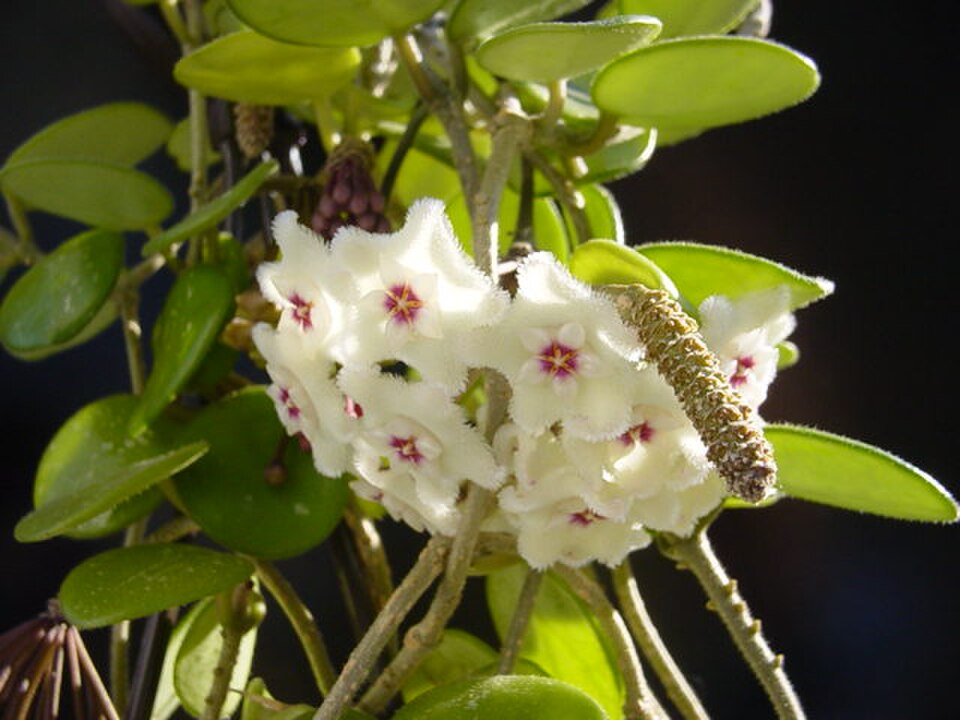
Hoya Mathilde, a captivating cultivar resulting from a cross between Hoya serpens and Hoya carnosa, is an evergreen perennial admired for its aesthetic grace. This hybrid typically exhibits a compact, trailing, or climbing growth habit, making it an ideal choice for hanging baskets or trellises indoors. Its succulent leaves are characteristically thick and waxy, generally oval to elliptical, often displaying a charming splash of silvery variegation across their deep green surface. These leaves usually measure between 2 to 4 inches in length, contributing to its dense, lush appearance.
During its blooming season, typically from spring through summer, Hoya Mathilde produces clusters of small, star-shaped flowers. These exquisite blooms are often pale cream to soft pink, sometimes with a contrasting red center, and possess a delicate, sweet fragrance that can subtly perfume a room. The waxy texture of the flowers is a hallmark of the Hoya genus. While Hoya Mathilde is a cultivated hybrid, its parentage suggests an origin rooted in the tropical and subtropical regions of Southeast Asia, particularly Malaysia and Indonesia, where its wild counterparts thrive in warm, humid forest understories.
Taxonomically, it resides within the Apocynaceae family, a diverse group known for both ornamental and medicinally significant plants. This cultivar is particularly prized for its relatively easy care, thriving in bright, indirect light and moderate humidity, adapting well to typical indoor environments.
Trusted Scientific References
1. Authoritative external sources for Hoya Mathilde
1.1 Wikipedia — Hoya Mathilde
1.2 Kew POWO (Plants of the World Online)
1.3 PubMed — peer-reviewed research
1.4 NCBI Taxonomy Browser
1.5 GBIF — Global Biodiversity
1.6Hoya Mathilde should be interpreted through verified botanical identity, practical care, and responsible safety language. This recovery note adds the missing context needed for a complete profile: match light to the plant's habit, use well-drained soil, water according to season, and avoid unsupported medicinal or edible claims. For publishing, the plant can be presented as a source-backed indoor plant with clear care guidance, common problem diagnosis, and conservative safety wording.
1.1.Hoya Mathilde — Key Features
- ✓ <strong>Hybrid Origin</strong> — A delightful cross between Hoya serpens and Hoya carnosa, combining their best traits.
- ✓ <strong>Compact Growth Habit</strong> — Ideal for indoor spaces, hanging baskets, or small trellises due to its manageable size.
- ✓ <strong>Succulent, Waxy Leaves</strong> — Features thick, oval to elliptical foliage often with attractive silver splash variegation.
- ✓ <strong>Fragrant, Star</strong> — shaped Flowers — Produces clusters of delicate pale cream to pink blooms with a characteristic waxy texture and sweet scent.
- ✓ <strong>Low Maintenance</strong> — Considered relatively easy to care for, making it suitable for both novice and experienced plant enthusiasts.
- ✓ <strong>Air Purifying Qualities</strong> — Contributes to cleaner indoor air by absorbing common pollutants and releasing oxygen.
- ✓ <strong>Stress</strong> — Reducing Presence — Known to enhance mental well-being, promote calm, and reduce stress through biophilic interaction.
- ✓ <strong>Pet</strong> — Friendly (Generally) — Widely regarded as non-toxic to common household pets like cats and dogs.
- ✓ <strong>Adaptable</strong> — Tolerates a range of typical indoor conditions, though it flourishes in specific environments for optimal flowering.
- ✓ <strong>Ornamental Value</strong> — Highly valued for its striking aesthetic appeal, adding a touch of natural elegance to interior decor.
1.2.Hoya Mathilde — Quick Summary
- ✓ Hoya Mathilde is a beautiful, easy-care ornamental hybrid plant.
- ✓ Known for its thick, waxy leaves and fragrant, star-shaped flowers.
- ✓ Contributes to indoor air purification and stress reduction.
- ✓ Thrives in bright, indirect light and moderate humidity.
- ✓ Generally non-toxic to pets, but sap may cause mild skin irritation.
- ✓ An excellent choice for enhancing home aesthetics and well-being.
2.Hoya Mathilde — Scientific Identity
3.Hoya Mathilde — Quick Facts
4.Hoya Mathilde — Appearance & Identification
5.Hoya Mathilde — Native Habitat
6.Hoya Mathilde — Water Requirements
- ✓ Light — Provide bright, indirect light; an east or west-facing window is ideal, avoiding harsh direct sun which can scorch leaves.
- ✓ Watering — Allow the top inch or two of potting mix to dry out completely between waterings; check leaf firmness – soft leaves indicate thirst, firm leaves mean no water needed.
- ✓ Humidity — Prefers moderate to high humidity (60-80% for optimal growth and flowering), though it can tolerate average household humidity (30-40%).
- ✓ Potting Mix — Use a well-draining, airy substrate, ideally an orchid or Hoya-specific mix containing bark, perlite, and a small amount of peat or coco coir.
- ✓ Fertilization — Feed monthly during the growing season (spring and summer) with a balanced, diluted liquid fertilizer or a specialized orchid spray.
- ✓ Temperature — Thrives in warm temperatures, ideally between 65-80°F (18-27°C), avoiding cold drafts or temperatures below 50°F (10°C).
- ✓ Support — As a vining plant, provide a trellis or allow it to trail from a hanging basket to encourage optimal growth and display.
- ✓ Repotting — Repot only when root-bound, typically every 1-2 years, into a pot only slightly larger than the previous one, preferably terracotta for breathability.
Reviewed by the Flora Medical Global Botanical Review Panel
Multi-disciplinary editorial group · Botany · Ethnobotany · Herbal-medicine literature
Who reviewed this: This page was checked by the Flora Medical Global Botanical Review Panel — an in-house editorial group of botany graduates, ethnobotany researchers, and horticulture practitioners who collectively maintain our 7,000+ plant encyclopedia. Meet the team.
Our 4-step verification process
1. Taxonomic verification
Scientific names and synonyms cross-checked against Kew POWO, World Flora Online, and The Plant List.
2. Phytochemical & medicinal cross-reference
Active compounds, traditional uses, and reported activities are cross-referenced with PubMed, USDA Dr. Duke's database, and peer-reviewed ethnobotanical literature.
3. Conservation & distribution check
Distribution, ecology, and conservation status confirmed against GBIF occurrence records and the IUCN Red List.
4. Editorial & safety review
Every entry passes an editorial pass for clarity, originality, and safety notices (toxicity, contraindications, dosage caveats) before publication.
Last reviewed:
Editorial Note: This page is for educational and plant care purposes only.
Written by: Flora Medical Global Editorial Team
Reviewed by: Flora Medical Global Botanical Review Panel
Last Updated: June 15, 2026







Hoya Mathilde — Comments & Community Reviews
Rate this plant