

Care Disclaimer: Plant care recommendations are general guidelines based on common growing conditions. Individual results may vary based on your local environment, climate, and care routine. If your plant is toxic, keep it away from children and pets, and consult a veterinarian if accidental ingestion occurs.
1.Hoya Obovata — Overview
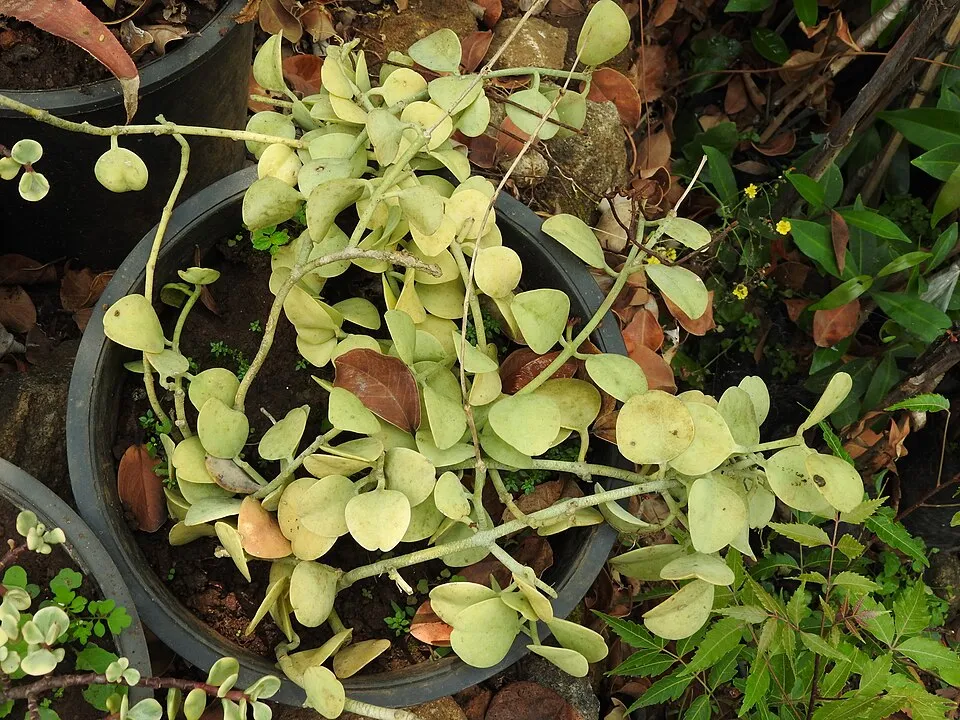
Hoya obovata, often recognized as the round-leaved hoya or wax plant, is an exquisite epiphytic succulent vine thriving within the expansive Apocynaceae family, a diverse botanical group that also encompasses genera like Asclepias and Nerium. This captivating species typically exhibits a graceful trailing or climbing growth habit, extending up to 1-3 feet when cultivated indoors, yet capable of much greater lengths in its native environment by anchoring to host trees. Its distinctive morphology is defined by thick, fleshy, and highly succulent leaves, which are broadly oval to obovate, commonly measuring between 3-5 inches long and 2-4 inches wide. A prominent characteristic of Hoya obovata foliage is the irregular scattering of silvery-white splash markings or flecks across the glossy, waxy lamina, significantly enhancing its ornamental appeal and aiding in moisture retention during drier periods.
The leaf venation, often palmate or subtly pinnate, is recessed into the thick cuticle. Stems are robust and initially green, gradually developing a slightly woody texture with age and frequently exhibiting fine, short hairs. When broken, these stems exude a milky latex sap, a defining feature of the Apocynaceae family. The fibrous root system is expertly adapted for epiphytic existence, developing aerial roots that secure the plant to its support and efficiently absorb atmospheric moisture and nutrients.
Hoya obovata produces stunning star-shaped flowers, typically ranging from a delicate pale pink to pristine white, each adorned with a prominent maroon or deep red corona at its core. These waxy, intensely fragrant blooms are arranged in dense, ball-shaped umbels, with individual flowers approximately 1/2 to 3/4 inch across. Flowering predominantly occurs during the warmer summer months, releasing a sweet, sometimes spicy, fragrance that becomes particularly potent in the evening. This species is native to the tropical and subtropical rainforests of Southeast Asia, with its primary distribution encompassing regions of Indonesia.
Trusted Scientific References
1. Authoritative external sources for Hoya obovata
1.1 Wikipedia — Hoya obovata
1.2 Kew POWO (Plants of the World Online)
1.3 PubMed — peer-reviewed research
1.4 NCBI Taxonomy Browser
1.5 GBIF — Global Biodiversity
1.1.Hoya Obovata — Key Features
- ✓ <strong>Epiphytic Growth Habit</strong> — Naturally grows on other plants, absorbing moisture and nutrients from the air.
- ✓ <strong>Succulent Leaves</strong> — Thick, fleshy, obovate leaves store water, contributing to its drought tolerance.
- ✓ <strong>Silver Splash Variegation</strong> — Unique silvery-white flecks on glossy green foliage enhance ornamental appeal.
- ✓ <strong>Fragrant Waxy Flowers</strong> — Star-shaped, porcelain-like blooms with a sweet, sometimes spicy scent.
- ✓ <strong>Milky Latex Sap</strong> — Characteristic of the Apocynaceae family, exuded when stems are damaged.
- ✓ <strong>Trailing or Climbing Vines</strong> — Adaptable growth habit suitable for hanging baskets or trellises.
- ✓ <strong>Low Maintenance</strong> — Relatively easy to care for, making it popular for both beginners and collectors.
- ✓ <strong>Native to Southeast Asia</strong> — Thrives in tropical and subtropical rainforest conditions.
- ✓ <strong>Non</strong> — Toxic to Pets — Considered safe for households with cats and dogs.
- ✓ <strong>Air Purifying Qualities (Potential)</strong> — May contribute to improved indoor air quality.
1.2.Hoya Obovata — Quick Summary
- ✓ Epiphytic succulent vine with thick, waxy, oval leaves.
- ✓ Distinctive silvery-white splash markings on foliage.
- ✓ Produces fragrant, star-shaped, pale pink to white flowers in umbels.
- ✓ Native to Southeast Asian tropical and subtropical rainforests.
- ✓ Primarily an ornamental houseplant, generally considered non-toxic.
- ✓ Requires bright indirect light, well-draining soil, and infrequent watering.
2.Hoya Obovata — Scientific Identity
3.Hoya Obovata — Quick Facts
4.Hoya Obovata — Appearance & Identification
5.Hoya Obovata — Native Habitat
6.Hoya Obovata — Water Requirements
- ✓ Provide Bright Indirect Light — Hoya obovata thrives in consistent bright, indirect light, mimicking its natural dappled habitat; avoid harsh, direct sunlight to prevent leaf scorch.
- ✓ Use Well-Draining Soil — Plant in an airy, well-draining potting mix, ideally a blend of peat, perlite, and orchid bark, to ensure proper aeration and prevent root rot.
- ✓ Water Infrequently — Allow the soil to dry out thoroughly between waterings, as Hoya obovata is sensitive to overwatering; reduce frequency during fall and winter dormancy.
- ✓ Maintain Stable Temperatures — Ideal temperatures range between 65-75°F (18-24°C); protect from extreme temperature fluctuations, drafts, and direct heat sources.
- ✓ Ensure Adequate Humidity — While adaptable, this epiphytic plant appreciates higher humidity levels and occasional misting, though it can tolerate average household humidity.
- ✓ Fertilize During Growing Season — Apply a balanced liquid fertilizer twice monthly during spring and summer; switch to a higher phosphorus formula to encourage blooming.
- ✓ Prune for Shape and Health — Trim leggy vines or overgrown sections in spring or after blooming, making cuts above a leaf node; promptly remove any yellow or wilted leaves.
Reviewed by the Flora Medical Global Botanical Review Panel
Multi-disciplinary editorial group · Botany · Ethnobotany · Herbal-medicine literature
Who reviewed this: This page was checked by the Flora Medical Global Botanical Review Panel — an in-house editorial group of botany graduates, ethnobotany researchers, and horticulture practitioners who collectively maintain our 7,000+ plant encyclopedia. Meet the team.
Our 4-step verification process
1. Taxonomic verification
Scientific names and synonyms cross-checked against Kew POWO, World Flora Online, and The Plant List.
2. Phytochemical & medicinal cross-reference
Active compounds, traditional uses, and reported activities are cross-referenced with PubMed, USDA Dr. Duke's database, and peer-reviewed ethnobotanical literature.
3. Conservation & distribution check
Distribution, ecology, and conservation status confirmed against GBIF occurrence records and the IUCN Red List.
4. Editorial & safety review
Every entry passes an editorial pass for clarity, originality, and safety notices (toxicity, contraindications, dosage caveats) before publication.
Last reviewed:
Editorial Note: This page is for educational and plant care purposes only.
Written by: Flora Medical Global Editorial Team
Reviewed by: Flora Medical Global Botanical Review Panel
Last Updated: June 15, 2026







Hoya Obovata — Comments & Community Reviews
Rate this plant