

Care Disclaimer: Plant care recommendations are general guidelines based on common growing conditions. Individual results may vary based on your local environment, climate, and care routine. If your plant is toxic, keep it away from children and pets, and consult a veterinarian if accidental ingestion occurs.
1.Janet Craig — Overview
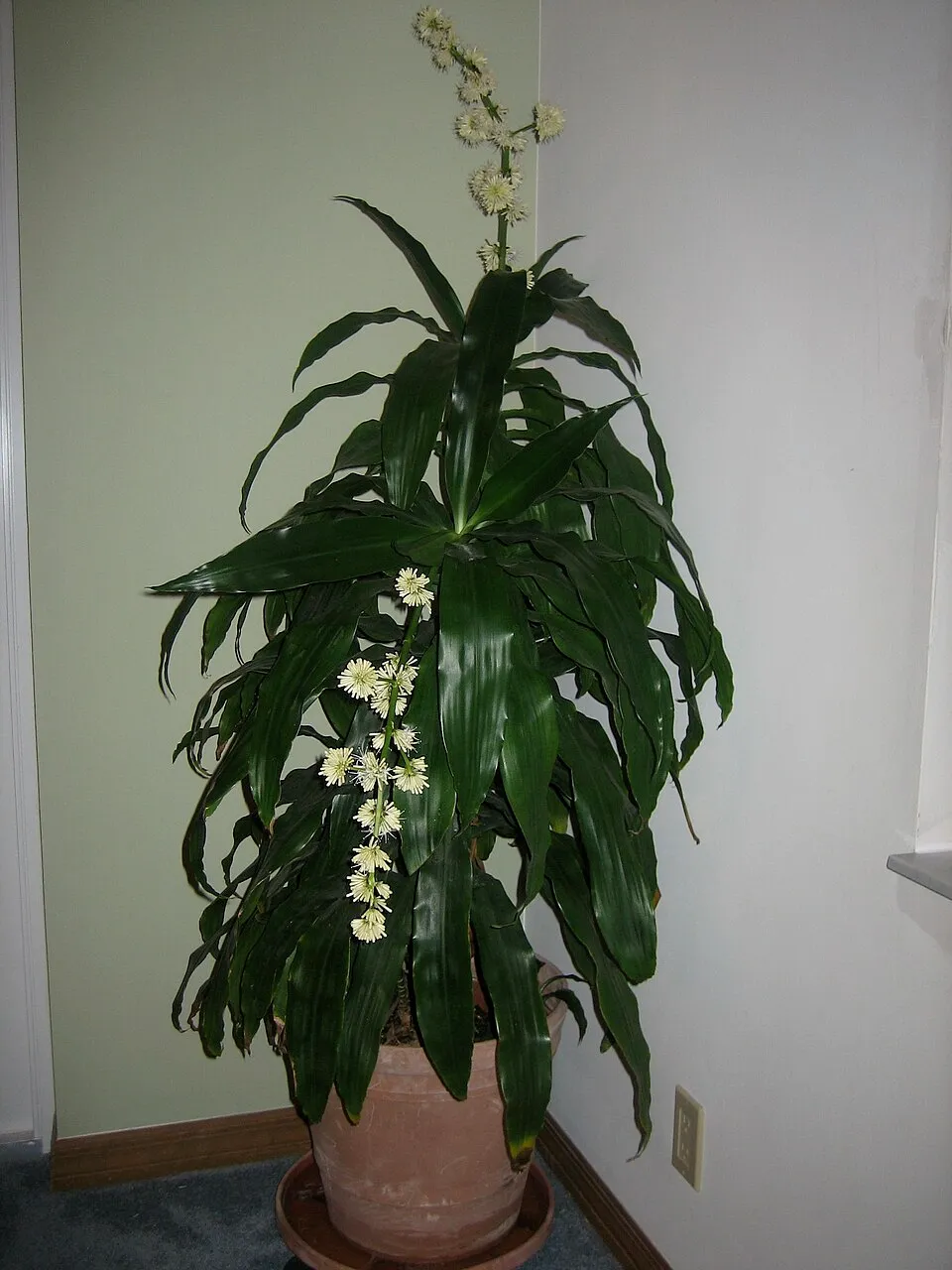
Dracaena deremensis 'Janet Craig', often botanically reclassified as a cultivar of Dracaena fragrans and sometimes referred to as 'Compacta', is a distinguished evergreen perennial within the Asparagaceae family, specifically the Nolinoideae subfamily. This highly regarded cultivar is celebrated for its robust nature and striking, deep green foliage, establishing it as a popular choice in indoor horticulture.
Native to the tropical understory of West Africa, its natural habitat features filtered light and consistent humidity, conditions it readily adapts to indoors.
The plant typically develops an erect, woody stem that can reach impressive heights of 3 to 6 feet (0.9 to 1.8 meters) in cultivated indoor environments, with growth influenced by light, pot size, and overall care. Its most defining characteristic is its long, narrow, lanceolate leaves, which possess a lustrous, dark green hue. These leaves can extend up to 24 inches (60 cm) in length and approximately 3 inches (7.5 cm) in width, often exhibiting subtle lighter green stripes along their margins, enhancing their visual depth.
The parallel venation is characteristic of monocots, and the leaves emerge in a spiral arrangement from the stem's apex, forming a dense, attractive rosette. While primarily grown for its ornamental foliage, 'Janet Craig' can produce small clusters of fragrant, white to pale green flowers, though this is a rare occurrence indoors. These blossoms may be followed by small, orange-red berries.
The root system is fibrous and relatively shallow, making it well-suited for container cultivation.
Trusted Scientific References
1. Authoritative external sources for Dracaena deremensis Janet
1.1 Wikipedia — Dracaena deremensis Janet
1.2 Kew POWO (Plants of the World Online)
1.3 PubMed — peer-reviewed research
1.4 NCBI Taxonomy Browser
1.5 GBIF — Global Biodiversity
1.6Janet Craig should be interpreted through verified botanical identity, practical care, and responsible safety language. This recovery note adds the missing context needed for a complete profile: match light to the plant's habit, use well-drained soil, water according to season, and avoid unsupported medicinal or edible claims. For publishing, the plant can be presented as a source-backed indoor plant with clear care guidance, common problem diagnosis, and conservative safety wording.
1.1.Janet Craig — Key Features
- ✓ <strong>Botanical Name</strong> — Dracaena fragrans 'Compacta' (formerly D. deremensis 'Janet Craig').
- ✓ <strong>Family</strong> — Asparagaceae (subfamily Nolinoideae).
- ✓ <strong>Native Region</strong> — Tropical West Africa, favoring forest understories.
- ✓ <strong>Foliage</strong> — Distinctive deep, lustrous dark green, lanceolate leaves with parallel venation.
- ✓ <strong>Growth Habit</strong> — Characterized by an erect, woody, cane-like stem, forming an attractive rosette of leaves.
- ✓ <strong>Indoor Air Purifier</strong> — Effective against common volatile organic compounds (VOCs) like formaldehyde and benzene.
- ✓ <strong>Light Requirement</strong> — Highly tolerant of low to medium, indirect light conditions, making it ideal for indoor settings.
- ✓ <strong>Water Needs</strong> — Requires infrequent watering, preferring the soil to dry out completely between applications.
- ✓ <strong>Pet Toxicity</strong> — Contains saponins, rendering it toxic to cats and dogs upon ingestion, causing gastrointestinal distress.
- ✓ <strong>Ornamental Value</strong> — Provides high aesthetic appeal, contributing to biophilic design and enhancing indoor environments.
1.2.Janet Craig — Quick Summary
- ✓ Popular low-maintenance indoor foliage plant, known for its deep green leaves.
- ✓ Renowned for its capabilities in purifying indoor air, as supported by NASA research.
- ✓ Features an upright, cane-like stem topped with lush, lanceolate foliage.
- ✓ Highly toxic to domestic pets, specifically cats and dogs, if any part is ingested.
- ✓ Thrives in environments with low to medium, indirect light and consistent humidity.
- ✓ Not documented for traditional or modern internal herbal medicinal uses.
2.Janet Craig — Scientific Identity
3.Janet Craig — Quick Facts
4.Janet Craig — Appearance & Identification
5.Janet Craig — Native Habitat
6.Janet Craig — Water Requirements
- ✓ Light — Dracaena 'Janet Craig' thrives in low to medium, indirect sunlight; direct exposure can lead to leaf scorching and damage.
- ✓ Soil — Requires a well-draining, peat-based potting mix that allows the soil to dry out almost entirely between waterings to prevent root rot.
- ✓ Watering — Water infrequently, typically every seven to ten days, ensuring the soil is dry to the touch; avoid using water softened by salts, which can harm the plant.
- ✓ Temperature & Humidity — Prefers stable indoor temperatures between 65-75°F (18-24°C) and medium to high humidity, benefiting from occasional misting.
- ✓ Fertilization — As a slow-growing plant, it needs minimal fertilizer; feed every three months with a balanced, all-purpose liquid fertilizer at half the recommended strength during the growing season.
- ✓ Pruning — Remove any yellowing or browning lower leaves as they naturally shed; prune to maintain shape or encourage new growth, ideally in spring or summer, using sterile tools.
- ✓ Propagation — Easily propagated from stem cuttings placed in water during early spring; allow several roots to appear before transferring to soil.
- ✓ Repotting — Repotting is infrequent, typically every two years, into a container that is only two inches larger in diameter and slightly deeper than the previous one, using fresh potting mix.
Reviewed by the Flora Medical Global Botanical Review Panel
Multi-disciplinary editorial group · Botany · Ethnobotany · Herbal-medicine literature
Who reviewed this: This page was checked by the Flora Medical Global Botanical Review Panel — an in-house editorial group of botany graduates, ethnobotany researchers, and horticulture practitioners who collectively maintain our 7,000+ plant encyclopedia. Meet the team.
Our 4-step verification process
1. Taxonomic verification
Scientific names and synonyms cross-checked against Kew POWO, World Flora Online, and The Plant List.
2. Phytochemical & medicinal cross-reference
Active compounds, traditional uses, and reported activities are cross-referenced with PubMed, USDA Dr. Duke's database, and peer-reviewed ethnobotanical literature.
3. Conservation & distribution check
Distribution, ecology, and conservation status confirmed against GBIF occurrence records and the IUCN Red List.
4. Editorial & safety review
Every entry passes an editorial pass for clarity, originality, and safety notices (toxicity, contraindications, dosage caveats) before publication.
Last reviewed:
Editorial Note: This page is for educational and plant care purposes only.
Written by: Flora Medical Global Editorial Team
Reviewed by: Flora Medical Global Botanical Review Panel
Last Updated: June 15, 2026







Janet Craig — Comments & Community Reviews
Rate this plant