
Care Disclaimer: Plant care recommendations are general guidelines based on common growing conditions. Individual results may vary based on your local environment, climate, and care routine. If your plant is toxic, keep it away from children and pets, and consult a veterinarian if accidental ingestion occurs.
1.Juncus Effusus Spiralis — Overview
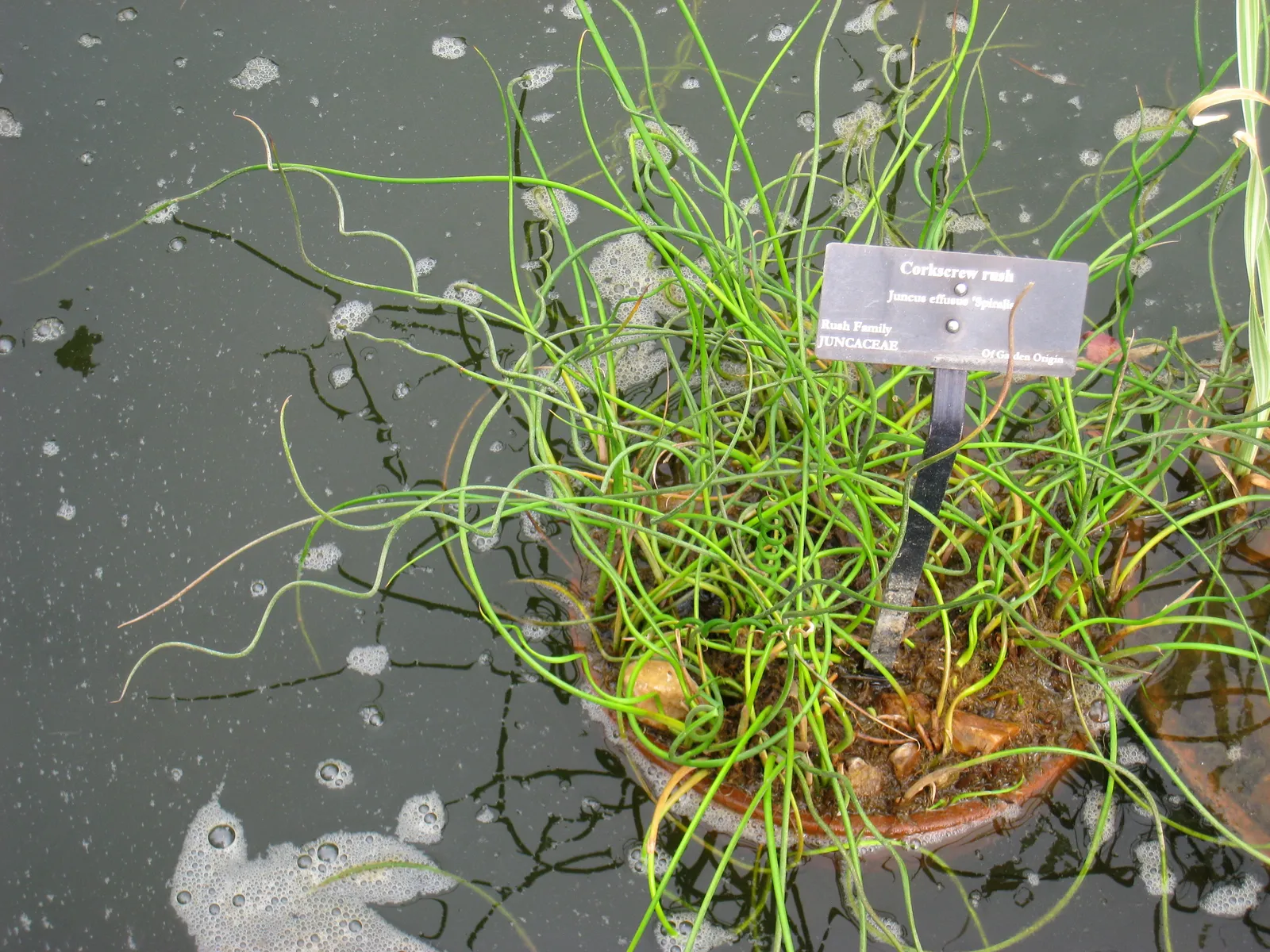
Juncus effusus 'Spiralis', commonly known as the Corkscrew Rush, is a captivating perennial herbaceous plant belonging to the Juncaceae family. This distinctive cultivar of the common rush, Juncus effusus, is celebrated for its unique morphological features. It typically forms dense, upright clumps, reaching heights of 30 to 45 centimeters (12 to 18 inches) and similar widths.
The most striking characteristic of the Corkscrew Rush is its dark green, cylindrical stems, which are devoid of true leaves. Instead, these stems perform photosynthesis and grow in an intriguing, tightly coiled or spiraling fashion, creating a sculptural and architectural display. Each stem is smooth to the touch and can be up to 1 centimeter in diameter.
In late summer, the plant produces inconspicuous, yellowish-green to brownish flowers in small, irregular clusters (cymes) near the stem tips. These small scaly flowers are followed by obovoid capsules as fruit.
Ecologically, Juncus effusus 'Spiralis' thrives in consistently moist to wet conditions, characteristic of its native temperate regions across Europe, North America, and Asia. It is frequently found in wetlands, marshy areas, along stream banks, and at the edges of ponds, often growing with several inches of water over its crown. Taxonomically, it is classified within the order Poales.
While primarily cultivated for its ornamental appeal in water gardens, rain gardens, and as a houseplant, its robust nature also contributes to the biodiversity of aquatic habitats. In warmer climates, it can remain semi-evergreen, but in cooler zones, its foliage typically yellows and dies back to the ground during winter, regrowing in spring.
Trusted Scientific References
1. Authoritative external sources for Juncus effusus Spiralis
1.1 Wikipedia — Juncus effusus Spiralis
1.2 Kew POWO (Plants of the World Online)
1.3 PubMed — peer-reviewed research
1.4 NCBI Taxonomy Browser
1.5 GBIF — Global Biodiversity
1.6Juncus Effusus Spiralis should be interpreted through verified botanical identity, practical care, and responsible safety language. This recovery note adds the missing context needed for a complete profile: match light to the plant's habit, use well-drained soil, water according to season, and avoid unsupported medicinal or edible claims. For publishing, the plant can be presented as a source-backed indoor plant with clear care guidance, common problem diagnosis, and conservative safety wording.
1.1.Juncus Effusus Spiralis — Key Features
- ✓ <strong>Distinctive corkscrew</strong> — like, spiraling green stems.
- ✓ <strong>Perennial herbaceous plant</strong> — Perennial herbaceous plant with a clumping growth habit.
- ✓ <strong>Adaptable to full</strong> — Adaptable to full sun to partial shade conditions.
- ✓ <strong>Thrives in consistently</strong> — Thrives in consistently moist to wet, boggy soils.
- ✓ <strong>Excellent choice for</strong> — Excellent choice for water gardens, rain gardens, and containers.
- ✓ <strong>Suitable as a unique and low</strong> — maintenance houseplant.
- ✓ <strong>Produces inconspicuous, small</strong> — Produces inconspicuous, small brownish flowers in summer.
- ✓ <strong>Native to temperate</strong> — Native to temperate regions across multiple continents.
- ✓ <strong>Contributes to local biodiversity in aquatic and semi</strong> — aquatic habitats.
- ✓ <strong>Known for its</strong> — Known for its potential to act as a natural indoor air purifier.
1.2.Juncus Effusus Spiralis — Quick Summary
- ✓ Unique spiraling stems make it a distinctive ornamental plant.
- ✓ Thrives in wet, boggy conditions, ideal for water gardens and containers.
- ✓ Low-maintenance and easy to grow, suitable for indoor environments.
- ✓ Traditional uses of *related Juncus species* include diuretic, anti-inflammatory, and calming effects.
- ✓ Primarily valued for its aesthetic appeal and environmental benefits like air purification.
2.Juncus Effusus Spiralis — Scientific Identity
3.Juncus Effusus Spiralis — Quick Facts
4.Juncus Effusus Spiralis — Appearance & Identification
5.Juncus Effusus Spiralis — Native Habitat
6.Juncus Effusus Spiralis — Water Requirements
- ✓ Site Selection — Prefers full sun (6+ hours direct sunlight) but tolerates partial shade (2-6 hours).
- ✓ Soil Requirements — Thrives in consistently moist, boggy, or wet soils; adaptable to clay, loam, or sand textures with neutral pH (6.0-8.0).
- ✓ Water Management — Requires abundant water; can grow with 1 to 6 inches of water over its crown, making it ideal for water gardens or boggy sites.
- ✓ Container Growing — Excellent as a container plant or houseplant; use pots 2 gallons or larger to accommodate its clumping habit.
- ✓ Propagation — Primarily propagated by division of its rhizomes, which helps manage its spread, especially when planted directly in the ground.
- ✓ Spread Control — To limit self-seeding and spread, keep plants in pots or sink potted plants into the ground with the lip above soil level.
- ✓ Winter Care — In zones 5a-11b, it can be semi-evergreen; in cooler climates, foliage may yellow and die back, requiring trimming in spring.
- ✓ Maintenance — Considered low-maintenance, requiring consistent moisture and occasional division to maintain vigor.
Reviewed by the Flora Medical Global Botanical Review Panel
Multi-disciplinary editorial group · Botany · Ethnobotany · Herbal-medicine literature
Who reviewed this: This page was checked by the Flora Medical Global Botanical Review Panel — an in-house editorial group of botany graduates, ethnobotany researchers, and horticulture practitioners who collectively maintain our 7,000+ plant encyclopedia. Meet the team.
Our 4-step verification process
1. Taxonomic verification
Scientific names and synonyms cross-checked against Kew POWO, World Flora Online, and The Plant List.
2. Phytochemical & medicinal cross-reference
Active compounds, traditional uses, and reported activities are cross-referenced with PubMed, USDA Dr. Duke's database, and peer-reviewed ethnobotanical literature.
3. Conservation & distribution check
Distribution, ecology, and conservation status confirmed against GBIF occurrence records and the IUCN Red List.
4. Editorial & safety review
Every entry passes an editorial pass for clarity, originality, and safety notices (toxicity, contraindications, dosage caveats) before publication.
Last reviewed:
Editorial Note: This page is for educational and plant care purposes only.
Written by: Flora Medical Global Editorial Team
Reviewed by: Flora Medical Global Botanical Review Panel
Last Updated: June 15, 2026







Juncus Effusus Spiralis — Comments & Community Reviews
Rate this plant