
Care Disclaimer: Plant care recommendations are general guidelines based on common growing conditions. Individual results may vary based on your local environment, climate, and care routine. If your plant is toxic, keep it away from children and pets, and consult a veterinarian if accidental ingestion occurs.
1.Lithops Aucampiae — Overview
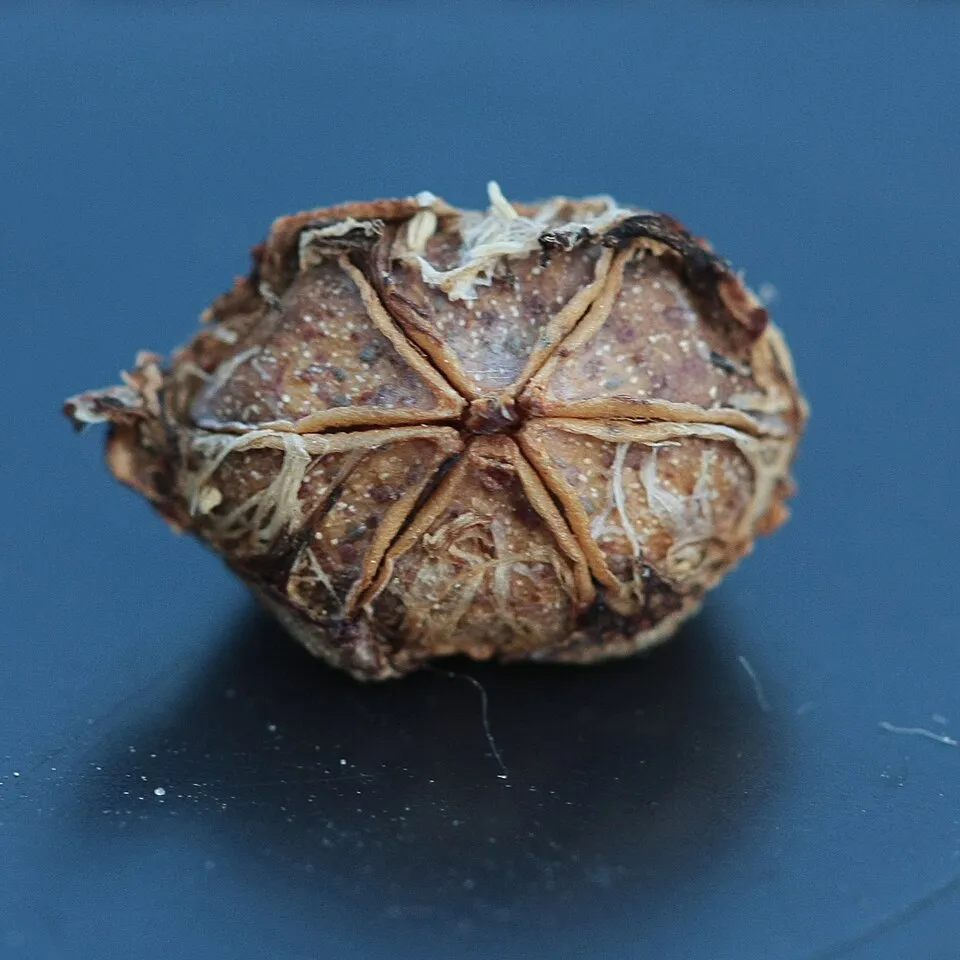
Lithops aucampiae, commonly known as Living Stones, is a captivating succulent belonging to the Aizoaceae family, renowned for its extraordinary mimicry and adaptation to harsh arid environments. Native to the dry, stony regions of South Africa, particularly the Northern Cape Province and along the Orange River valley, this species blends seamlessly with its surroundings, resembling small pebbles or gravel. Each individual plant typically consists of two thick, fleshy leaves fused at the base, forming an inverted cone shape, with a narrow fissure at the top from which flowers emerge.
These leaves, usually grayish-green with intricate patterns, textures, and sometimes dimples, serve as a camouflage mechanism against herbivores. A distinctive feature is the translucent 'window' on the upper surface of the leaves, which allows sunlight to penetrate to the internal chlorophyll cells, facilitating photosynthesis while the bulk of the plant remains subterranean, protected from intense heat and drought. Growing to about 2.5-5 cm in height and 5-10 cm in width, Lithops aucampiae minimizes exposure to the elements.
During late summer to early winter, delicate, daisy-like flowers, often yellow or white, emerge from the fissure, opening in the afternoon sun and closing at dusk. This unique morphology and specialized physiology, including its capacity for extensive water storage, enable Lithops aucampiae to thrive in areas receiving as little as 10 cm of annual rainfall, making it a marvel of botanical evolution and a popular choice for succulent enthusiasts.
Trusted Scientific References
1. Authoritative external sources for Lithops aucampiae
1.1 Wikipedia — Lithops aucampiae
1.2 Kew POWO (Plants of the World Online)
1.3 PubMed — peer-reviewed research
1.4 NCBI Taxonomy Browser
1.5 GBIF — Global Biodiversity
1.6Lithops Aucampiae should be interpreted through verified botanical identity, practical care, and responsible safety language. This recovery note adds the missing context needed for a complete profile: match light to the plant's habit, use well-drained soil, water according to season, and avoid unsupported medicinal or edible claims. For publishing, the plant can be presented as a source-backed indoor plant with clear care guidance, common problem diagnosis, and conservative safety wording.
1.1.Lithops Aucampiae — Key Features
- ✓ <strong>Extreme Mimicry</strong> — Resembles pebbles and stones in its natural habitat for camouflage.
- ✓ <strong>Succulent Adaptation</strong> — Highly specialized leaves store water, enabling survival in arid environments.
- ✓ <strong>Windowed Leaves</strong> — Translucent areas on leaf tops allow light penetration for photosynthesis underground.
- ✓ <strong>Subterranean Growth</strong> — Most of the plant body remains below the soil surface, protecting it from heat and predation.
- ✓ <strong>Unique Morphology</strong> — Consists of two fused, fleshy leaves with a central fissure.
- ✓ <strong>Daisy</strong> — like Flowers — Produces yellow or white flowers that emerge from the fissure in late summer/early winter.
- ✓ <strong>Native to Southern Africa</strong> — Indigenous to dry, rocky areas of Namibia and South Africa.
- ✓ <strong>Low Maintenance</strong> — Requires minimal watering and care, making it suitable for indoor cultivation.
- ✓ <strong>Non</strong> — Toxic — Generally considered safe for humans and pets.
- ✓ <strong>Long</strong> — Lived — Can survive for decades with proper care.
1.2.Lithops Aucampiae — Quick Summary
- ✓ Unique 'Living Stone' mimicry for camouflage and survival.
- ✓ Native to arid regions of Southern Africa, highly drought-adapted.
- ✓ Primarily an ornamental succulent, prized by collectors.
- ✓ Features translucent leaf 'windows' for subterranean photosynthesis.
- ✓ Requires bright light, well-drained soil, and infrequent watering.
- ✓ No documented medicinal uses or known toxicity to humans or pets.
2.Lithops Aucampiae — Scientific Identity
3.Lithops Aucampiae — Quick Facts
4.Lithops Aucampiae — Appearance & Identification
5.Lithops Aucampiae — Native Habitat
6.Lithops Aucampiae — Water Requirements
- ✓ Bright Light Requirement — Provide 4-5 hours of direct sunlight daily, ideally from a south-facing window or greenhouse, to prevent etiolation and maintain compact growth.
- ✓ Well-Drained Substrate — Plant in a specialized cactus or succulent potting mix, amended with ample gritty materials like perlite, pumice, or sharp sand, to ensure excellent drainage and aeration.
- ✓ Infrequent Watering Schedule — Water only when the plant shows signs of thirst (slight shriveling) and during its active growing season (late summer to early winter), allowing the soil to dry out completely between waterings.
- ✓ Deep Pot Selection — Use pots 3-5 inches deep with drainage holes to accommodate the extensive taproot system, promoting healthy root development.
- ✓ Dormancy Management — Reduce or cease watering during dormant periods (usually spring and mid-summer) when old leaves are being reabsorbed or during intense heat, to prevent rot.
- ✓ Gradual Light Acclimation — Avoid abrupt changes to brighter light conditions, as this can cause sunburn and fatal injury; introduce new light levels slowly over several days.
- ✓ Minimal Fertilization — Lithops aucampiae has low nutrient needs; fertilize sparingly with a diluted, low-nitrogen succulent fertilizer during the active growing season, if at all.
- ✓ Good Air Circulation — Ensure adequate airflow to prevent fungal issues, especially in humid environments, which is crucial for these arid-adapted plants.
Reviewed by the Flora Medical Global Botanical Review Panel
Multi-disciplinary editorial group · Botany · Ethnobotany · Herbal-medicine literature
Who reviewed this: This page was checked by the Flora Medical Global Botanical Review Panel — an in-house editorial group of botany graduates, ethnobotany researchers, and horticulture practitioners who collectively maintain our 7,000+ plant encyclopedia. Meet the team.
Our 4-step verification process
1. Taxonomic verification
Scientific names and synonyms cross-checked against Kew POWO, World Flora Online, and The Plant List.
2. Phytochemical & medicinal cross-reference
Active compounds, traditional uses, and reported activities are cross-referenced with PubMed, USDA Dr. Duke's database, and peer-reviewed ethnobotanical literature.
3. Conservation & distribution check
Distribution, ecology, and conservation status confirmed against GBIF occurrence records and the IUCN Red List.
4. Editorial & safety review
Every entry passes an editorial pass for clarity, originality, and safety notices (toxicity, contraindications, dosage caveats) before publication.
Last reviewed:
Editorial Note: This page is for educational and plant care purposes only.
Written by: Flora Medical Global Editorial Team
Reviewed by: Flora Medical Global Botanical Review Panel
Last Updated: June 15, 2026







Lithops Aucampiae — Comments & Community Reviews
Rate this plant