
Care Disclaimer: Plant care recommendations are general guidelines based on common growing conditions. Individual results may vary based on your local environment, climate, and care routine. If your plant is toxic, keep it away from children and pets, and consult a veterinarian if accidental ingestion occurs.
1.Lobivia Ferox — Overview
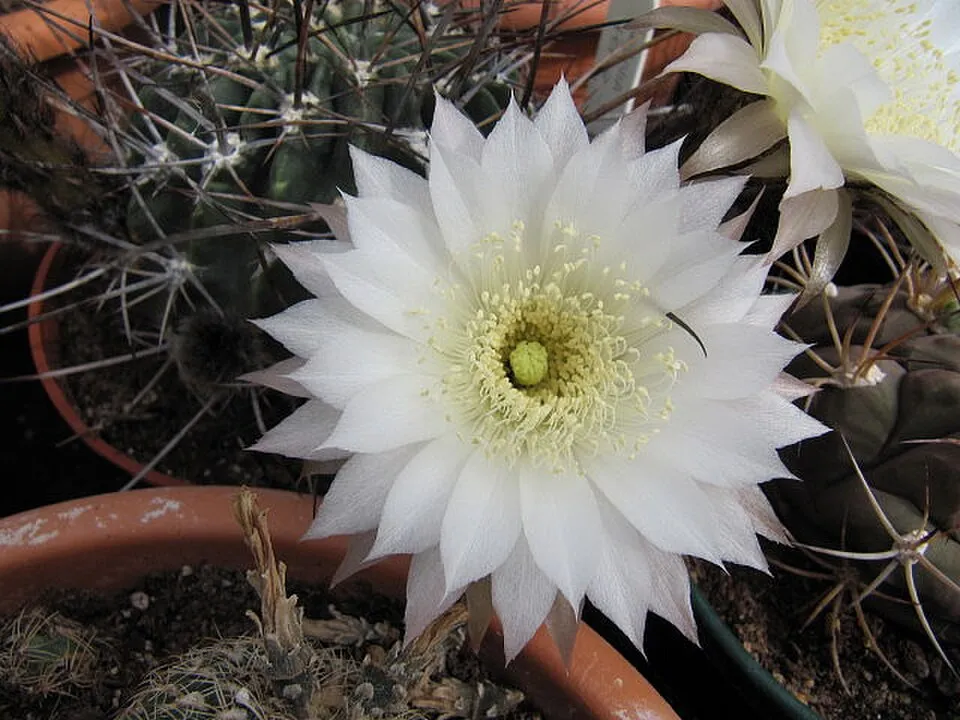
Lobivia ferox, a captivating member of the Cactaceae family, is renowned for its striking morphology and resilience. This globular cactus typically presents a robust, bulbous stem that can attain heights of up to 30 centimeters (approximately 12 inches) and a diameter of 25 centimeters. Its vivid green surface is characterized by 10 to 12 prominent, undulating ribs, which are symmetrically adorned with clusters of sharp, golden-yellow spines.
These formidable spines, arising from areoles, contribute significantly to its distinctive appearance. During its flowering season, typically in summer, Lobivia ferox produces stunning, trumpet-shaped blooms that emerge gracefully from the apex of the stem. These vibrant flowers, measuring 7 to 10 centimeters (3 to 4 inches) in diameter, exhibit a spectrum of colors ranging from bright yellow to rich orange, creating a dramatic visual spectacle.
Native to the high-altitude, arid regions of South America, particularly Bolivia, Lobivia ferox thrives in rocky, well-drained soils, showcasing remarkable adaptation to harsh desert environments. Taxonomically, while historically recognized as part of the Lobivia genus, it is now often classified under the broader genus Echinopsis, which encompasses numerous globular South American cacti. This species is widely cultivated as an ornamental houseplant, prized for its compact size, minimal care requirements, and exceptional aesthetic appeal, making it a popular choice for indoor gardeners seeking a touch of desert beauty.
Trusted Scientific References
1. Authoritative external sources for Lobivia ferox
1.1 Wikipedia — Lobivia ferox
1.2 Kew POWO (Plants of the World Online)
1.3 PubMed — peer-reviewed research
1.4 NCBI Taxonomy Browser
1.5 GBIF — Global Biodiversity
1.6Lobivia Ferox should be interpreted through verified botanical identity, practical care, and responsible safety language. This recovery note adds the missing context needed for a complete profile: match light to the plant's habit, use well-drained soil, water according to season, and avoid unsupported medicinal or edible claims. For publishing, the plant can be presented as a source-backed indoor plant with clear care guidance, common problem diagnosis, and conservative safety wording.
1.1.Lobivia Ferox — Key Features
- ✓ <strong>Striking Ornamental Plant</strong> — Distinctive spiny, ribbed stem and vibrant, trumpet-shaped flowers make it a captivating visual addition.
- ✓ <strong>Native to Bolivian Arid Regions</strong> — Originates from high-altitude desert environments in South America, showcasing remarkable drought tolerance.
- ✓ <strong>Distinctive Spiny, Ribbed Stem</strong> — Features 10-12 prominent ribs adorned with clusters of sharp, golden spines.
- ✓ <strong>Vibrant Yellow</strong> — Orange Trumpet Blooms — Produces large, showy flowers, typically 7-10 cm in diameter, in bright hues.
- ✓ <strong>Low Maintenance Houseplant</strong> — Requires minimal care, making it suitable for both experienced and novice gardeners.
- ✓ <strong>Potential Indoor Air Purifier</strong> — Like some other cacti, it may contribute to improved indoor air quality by absorbing airborne toxins.
- ✓ <strong>Traditional Topical Uses (Mucilage)</strong> — Mucilaginous sap from related cacti has historical uses for soothing skin irritations and providing hydration.
- ✓ <strong>Long Lifespan (Up to 50 Years)</strong> — A hardy cactus that can live for many decades with proper care.
- ✓ <strong>Drought</strong> — Tolerant — Highly adapted to dry conditions, requiring infrequent watering, especially during dormancy.
- ✓ <strong>Compact Size for Containers</strong> — Its relatively small, globular form makes it ideal for growing in pots and on sunny windowsills.
1.2.Lobivia Ferox — Quick Summary
- ✓ Lobivia ferox is a striking ornamental cactus native to Bolivia.
- ✓ Features a ribbed, spiny stem and vibrant yellow-orange trumpet flowers.
- ✓ Thrives with bright light and well-drained soil, requiring minimal winter watering.
- ✓ Traditionally, cactus mucilage (from related species) is used topically for skin soothing.
- ✓ Valued as a low-maintenance houseplant that may improve indoor air quality.
- ✓ Not recommended for internal consumption due to lack of safety data.
2.Lobivia Ferox — Scientific Identity
3.Lobivia Ferox — Quick Facts
4.Lobivia Ferox — Appearance & Identification
5.Lobivia Ferox — Native Habitat
6.Lobivia Ferox — Water Requirements
- ✓ Light Requirements — Provide bright, direct sunlight for optimal growth; Lobivia ferox is a sun-loving species that thrives in high light conditions.
- ✓ Soil Composition — Use a light, well-drained potting mix specifically formulated for cacti and succulents, or a blend of equal parts sand and general-purpose potting soil.
- ✓ Watering Schedule — Water thoroughly during the active growing and blooming seasons (spring and summer), allowing the soil to dry out completely between waterings to prevent root rot.
- ✓ Winter Dormancy — Significantly reduce or cease watering during winter months to encourage a dormant period, which is crucial for stimulating robust flower production in the spring.
- ✓ Potting and Repotting — Plant in unglazed terra-cotta pots, which promote aeration and allow excess moisture to evaporate. Repot every two years, choosing a pot only 1-2 inches larger if the plant is pot-bound.
- ✓ Fertilization — Apply a balanced liquid fertilizer formulated for cacti and succulents during the active growth phase, typically at one-quarter strength of general houseplant fertilizers.
- ✓ Temperature Management — Keep temperatures above 50°F (10°C); if grown outdoors in summer, bring indoors before temperatures drop to prevent cold damage.
- ✓ Handling Precautions — Always wear protective gloves when handling Lobivia ferox due to its sharp spines; for larger plants, use tongs or wrap the plant gently in paper for safe manipulation.
Reviewed by the Flora Medical Global Botanical Review Panel
Multi-disciplinary editorial group · Botany · Ethnobotany · Herbal-medicine literature
Who reviewed this: This page was checked by the Flora Medical Global Botanical Review Panel — an in-house editorial group of botany graduates, ethnobotany researchers, and horticulture practitioners who collectively maintain our 7,000+ plant encyclopedia. Meet the team.
Our 4-step verification process
1. Taxonomic verification
Scientific names and synonyms cross-checked against Kew POWO, World Flora Online, and The Plant List.
2. Phytochemical & medicinal cross-reference
Active compounds, traditional uses, and reported activities are cross-referenced with PubMed, USDA Dr. Duke's database, and peer-reviewed ethnobotanical literature.
3. Conservation & distribution check
Distribution, ecology, and conservation status confirmed against GBIF occurrence records and the IUCN Red List.
4. Editorial & safety review
Every entry passes an editorial pass for clarity, originality, and safety notices (toxicity, contraindications, dosage caveats) before publication.
Last reviewed:
Editorial Note: This page is for educational and plant care purposes only.
Written by: Flora Medical Global Editorial Team
Reviewed by: Flora Medical Global Botanical Review Panel
Last Updated: June 15, 2026







Lobivia Ferox — Comments & Community Reviews
Rate this plant