


Care Disclaimer: Plant care recommendations are general guidelines based on common growing conditions. Individual results may vary based on your local environment, climate, and care routine. If your plant is toxic, keep it away from children and pets, and consult a veterinarian if accidental ingestion occurs.
1.Lucky Bamboo — Overview
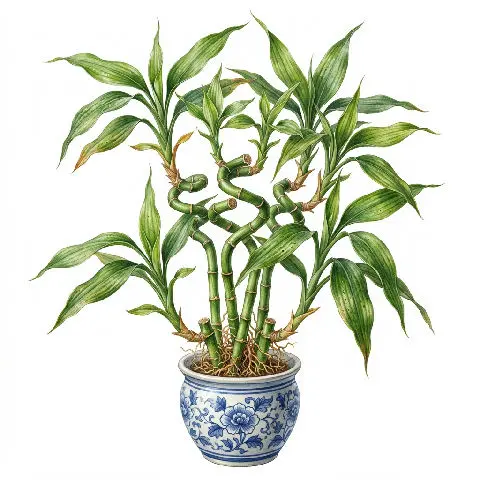
Lucky Bamboo, scientifically designated as Dracaena sanderiana, is a widely recognized indoor plant, though it is not a true bamboo. This striking species, a member of the Asparagaceae family, features slender, cane-like stems that can grow up to three feet tall under optimal conditions, presenting a smooth, vibrant green appearance often segmented to mimic its namesake. Its lanceolate leaves, typically 4 to 8 inches in length, possess a glossy surface and a rich green hue that contrasts beautifully with the stems.
While primarily cultivated for its evergreen foliage and distinctive aesthetic, Dracaena sanderiana is a flowering plant capable of producing small, subtly fragrant white to yellow blossoms, though this phenomenon is rare in indoor environments. Native to the tropical rainforests of Central Africa, Lucky Bamboo thrives in warm, humid conditions that replicate its natural habitat. It is extensively propagated and admired globally as an ornamental plant, frequently arranged in decorative spirals or tiered designs in homes and offices.
Beyond its visual appeal, it holds significant cultural importance, particularly in Asian traditions where it symbolizes good luck, prosperity, and harmony, often utilized in Feng Shui practices to enhance positive energy flow.
Trusted Scientific References
1. Authoritative external sources for Dracaena sanderiana
1.1 Wikipedia — Dracaena sanderiana
1.2 Kew POWO (Plants of the World Online)
1.3 PubMed — peer-reviewed research
1.4 NCBI Taxonomy Browser
1.5 GBIF — Global Biodiversity
1.6Lucky Bamboo should be interpreted through verified botanical identity, practical care, and responsible safety language. This recovery note adds the missing context needed for a complete profile: match light to the plant's habit, use well-drained soil, water according to season, and avoid unsupported medicinal or edible claims. For publishing, the plant can be presented as a source-backed indoor plant with clear care guidance, common problem diagnosis, and conservative safety wording.
1.1.Lucky Bamboo — Key Features
- ✓ <strong>Botanical Identity</strong> — Dracaena sanderiana, part of the Asparagaceae family.
- ✓ <strong>Distinctive Morphology</strong> — Slender, segmented, cane-like stems and glossy, lanceolate leaves.
- ✓ <strong>Ornamental Value</strong> — Highly prized for its aesthetic appeal in indoor settings.
- ✓ <strong>Cultural Symbolism</strong> — Widely associated with good fortune, prosperity, and positive energy in various cultures.
- ✓ <strong>Adaptable Growth</strong> — Can thrive in both hydroponic (water) and soil-based environments.
- ✓ <strong>Low Maintenance</strong> — Considered an easy-to-care-for houseplant suitable for beginners.
- ✓ <strong>Air Purifying Qualities</strong> — Contributes to cleaner indoor air by filtering certain pollutants.
- ✓ <strong>Non</strong> — flowering Indoors — Rarely produces its small white to yellow flowers when grown indoors.
- ✓ <strong>Pet Toxicity</strong> — Known to be toxic to cats and dogs if ingested.
- ✓ <strong>Indirect Light Preference</strong> — Requires bright, indirect light to prevent leaf scorching.
1.2.Lucky Bamboo — Quick Summary
- ✓ Dracaena sanderiana, not true bamboo, is a popular ornamental houseplant.
- ✓ Native to Central Africa, known for its cane-like stems and lanceolate leaves.
- ✓ Symbolizes good luck, prosperity, and harmony in Feng Shui practices.
- ✓ Contains saponins, flavonoids, and phenolic compounds with potential antioxidant properties.
- ✓ Primarily an indoor plant, easy to care for in water or soil with indirect light.
- ✓ Toxic to pets and can cause skin irritation in humans; not for ingestion.
2.Lucky Bamboo — Scientific Identity
3.Lucky Bamboo — Quick Facts
4.Lucky Bamboo — Appearance & Identification
5.Lucky Bamboo — Native Habitat
6.Lucky Bamboo — Water Requirements
- ✓ USDA Hardiness Zones — Best suited for zones 10 to 12 when grown outdoors; typically cultivated indoors in all other regions.
- ✓ Light & Location — Thrives in bright, indirect light; direct sunlight can scorch leaves and cause browning.
- ✓ Growing Medium — Can be successfully grown hydroponically in water or in well-draining potting soil formulated for indoor or tropical plants.
- ✓ Watering (Water Culture) — Maintain water levels to cover roots and at least one inch of stem, changing water weekly to prevent stagnation and algae growth.
- ✓ Watering (Soil Culture) — Water thoroughly when the top inch of soil feels dry, ensuring proper drainage and avoiding standing water in saucers.
- ✓ Fertilization — For water-grown plants, fertilize every other month with a diluted liquid houseplant fertilizer (1/4 strength); for soil, monthly during the growing season.
- ✓ Propagation — Easily propagated by taking cuttings of new shoots, removing lower leaves, and placing them in water until new roots form within 2-3 weeks.
- ✓ Pest Management — Monitor for common pests like spider mites, mealybugs, and aphids; these can be managed by rinsing leaves, neem oil, or insecticidal soap.
Reviewed by the Flora Medical Global Botanical Review Panel
Multi-disciplinary editorial group · Botany · Ethnobotany · Herbal-medicine literature
Who reviewed this: This page was checked by the Flora Medical Global Botanical Review Panel — an in-house editorial group of botany graduates, ethnobotany researchers, and horticulture practitioners who collectively maintain our 7,000+ plant encyclopedia. Meet the team.
Our 4-step verification process
1. Taxonomic verification
Scientific names and synonyms cross-checked against Kew POWO, World Flora Online, and The Plant List.
2. Phytochemical & medicinal cross-reference
Active compounds, traditional uses, and reported activities are cross-referenced with PubMed, USDA Dr. Duke's database, and peer-reviewed ethnobotanical literature.
3. Conservation & distribution check
Distribution, ecology, and conservation status confirmed against GBIF occurrence records and the IUCN Red List.
4. Editorial & safety review
Every entry passes an editorial pass for clarity, originality, and safety notices (toxicity, contraindications, dosage caveats) before publication.
Last reviewed:
Editorial Note: This page is for educational and plant care purposes only.
Written by: Flora Medical Global Editorial Team
Reviewed by: Flora Medical Global Botanical Review Panel
Last Updated: June 15, 2026







Lucky Bamboo — Comments & Community Reviews
Rate this plant