
Care Disclaimer: Plant care recommendations are general guidelines based on common growing conditions. Individual results may vary based on your local environment, climate, and care routine. If your plant is toxic, keep it away from children and pets, and consult a veterinarian if accidental ingestion occurs.
1.Medinilla Magnifica — Overview
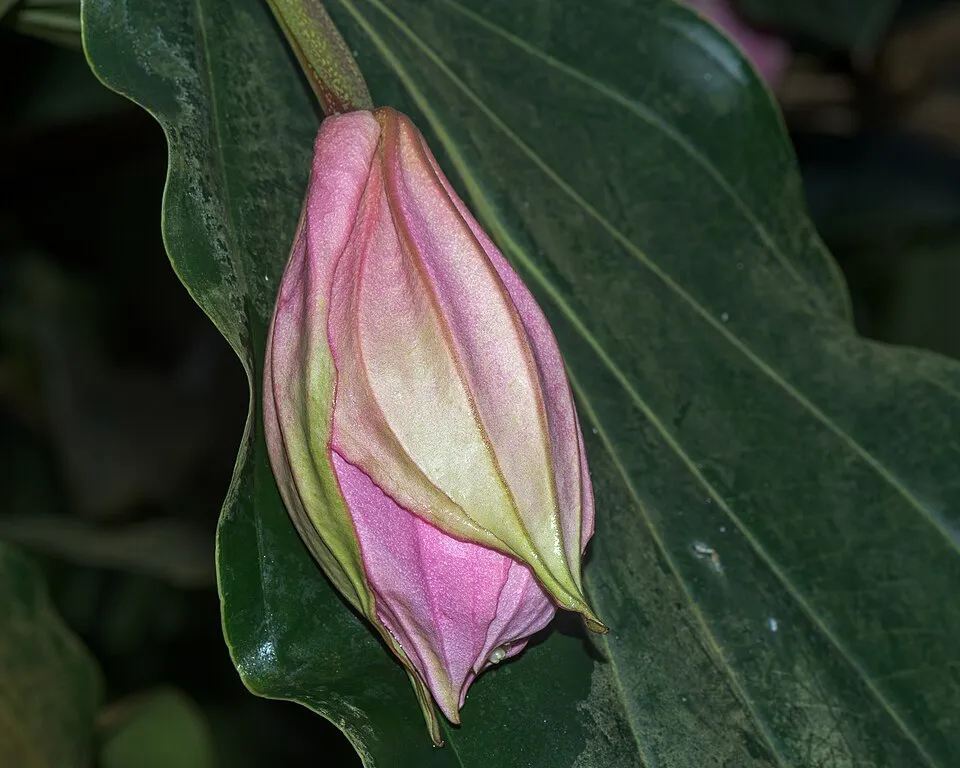
Medinilla magnifica, often celebrated as the rose grape or Philippine orchid, is a striking tropical evergreen shrub belonging to the Melastomataceae family. This magnificent plant is indigenous to the Philippines, particularly thriving in the mossy primary forests of islands such as Luzon, Mindoro, Negros, Panay, and Mindanao, at low to medium altitudes. It exhibits a versatile growth habit, appearing naturally as an epiphyte, lithophyte, or even terrestrially, clinging to trees or rocks in its humid native environment. The plant is characterized by its large, leathery, ovate to oblong leaves, which can extend up to 30 cm (12 inches) in length.
These glossy, deep green leaves are notable for their prominent, parallel venation, contributing to a rich, textured appearance. The true spectacle of Medinilla magnifica lies in its pendulous inflorescences, known as thyrses. These chandelier-like clusters emerge gracefully from large, vibrant pink bracts, which subtend whorls of smaller, star-shaped flowers. The flowers themselves range from rose-pink to deep magenta and are clustered in a manner reminiscent of grape bunches.
Following its impressive floral display, the plant may produce small, berry-like fruits, typically purplish-red in color. In its natural habitat, Medinilla magnifica can reach heights of 2.5 to 3 meters (8-10 feet), but when cultivated as a houseplant, it generally maintains a more manageable size of 1 to 1.2 meters (3-4 feet). Its exotic allure, combined with its long-lasting blooms that can persist for up to three months, makes it a highly coveted ornamental plant for indoor spaces and conservatories requiring tropical elegance and specific humidity.
Trusted Scientific References
1. Authoritative external sources for Medinilla magnifica
1.1 Wikipedia — Medinilla magnifica
1.2 Kew POWO (Plants of the World Online)
1.3 PubMed — peer-reviewed research
1.4 NCBI Taxonomy Browser
1.5 GBIF — Global Biodiversity
1.6Medinilla Magnifica should be interpreted through verified botanical identity, practical care, and responsible safety language. This recovery note adds the missing context needed for a complete profile: match light to the plant's habit, use well-drained soil, water according to season, and avoid unsupported medicinal or edible claims. For publishing, the plant can be presented as a source-backed indoor plant with clear care guidance, common problem diagnosis, and conservative safety wording.
1.1.Medinilla Magnifica — Key Features
- ✓ <strong>Spectacular Ornamental Value</strong> — Highly prized for its showy, pendant clusters of pink flowers and large, glossy leaves.
- ✓ <strong>Native to the Philippines</strong> — Originates from the humid tropical forests of Southeast Asia.
- ✓ <strong>Epiphytic/Lithophytic Growth Habit</strong> — Naturally grows on trees or rocks in its native environment.
- ✓ <strong>Long</strong> — Lasting Blooms — Flowers can persist for up to three months, offering extended visual appeal.
- ✓ <strong>Large, Veined Leaves</strong> — Distinctive ovate to oblong leaves with prominent parallel veins.
- ✓ <strong>Tropical Houseplant</strong> — A popular choice for indoor cultivation in suitable warm, humid conditions.
- ✓ <strong>Melastomataceae Family Member</strong> — Part of a diverse family of flowering plants.
- ✓ <strong>Air Purifying Qualities</strong> — Contributes to cleaner indoor air by absorbing CO2 and filtering toxins.
- ✓ <strong>Stress</strong> — Reducing Presence — Its beauty can enhance well-being and reduce stress.
- ✓ <strong>Unique Culinary Potential</strong> — Young leaves are traditionally used in some cultures for their sour taste.
1.2.Medinilla Magnifica — Quick Summary
- ✓ Medinilla magnifica is a stunning Philippine native tropical evergreen.
- ✓ Renowned for its dramatic, pendulous pink inflorescences and glossy leaves.
- ✓ Primarily valued as an ornamental houseplant for its exotic beauty.
- ✓ Traditionally, young leaves are consumed for purported digestive and antioxidant benefits.
- ✓ Requires bright, indirect light, high humidity, and warm temperatures.
- ✓ Limited scientific documentation exists for its specific medicinal properties.
2.Medinilla Magnifica — Scientific Identity
3.Medinilla Magnifica — Quick Facts
4.Medinilla Magnifica — Appearance & Identification
5.Medinilla Magnifica — Native Habitat
6.Medinilla Magnifica — Water Requirements
- ✓ Light — Prefers bright, indirect sunlight; direct afternoon sun can scorch leaves, so place near a window with filtered light.
- ✓ Soil — Requires a well-draining, moisture-retentive potting mix, ideally an orchid or tropical plant blend high in organic matter.
- ✓ Watering — Water thoroughly when the top inch of soil feels dry, allowing excess water to drain; avoid waterlogging to prevent root rot.
- ✓ Humidity — Thrives in high humidity (60-80%); mist regularly, use a pebble tray, or place near a humidifier, especially indoors.
- ✓ Temperature — Maintain warm temperatures between 18-29°C (65-85°F); sensitive to cold drafts and temperatures below 15°C (60°F).
- ✓ Fertilization — Feed monthly during the growing season (spring to fall) with a balanced liquid fertilizer diluted to half strength.
- ✓ Pruning — Prune after flowering to maintain shape and encourage bushier growth; remove spent blooms and any yellowing leaves.
- ✓ Repotting — Repot every 2-3 years in spring, or when root-bound, into a slightly larger pot with fresh potting mix.
Reviewed by the Flora Medical Global Botanical Review Panel
Multi-disciplinary editorial group · Botany · Ethnobotany · Herbal-medicine literature
Who reviewed this: This page was checked by the Flora Medical Global Botanical Review Panel — an in-house editorial group of botany graduates, ethnobotany researchers, and horticulture practitioners who collectively maintain our 7,000+ plant encyclopedia. Meet the team.
Our 4-step verification process
1. Taxonomic verification
Scientific names and synonyms cross-checked against Kew POWO, World Flora Online, and The Plant List.
2. Phytochemical & medicinal cross-reference
Active compounds, traditional uses, and reported activities are cross-referenced with PubMed, USDA Dr. Duke's database, and peer-reviewed ethnobotanical literature.
3. Conservation & distribution check
Distribution, ecology, and conservation status confirmed against GBIF occurrence records and the IUCN Red List.
4. Editorial & safety review
Every entry passes an editorial pass for clarity, originality, and safety notices (toxicity, contraindications, dosage caveats) before publication.
Last reviewed:
Editorial Note: This page is for educational and plant care purposes only.
Written by: Flora Medical Global Editorial Team
Reviewed by: Flora Medical Global Botanical Review Panel
Last Updated: June 15, 2026







Medinilla Magnifica — Comments & Community Reviews
Rate this plant