
Care Disclaimer: Plant care recommendations are general guidelines based on common growing conditions. Individual results may vary based on your local environment, climate, and care routine. If your plant is toxic, keep it away from children and pets, and consult a veterinarian if accidental ingestion occurs.
1.Mini Monstera — Overview
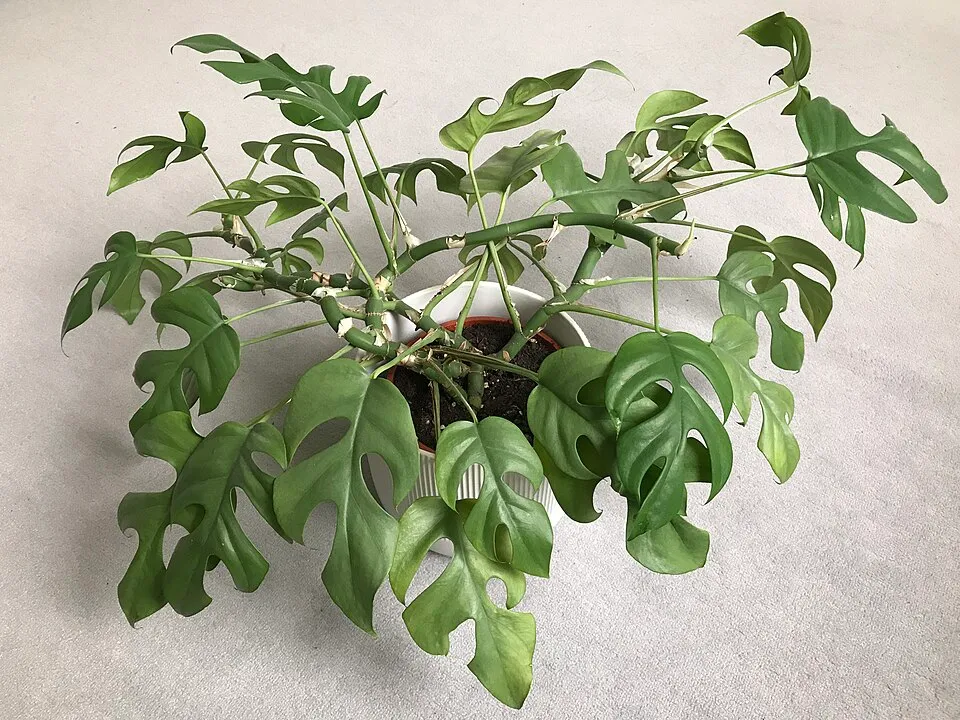
The Mini Monstera, scientifically designated as Rhaphidophora tetrasperma, is a highly appealing hemiepiphytic perennial vine belonging to the Araceae family. Despite its popular moniker, it is not a true Monstera, though it shares a striking aesthetic resemblance due to its distinctively lobed and fenestrated leaves. Native to the lush tropical and subtropical rainforests of Southern Thailand and Malaysia, this plant thrives in warm, humid conditions with dappled sunlight, often found ascending trees and other structures using its robust aerial roots. In cultivation, particularly as an indoor plant, Rhaphidophora tetrasperma typically maintains a more manageable size, reaching heights of 2 to 3 feet, with its slender, yet resilient, light green stems extending gracefully.
The plant’s most captivating feature is its glossy, dark green leaves, which can measure between 6 to 12 inches in length. These leaves are characterized by prominent, deeply incised lobes that frequently extend close to the midrib, creating the iconic 'splits' or fenestrations. The venation is pinnate, contributing to the leaf’s sturdy structure and vibrant appearance. While the plant is capable of producing inflorescences, consisting of a spathe enclosing a spadix, these unique flower structures are exceedingly rare in indoor environments, requiring specific environmental cues to bloom.
The mature stem’s bark is thin, smooth, and possesses a slightly waxy, shiny texture, enhancing its overall ornamental appeal. Its adaptability to indirect light and moderate humidity makes it an excellent choice for various indoor settings, where it contributes an exotic flair and is often valued for its perceived air-purifying qualities. Taxonomically, it is distinguished from the genus Monstera by specific floral and reproductive characteristics.
Trusted Scientific References
1. Authoritative external sources for Rhaphidophora tetrasperma
1.1 Wikipedia — Rhaphidophora tetrasperma
1.2 Kew POWO (Plants of the World Online)
1.3 PubMed — peer-reviewed research
1.4 NCBI Taxonomy Browser
1.5 GBIF — Global Biodiversity
1.1.Mini Monstera — Key Features
- ✓ <strong>Distinctive Fenestrated Leaves</strong> — Characterized by deeply lobed and split leaves, reminiscent of a true Monstera.
- ✓ <strong>Hemiepiphytic Growth Habit</strong> — Naturally climbs using aerial roots, adaptable to moss poles or trellises in cultivation.
- ✓ <strong>Rapid Vining Growth</strong> — Exhibits vigorous and relatively fast growth when provided with optimal environmental conditions.
- ✓ <strong>Compact Size for Indoors</strong> — Typically reaches 2-3 feet in height when grown in pots, suitable for various indoor spaces.
- ✓ <strong>Low Maintenance (with proper care)</strong> — Considered relatively easy to care for once its light, water, and humidity needs are understood.
- ✓ <strong>Air</strong> — Purifying Qualities (Perceived) — Believed to contribute to improved indoor air quality by filtering certain airborne toxins.
- ✓ <strong>High Ornamental Value</strong> — Highly sought after for its exotic, lush, and decorative foliage, enhancing interior aesthetics.
- ✓ <strong>Adaptable to Indirect Light</strong> — Thrives in bright, indirect light but can tolerate lower light levels, though growth may slow.
- ✓ <strong>Tropical Origin</strong> — Endemic to tropical rainforests, preferring warm, humid conditions with consistent moisture.
- ✓ <strong>Pet and Child Toxic</strong> — Contains calcium oxalate crystals, making it harmful if ingested by pets or humans.
1.2.Mini Monstera — Quick Summary
- ✓ Mini Monstera (Rhaphidophora tetrasperma) is a popular ornamental tropical vine.
- ✓ Native to Southern Thailand and Malaysia, known for its distinctive fenestrated leaves.
- ✓ Not a true Monstera, but shares aesthetic similarities, belonging to the Araceae family.
- ✓ Contains calcium oxalate crystals, rendering all parts toxic if ingested by humans or pets.
- ✓ Primarily cultivated for its aesthetic appeal, biophilic benefits, and perceived air-purifying qualities.
- ✓ Thrives in bright, indirect light, high humidity, and requires a well-draining potting mix with structural support.
2.Mini Monstera — Scientific Identity
3.Mini Monstera — Quick Facts
4.Mini Monstera — Appearance & Identification
5.Mini Monstera — Native Habitat
6.Mini Monstera — Water Requirements
- ✓ Provide bright, indirect light; while tolerant of low light, insufficient light can significantly slow growth and reduce fenestration.
- ✓ Maintain ambient temperatures between 55-95°F (13-35°C), strictly avoiding placement near heating or cooling vents which can cause detrimental temperature fluctuations.
- ✓ Ensure high humidity, ideally 50-70% relative humidity, which can be achieved through regular misting, using a humidifier, or placing the pot on a pebble tray filled with water.
- ✓ Use a well-draining potting mix, typically an equal blend of standard potting soil, orchid bark, and perlite, to prevent waterlogging and promote healthy root development.
- ✓ Water when the top 1-2 inches of soil are almost entirely dry; observe for slight leaf limpness as an indicator, but avoid prolonged dryness or overwatering to prevent root rot.
- ✓ Offer structural support like a moss pole or trellis to encourage upward growth, facilitate aerial root attachment, and potentially lead to larger, more mature leaves.
- ✓ Fertilize monthly during the active growing season (spring and summer) with a balanced, water-soluble fertilizer, diluted to half strength if the plant is not accustomed to frequent feeding.
- ✓ Prune regularly to maintain desired shape, encourage bushier growth, and remove any yellowing, damaged, or dead leaves or stems to promote overall plant health.
Reviewed by the Flora Medical Global Botanical Review Panel
Multi-disciplinary editorial group · Botany · Ethnobotany · Herbal-medicine literature
Who reviewed this: This page was checked by the Flora Medical Global Botanical Review Panel — an in-house editorial group of botany graduates, ethnobotany researchers, and horticulture practitioners who collectively maintain our 7,000+ plant encyclopedia. Meet the team.
Our 4-step verification process
1. Taxonomic verification
Scientific names and synonyms cross-checked against Kew POWO, World Flora Online, and The Plant List.
2. Phytochemical & medicinal cross-reference
Active compounds, traditional uses, and reported activities are cross-referenced with PubMed, USDA Dr. Duke's database, and peer-reviewed ethnobotanical literature.
3. Conservation & distribution check
Distribution, ecology, and conservation status confirmed against GBIF occurrence records and the IUCN Red List.
4. Editorial & safety review
Every entry passes an editorial pass for clarity, originality, and safety notices (toxicity, contraindications, dosage caveats) before publication.
Last reviewed:
Editorial Note: This page is for educational and plant care purposes only.
Written by: Flora Medical Global Editorial Team
Reviewed by: Flora Medical Global Botanical Review Panel
Last Updated: June 15, 2026







Mini Monstera — Comments & Community Reviews
Rate this plant