
Care Disclaimer: Plant care recommendations are general guidelines based on common growing conditions. Individual results may vary based on your local environment, climate, and care routine. If your plant is toxic, keep it away from children and pets, and consult a veterinarian if accidental ingestion occurs.
1.Monstera Lechleriana — Overview
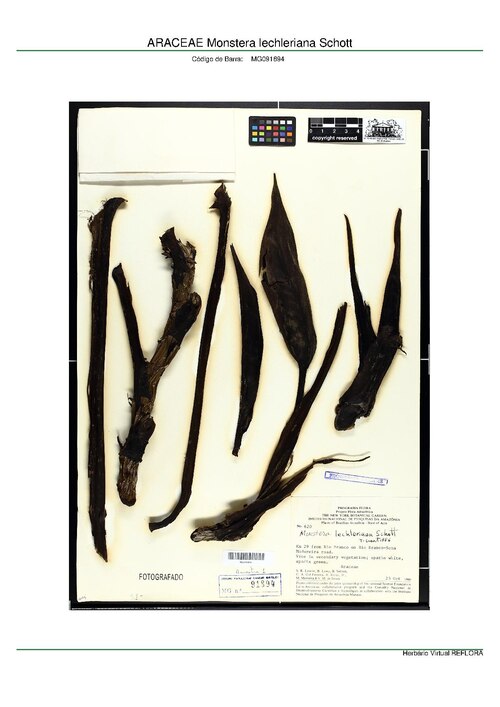
Monstera lechleriana is a captivating hemi-epiphytic species belonging to the Araceae family, native to the lush, humid tropical rainforests of Central and South America. This remarkable plant initiates its life cycle as a terrestrial seedling before developing its characteristic climbing habit, ascending host trees with the aid of robust aerial roots that anchor it and absorb moisture and nutrients from the environment. A defining feature of mature M. lechleriana leaves is the development of fenestrations, or natural splits and holes, which are believed to enhance its resilience against strong winds and facilitate light penetration to lower canopy layers.
Juvenile leaves, in contrast, are typically entire and smaller, lacking these dramatic characteristic perforations. The plant exhibits a vigorous vining growth pattern, utilizing its specialized aerial roots for adherence to surfaces. Under optimal conditions, particularly in its natural habitat, it produces the distinctive spathe and spadix inflorescence common to the Araceae family, though flowering is a rare occurrence in indoor cultivation. Its leaves are generally ovate to oblong, often elongated, and can achieve substantial dimensions on well-established, mature specimens.
Monstera lechleriana thrives in the shaded understory or climbing positions within humid tropical ecosystems, preferring well-drained, humus-rich substrates with consistent moisture and high ambient humidity. The species epithet 'lechleriana' pays homage to the botanist Willibald Lechler, recognizing his contributions to botanical exploration. Its distinctly vining nature makes it an excellent candidate for vertical gardening or training on trellises, particularly in ornamental settings.
Trusted Scientific References
1. Authoritative external sources for Monstera lechleriana
1.1 Wikipedia — Monstera lechleriana
1.2 Kew POWO (Plants of the World Online)
1.3 PubMed — peer-reviewed research
1.4 NCBI Taxonomy Browser
1.5 GBIF — Global Biodiversity
1.6Monstera Lechleriana should be interpreted through verified botanical identity, practical care, and responsible safety language. This recovery note adds the missing context needed for a complete profile: match light to the plant's habit, use well-drained soil, water according to season, and avoid unsupported medicinal or edible claims. For publishing, the plant can be presented as a source-backed indoor plant with clear care guidance, common problem diagnosis, and conservative safety wording.
1.1.Monstera Lechleriana — Key Features
- ✓ <strong>Hemi</strong> — epiphytic growth habit, starting on the ground and climbing host trees.
- ✓ <strong>Characteristic fenestrated (split</strong> — Characteristic fenestrated (split and holed) mature leaves, unique to the species.
- ✓ <strong>Native distribution across</strong> — Native distribution across the tropical rainforests of Central and South America.
- ✓ <strong>Contains toxic calcium</strong> — Contains toxic calcium oxalate crystals, rendering all plant parts poisonous if ingested.
- ✓ <strong>Primarily cultivated as</strong> — Primarily cultivated as an ornamental houseplant for its aesthetic appeal.
- ✓ <strong>Thrives in bright,</strong> — Thrives in bright, indirect light conditions and requires high ambient humidity.
- ✓ <strong>Benefits significantly from</strong> — Benefits significantly from climbing support such as a moss pole or trellis.
- ✓ <strong>Considered relatively low</strong> — maintenance for experienced plant enthusiasts and beginners alike.
- ✓ <strong>Develops prominent aerial</strong> — Develops prominent aerial roots for anchoring and nutrient absorption.
- ✓ <strong>Belongs to the</strong> — Belongs to the Araceae family, known for many popular houseplants.
1.2.Monstera Lechleriana — Quick Summary
- ✓ Ornamental tropical hemi-epiphyte native to Central and South American rainforests.
- ✓ Features distinctive fenestrated mature leaves, a vigorous climbing habit, and prominent aerial roots.
- ✓ Contains toxic calcium oxalate crystals in all parts, making it poisonous if ingested by humans or pets.
- ✓ Primarily valued for its lush aesthetic appeal and unique foliage as a relatively low-maintenance houseplant.
- ✓ Lacks any documented traditional or scientific medicinal uses, serving purely ornamental purposes.
- ✓ Requires bright indirect light, a well-draining, airy soil mix, and consistent high humidity for optimal growth.
2.Monstera Lechleriana — Scientific Identity
3.Monstera Lechleriana — Quick Facts
4.Monstera Lechleriana — Appearance & Identification
5.Monstera Lechleriana — Native Habitat
6.Monstera Lechleriana — Water Requirements
- ✓ Light Requirements — Provide bright to medium indirect light; direct sunlight can scorch leaves, while insufficient light leads to leggy growth and reduced fenestration.
- ✓ Soil Mix — Utilize an airy, well-draining aroid-specific potting mix, ideally combining equal parts potting soil, coco coir, orchid bark, and perlite to ensure proper aeration and moisture retention.
- ✓ Watering Schedule — Water thoroughly once the top half to three-quarters of the soil has dried out; always err on the side of underwatering to prevent root rot, which this species is susceptible to.
- ✓ Temperature and Humidity — Maintain warm household temperatures (above 65°F / 18°C) and high humidity levels; consider a humidifier or pebble tray for optimal growth in drier environments.
- ✓ Fertilization — During the active growing seasons of spring and summer, feed monthly with a balanced liquid fertilizer, discontinuing applications in the fall and winter months.
- ✓ Climbing Support — Provide a moss pole or trellis to support its natural vining and climbing habit, which encourages larger leaf development and more pronounced fenestrations.
- ✓ Repotting Frequency — Repot every one to two years, or when the plant becomes root-bound, into a container that is 2-4 inches larger in diameter to accommodate growth.
- ✓ Propagation — Easily propagated via stem cuttings containing at least two nodes and one leaf, which can be rooted effectively in water or directly in a moist, well-draining substrate.
Reviewed by the Flora Medical Global Botanical Review Panel
Multi-disciplinary editorial group · Botany · Ethnobotany · Herbal-medicine literature
Who reviewed this: This page was checked by the Flora Medical Global Botanical Review Panel — an in-house editorial group of botany graduates, ethnobotany researchers, and horticulture practitioners who collectively maintain our 7,000+ plant encyclopedia. Meet the team.
Our 4-step verification process
1. Taxonomic verification
Scientific names and synonyms cross-checked against Kew POWO, World Flora Online, and The Plant List.
2. Phytochemical & medicinal cross-reference
Active compounds, traditional uses, and reported activities are cross-referenced with PubMed, USDA Dr. Duke's database, and peer-reviewed ethnobotanical literature.
3. Conservation & distribution check
Distribution, ecology, and conservation status confirmed against GBIF occurrence records and the IUCN Red List.
4. Editorial & safety review
Every entry passes an editorial pass for clarity, originality, and safety notices (toxicity, contraindications, dosage caveats) before publication.
Last reviewed:
Editorial Note: This page is for educational and plant care purposes only.
Written by: Flora Medical Global Editorial Team
Reviewed by: Flora Medical Global Botanical Review Panel
Last Updated: June 15, 2026







Monstera Lechleriana — Comments & Community Reviews
Rate this plant