
Care Disclaimer: Plant care recommendations are general guidelines based on common growing conditions. Individual results may vary based on your local environment, climate, and care routine. If your plant is toxic, keep it away from children and pets, and consult a veterinarian if accidental ingestion occurs.
1.Moth Orchid Mini — Overview
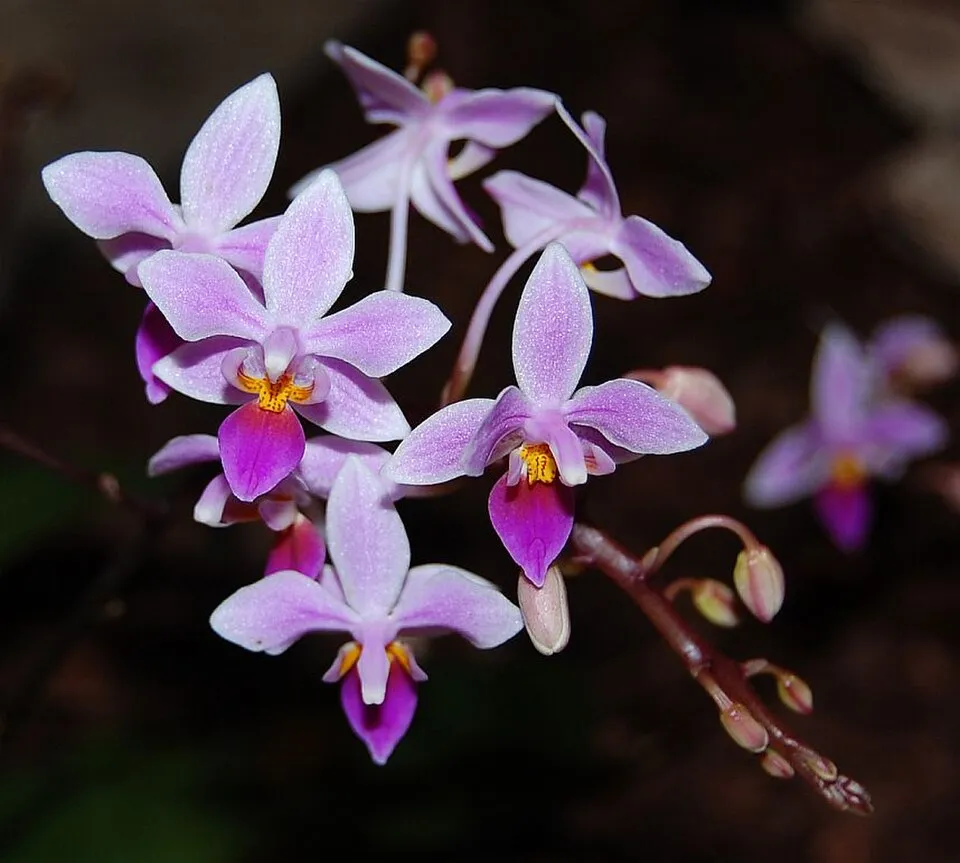
The Moth Orchid Mini, scientifically known as Phalaenopsis equestris, is a charming, petite epiphytic orchid species celebrated for its manageable size and captivating blooms. Typically growing to a height of 12 to 18 inches (30-45 cm), it is perfectly suited for indoor cultivation. This orchid features distinctive elongated, strap-like leaves, usually deep green and measuring 4 to 6 inches (10-15 cm) in length, which form a lush base for its floral display.
Its small, elegant flowers, averaging 1 to 2 inches (2.5-5 cm) in diameter, present a delightful spectrum of colors including pristine white, soft pink, and gentle lavender, often adorned with intricate markings on the lip and petals that enhance their allure. Each bloom structurally comprises three petals and three sepals, with a prominent labellum designed to attract pollinators. The plant’s slender, upright flower spikes contribute to its graceful silhouette.
Phalaenopsis equestris naturally thrives in the warm, humid tropical environments of Southeast Asia, particularly in regions like Malaysia, where it is commonly observed growing on tree branches rather than in soil. As a member of the diverse Orchidaceae family, it exemplifies the intricate beauty characteristic of orchids. Its epiphytic nature highlights its adaptability to various growing surfaces, making it an exceptional candidate for indoor culture, where its long-lasting blooms can provide weeks of vibrant color with appropriate care.
Trusted Scientific References
1. Authoritative external sources for Phalaenopsis equestris
1.1 Wikipedia — Phalaenopsis equestris
1.2 Kew POWO (Plants of the World Online)
1.3 PubMed — peer-reviewed research
1.4 NCBI Taxonomy Browser
1.5 GBIF — Global Biodiversity
1.6Moth Orchid Mini should be interpreted through verified botanical identity, practical care, and responsible safety language. This recovery note adds the missing context needed for a complete profile: match light to the plant's habit, use well-drained soil, water according to season, and avoid unsupported medicinal or edible claims. For publishing, the plant can be presented as a source-backed indoor plant with clear care guidance, common problem diagnosis, and conservative safety wording.
1.1.Moth Orchid Mini — Key Features
- ✓ <strong>Petite Size</strong> — Ideal for compact indoor spaces, typically reaching 12-18 inches in height.
- ✓ <strong>Epiphytic Nature</strong> — Grows on other plants in its natural habitat, requiring well-draining, bark-based potting media.
- ✓ <strong>Vibrant Blooms</strong> — Produces small (1-2 inch) flowers in a range of white, pink, and lavender with delicate markings.
- ✓ <strong>Long</strong> — Lasting Flowers — Individual blooms can persist for several weeks, offering extended ornamental value and beauty.
- ✓ <strong>Easy Care</strong> — Considered suitable for novice orchid growers with proper attention to light, water, and humidity.
- ✓ <strong>Tropical Origin</strong> — Native to humid regions of Southeast Asia, thriving in warm, consistent indoor temperatures.
- ✓ <strong>Air Purification</strong> — Contributes to improved indoor air quality through natural plant respiration and photosynthesis.
- ✓ <strong>Decorative Appeal</strong> — Highly prized for its aesthetic beauty, adding elegance and a touch of the exotic to any setting.
- ✓ <strong>Non</strong> — Toxic — Safe for households with children and common household pets, posing minimal health risks.
1.2.Moth Orchid Mini — Quick Summary
- ✓ Moth Orchid Mini (Phalaenopsis equestris) is a petite, epiphytic orchid native to Southeast Asia.
- ✓ Valued for its elegant strap-like leaves and small, vibrant blooms in white, pink, or lavender hues.
- ✓ Primarily cultivated as an ornamental houseplant, thriving under specific indoor care conditions.
- ✓ Requires consistent humidity, indirect light, and careful watering for optimal health and re-blooming.
- ✓ Traditionally associated with tranquility and aesthetic well-being in some cultures, enhancing indoor environments.
- ✓ Generally non-toxic and safe for homes with children and pets, making it a popular and accessible choice.
2.Moth Orchid Mini — Scientific Identity
3.Moth Orchid Mini — Quick Facts
4.Moth Orchid Mini — Appearance & Identification
5.Moth Orchid Mini — Native Habitat
6.Moth Orchid Mini — Water Requirements
- ✓ Light Requirements — Provide low to medium indirect light; east-facing windows are ideal, or shaded south/west windows. Leaves should be olive-green, not dark green (too little light) or reddish (too much).
- ✓ Temperature Preference — Maintain indoor temperatures between 70-90°F (21-32°C), with an optimal range of 75-85°F (24-29°C) for vigorous growth and flowering.
- ✓ Humidity Management — Aim for 50-80% humidity. In drier homes, use a pebble tray with water beneath the pot to increase local humidity, especially during flowering. Ensure good air circulation to prevent fungal issues.
- ✓ Watering Practices — Water thoroughly with lukewarm or room-temperature water when the potting medium is dry to the touch; never use ice cubes. Allow water to drain completely from the pot. Frequency varies (5-14 days) based on environmental conditions.
- ✓ Potting Medium — Use a coarse, well-draining epiphytic mix, typically composed of large bark chunks, charcoal, and perlite, with minimal sphagnum moss to ensure proper aeration for the roots.
- ✓ Post-Bloom Care — After flowering, prune the spent flower spike. You can cut it back to the base of the plant for a new spike to emerge in several months, or trim it above the second node from the bottom for a quicker re-bloom within 8-12 weeks.
- ✓ Fertilization Regimen — Fertilize every 2-4 weeks with a balanced orchid-specific fertilizer diluted to half or quarter strength, especially during active growth periods. Flush the pot with plain water monthly to prevent salt buildup.
Reviewed by the Flora Medical Global Botanical Review Panel
Multi-disciplinary editorial group · Botany · Ethnobotany · Herbal-medicine literature
Who reviewed this: This page was checked by the Flora Medical Global Botanical Review Panel — an in-house editorial group of botany graduates, ethnobotany researchers, and horticulture practitioners who collectively maintain our 7,000+ plant encyclopedia. Meet the team.
Our 4-step verification process
1. Taxonomic verification
Scientific names and synonyms cross-checked against Kew POWO, World Flora Online, and The Plant List.
2. Phytochemical & medicinal cross-reference
Active compounds, traditional uses, and reported activities are cross-referenced with PubMed, USDA Dr. Duke's database, and peer-reviewed ethnobotanical literature.
3. Conservation & distribution check
Distribution, ecology, and conservation status confirmed against GBIF occurrence records and the IUCN Red List.
4. Editorial & safety review
Every entry passes an editorial pass for clarity, originality, and safety notices (toxicity, contraindications, dosage caveats) before publication.
Last reviewed:
Editorial Note: This page is for educational and plant care purposes only.
Written by: Flora Medical Global Editorial Team
Reviewed by: Flora Medical Global Botanical Review Panel
Last Updated: June 15, 2026







Moth Orchid Mini — Comments & Community Reviews
Rate this plant