
Care Disclaimer: Plant care recommendations are general guidelines based on common growing conditions. Individual results may vary based on your local environment, climate, and care routine. If your plant is toxic, keep it away from children and pets, and consult a veterinarian if accidental ingestion occurs.
1.Myrmecophila — Overview
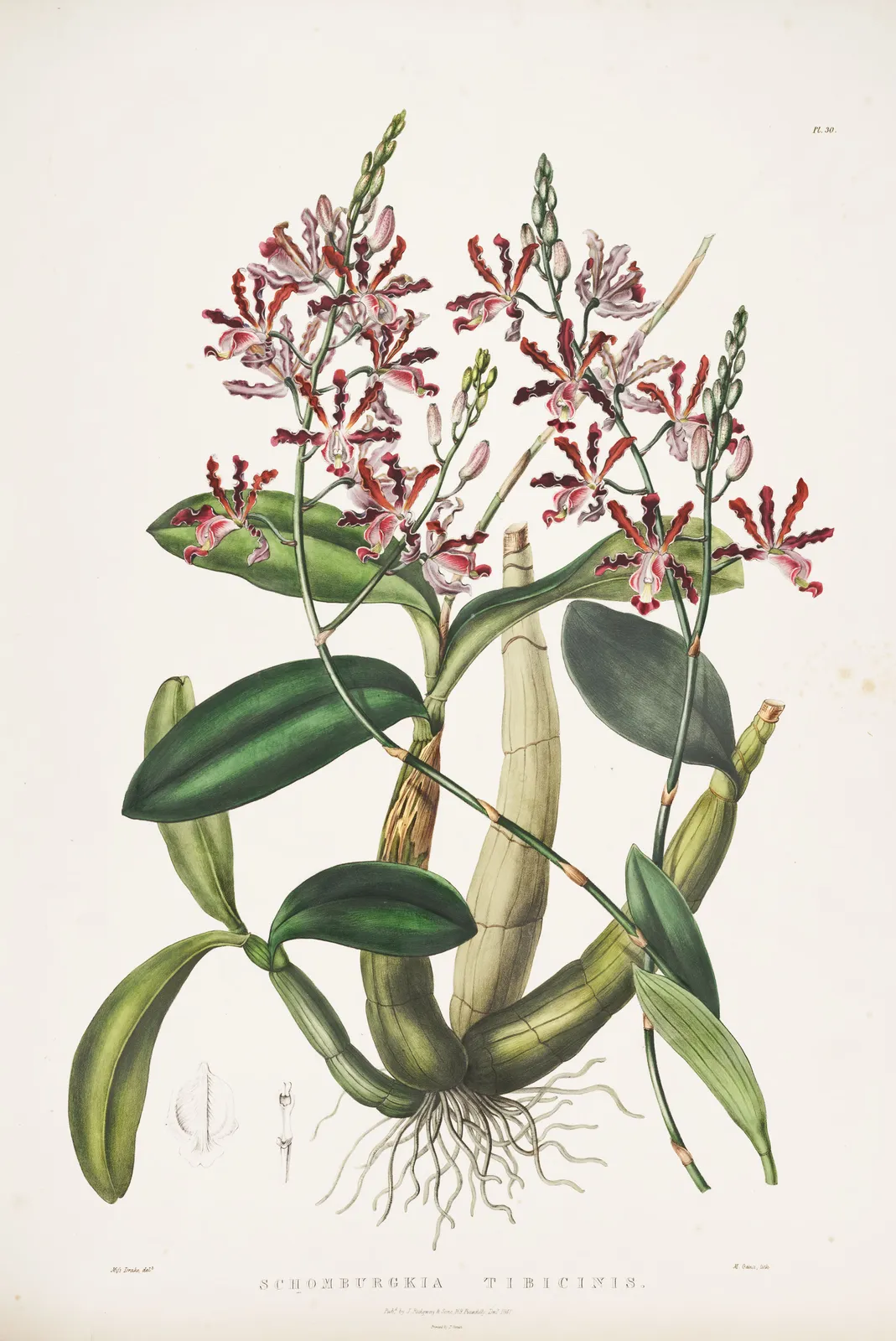
Myrmecophila tibicinis, commonly known as the ant orchid or trumpet player's Schomburgkia, is a captivating epiphytic orchid species within the extensive Orchidaceae family, specifically classified under the subfamily Epidendroideae. This robust plant typically grows to heights ranging from 30 to 90 centimeters, firmly attaching itself to trees or rock formations in its natural habitat. A defining characteristic of Myrmecophila tibicinis is its distinctive, elongated, hollow pseudobulbs, which can reach up to 20 centimeters in length. These pseudobulbs serve a unique dual purpose: they are storage organs for water and nutrients, and crucially, they provide shelter for various ant species. This fascinating mutualistic relationship is vital, as the ants protect the orchid from potential herbivores and may contribute to nutrient cycling through their debris, in exchange for a secure dwelling.
The pseudobulbs exhibit a smooth yet subtly ribbed texture, with prominent nodes from which emerge vibrant green, lanceolate leaves. These substantial leaves, typically 40 to 60 centimeters long, possess a glossy sheen that enhances their visual appeal. The inflorescences of Myrmecophila tibicinis are equally striking, rising as tall, elegant racemes that can bear numerous flowers. Each individual bloom, approximately 5 centimeters in diameter, displays a complex palette: wavy sepals and petals often appear magenta with bronze-orange tips, framing a large, prominent white labellum. This lip is intricately adorned with intense magenta veining on its pronounced, curled-up side lobes, a purple-tipped mid-lobe, and a bright yellow central callus.
This intricate color contrast is believed to play a significant role in attracting specific pollinators. The root system, typical of many epiphytic orchids, comprises thick, aerial roots encased in a specialized spongy tissue called velamen, which efficiently absorbs atmospheric moisture and dissolved nutrients. Native to the warm, humid environments of tropical Central America and Mexico, Myrmecophila tibicinis thrives in countries such as Costa Rica, Nicaragua, Honduras, Guatemala, and Mexico, typically found in low to mid-elevation forests between 300 to 600 meters above sea level, often in exposed, bright areas. Trusted Scientific References Authoritative external sources for Myrmecophila tibicinis : Wikipedia — Myrmecophila tibicinis Kew POWO (Plants of the World Online) PubMed — peer-reviewed research NCBI Taxonomy Browser GBI ...[CURRENT TEXT EXISTS: 2523 chars]
1.1.Myrmecophila — Key Features
- ✓ <strong>Myrmecophytic Orchid</strong> — Forms a unique, symbiotic relationship with ant colonies.
- ✓ <strong>Hollow Pseudobulbs</strong> — Specialized structures that provide shelter and nesting sites for ants.
- ✓ <strong>Showy Racemes</strong> — Tall, elegant flower spikes bearing numerous vibrant blooms.
- ✓ <strong>Vivid Floral Display</strong> — Flowers characterized by magenta and bronze sepals/petals and a white, veined labellum.
- ✓ <strong>Epiphytic Growth Habit</strong> — Naturally grows on trees or rocks, not in soil.
- ✓ <strong>Velamen Roots</strong> — Specialized aerial roots with a spongy outer layer for efficient moisture absorption.
- ✓ <strong>Native to Central America and Mexico</strong> — Indigenous to tropical low to mid-elevation forests.
- ✓ <strong>Ornamental Value</strong> — Highly prized in horticulture for its unique biology and aesthetic appeal.
- ✓ <strong>Robust Stature</strong> — Can grow into a substantial plant, reaching up to 90 centimeters in height.
- ✓ <strong>Trumpet Player's Schomburgkia</strong> — A distinctive common name reflecting its appearance.
1.2.Myrmecophila — Quick Summary
- ✓ Myrmecophila tibicinis is an epiphytic orchid known for its mutualistic relationship with ants.
- ✓ Features hollow pseudobulbs that house ants, offering protection and nutrient cycling.
- ✓ Produces striking racemes of magenta, bronze, and white flowers with intricate veining.
- ✓ Phytochemical analysis suggests potential for antioxidant, anti-inflammatory, and antimicrobial properties.
- ✓ Requires specific warm, humid, and bright conditions for successful cultivation.
- ✓ Medicinal uses are not traditionally documented, emphasizing cautious and research-based application.
2.Myrmecophila — Scientific Identity
3.Myrmecophila — Quick Facts
4.Myrmecophila — Appearance & Identification
5.Myrmecophila — Native Habitat
6.Myrmecophila — Water Requirements
- ✓ Light Requirements — Provide bright, indirect light, ideally between 2500-3000 foot-candles (27,000-32,000 lux), avoiding harsh midday sun.
- ✓ Temperature Range — Thrives in warm-intermediate conditions, with day temperatures of 21-29°C (70-85°F) and night temperatures of 16-21°C (60-70°F).
- ✓ Humidity Levels — Maintain high relative humidity, typically 70-80%, which is crucial for this epiphytic species, possibly requiring humidifiers or humidity trays.
- ✓ Watering Schedule — Water frequently and thoroughly, allowing the media to dry slightly between waterings; frequency depends on potting media's drying tendency.
- ✓ Growing Medium — Best cultivated mounted on bark or in pots with a very coarse, well-draining orchid mix (e.g., large bark chunks, charcoal, perlite) to mimic natural epiphytic conditions.
- ✓ Air Circulation — Ensure excellent air movement around the roots and foliage to prevent fungal infections and promote healthy growth.
- ✓ Fertilization — Apply a balanced orchid fertilizer at half strength every other watering during active growth periods, reducing frequency in cooler months.
- ✓ Repotting — Repot only when absolutely necessary, typically every 2-3 years after flowering, using fresh, coarse media to avoid disturbing the root system.
Reviewed by the Flora Medical Global Botanical Review Panel
Multi-disciplinary editorial group · Botany · Ethnobotany · Herbal-medicine literature
Who reviewed this: This page was checked by the Flora Medical Global Botanical Review Panel — an in-house editorial group of botany graduates, ethnobotany researchers, and horticulture practitioners who collectively maintain our 7,000+ plant encyclopedia. Meet the team.
Our 4-step verification process
1. Taxonomic verification
Scientific names and synonyms cross-checked against Kew POWO, World Flora Online, and The Plant List.
2. Phytochemical & medicinal cross-reference
Active compounds, traditional uses, and reported activities are cross-referenced with PubMed, USDA Dr. Duke's database, and peer-reviewed ethnobotanical literature.
3. Conservation & distribution check
Distribution, ecology, and conservation status confirmed against GBIF occurrence records and the IUCN Red List.
4. Editorial & safety review
Every entry passes an editorial pass for clarity, originality, and safety notices (toxicity, contraindications, dosage caveats) before publication.
Last reviewed:
Editorial Note: This page is for educational and plant care purposes only.
Written by: Flora Medical Global Editorial Team
Reviewed by: Flora Medical Global Botanical Review Panel
Last Updated: June 15, 2026







Myrmecophila — Comments & Community Reviews
Rate this plant