
Care Disclaimer: Plant care recommendations are general guidelines based on common growing conditions. Individual results may vary based on your local environment, climate, and care routine. If your plant is toxic, keep it away from children and pets, and consult a veterinarian if accidental ingestion occurs.
1.Neanthe Bella Palm — Overview
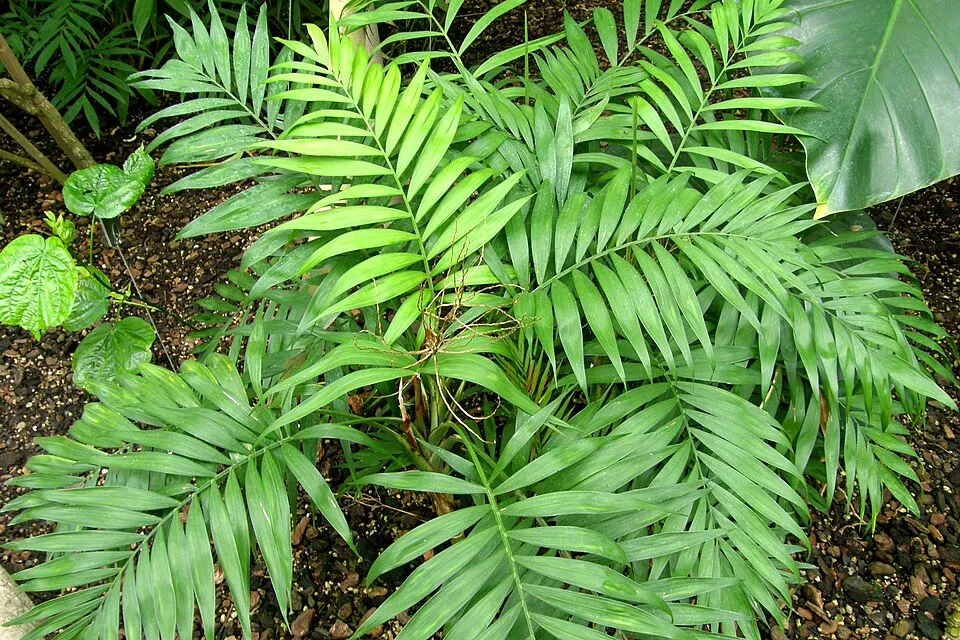
The Neanthe Bella Palm, botanically known as Chamaedorea elegans, is a distinguished and widely cherished palm species indigenous to the lush, humid understory of the rainforests spanning Southern Mexico and Guatemala. This diminutive and elegant member of the Arecaceae family is celebrated for its graceful, arching, pinnate fronds that unfurl in a rich, dark green hue, emerging from slender, reed-like stems marked by distinctive rings. In its natural habitat, Chamaedorea elegans thrives in the dappled light of the forest floor, typically reaching heights of 2 to 3 meters, forming dense, multi-stemmed clumps.
When cultivated indoors, it maintains a more compact stature, usually maturing at 1 to 1.5 meters, making it an ideal houseplant. The plant produces small, inconspicuous yellow, globular flowers on delicate inflorescences that emerge from the leaf axils, eventually yielding tiny, black, pea-sized fruits. Its slow growth rate, adaptability to lower light conditions, and inherent resilience have contributed to its global popularity as an ornamental specimen.
While specific ethnobotanical records detailing traditional medicinal uses for Chamaedorea elegans itself are scarce, its role in improving indoor air quality has garnered significant modern scientific interest, positioning it as a valuable contributor to human well-being in contemporary urban environments.
Trusted Scientific References
1. Authoritative external sources for Chamaedorea elegans
1.1 Wikipedia — Chamaedorea elegans
1.2 Kew POWO (Plants of the World Online)
1.3 PubMed — peer-reviewed research
1.4 NCBI Taxonomy Browser
1.5 GBIF — Global Biodiversity
1.6Neanthe Bella Palm should be interpreted through verified botanical identity, practical care, and responsible safety language. This recovery note adds the missing context needed for a complete profile: match light to the plant's habit, use well-drained soil, water according to season, and avoid unsupported medicinal or edible claims. For publishing, the plant can be presented as a source-backed indoor plant with clear care guidance, common problem diagnosis, and conservative safety wording.
1.1.Neanthe Bella Palm — Key Features
- ✓ <strong>Exceptional Air</strong> — Purifying Qualities — Removes VOCs like formaldehyde, benzene, and carbon monoxide.
- ✓ <strong>Non</strong> — Toxic to Pets and Humans — Safe for homes with children and animals.
- ✓ <strong>Low Maintenance and Easy Care</strong> — Ideal for beginner plant enthusiasts.
- ✓ <strong>Compact and Elegant Growth Habit</strong> — Perfect for indoor spaces and corners.
- ✓ <strong>Graceful, Feathery, Dark Green Fronds</strong> — Adds a lush, tropical aesthetic.
- ✓ <strong>Thrives in Indirect Light and Partial Shade</strong> — Adaptable to various indoor conditions.
- ✓ <strong>Slow Growing and Long</strong> — Lived — A lasting addition to any interior.
- ✓ <strong>Contributes to Enhanced Indoor Humidity</strong> — Beneficial in dry environments.
- ✓ <strong>Endorsed by NASA's Clean Air Study</strong> — Scientific validation of its benefits.
- ✓ <strong>Versatile for Home or Office Decor</strong> — Blends seamlessly with diverse interior designs.
1.2.Neanthe Bella Palm — Quick Summary
- ✓ Native to Southern Mexico and Guatemala, a popular indoor ornamental.
- ✓ Renowned for its significant air-purifying capabilities, validated by NASA.
- ✓ Effectively removes common indoor toxins like formaldehyde and benzene.
- ✓ Non-toxic to humans and pets, making it a safe household choice.
- ✓ Easy to care for, thriving in indirect light and moderate humidity.
- ✓ Contributes to psychological well-being and enhances indoor aesthetics.
2.Neanthe Bella Palm — Scientific Identity
3.Neanthe Bella Palm — Quick Facts
4.Neanthe Bella Palm — Appearance & Identification
5.Neanthe Bella Palm — Native Habitat
6.Neanthe Bella Palm — Water Requirements
- ✓ Light — Position in a location receiving bright, indirect sunlight or partial shade; direct sun can cause leaf scorching.
- ✓ Watering — Water thoroughly when the top layer of soil feels dry, typically every 5-7 days in summer and less frequently in winter (every 10-14 days).
- ✓ Soil — Use a well-draining potting mix that retains some moisture, ideally with good aeration to prevent root rot.
- ✓ Temperature — Maintain an ideal temperature range between 17°C and 25°C (63°F to 77°F); avoid sudden drops or extreme cold.
- ✓ Humidity — Prefers higher humidity; misting regularly or placing near a humidifier can replicate its natural rainforest environment.
- ✓ Fertilization — Feed monthly with a balanced liquid fertilizer during the active growing season (spring to autumn), reducing frequency in winter.
- ✓ Repotting — Repot every 2-3 years into a pot only one size larger (approx. 20% wider) to refresh soil and prevent root-bound conditions.
- ✓ Pruning — Only prune to remove yellowed, brown, or dead fronds at the base using clean, sharp scissors to maintain appearance and plant health.
Reviewed by the Flora Medical Global Botanical Review Panel
Multi-disciplinary editorial group · Botany · Ethnobotany · Herbal-medicine literature
Who reviewed this: This page was checked by the Flora Medical Global Botanical Review Panel — an in-house editorial group of botany graduates, ethnobotany researchers, and horticulture practitioners who collectively maintain our 7,000+ plant encyclopedia. Meet the team.
Our 4-step verification process
1. Taxonomic verification
Scientific names and synonyms cross-checked against Kew POWO, World Flora Online, and The Plant List.
2. Phytochemical & medicinal cross-reference
Active compounds, traditional uses, and reported activities are cross-referenced with PubMed, USDA Dr. Duke's database, and peer-reviewed ethnobotanical literature.
3. Conservation & distribution check
Distribution, ecology, and conservation status confirmed against GBIF occurrence records and the IUCN Red List.
4. Editorial & safety review
Every entry passes an editorial pass for clarity, originality, and safety notices (toxicity, contraindications, dosage caveats) before publication.
Last reviewed:
Editorial Note: This page is for educational and plant care purposes only.
Written by: Flora Medical Global Editorial Team
Reviewed by: Flora Medical Global Botanical Review Panel
Last Updated: June 15, 2026







Neanthe Bella Palm — Comments & Community Reviews
Rate this plant