
Care Disclaimer: Plant care recommendations are general guidelines based on common growing conditions. Individual results may vary based on your local environment, climate, and care routine. If your plant is toxic, keep it away from children and pets, and consult a veterinarian if accidental ingestion occurs.
1.Nephrolepis Green Lady — Overview
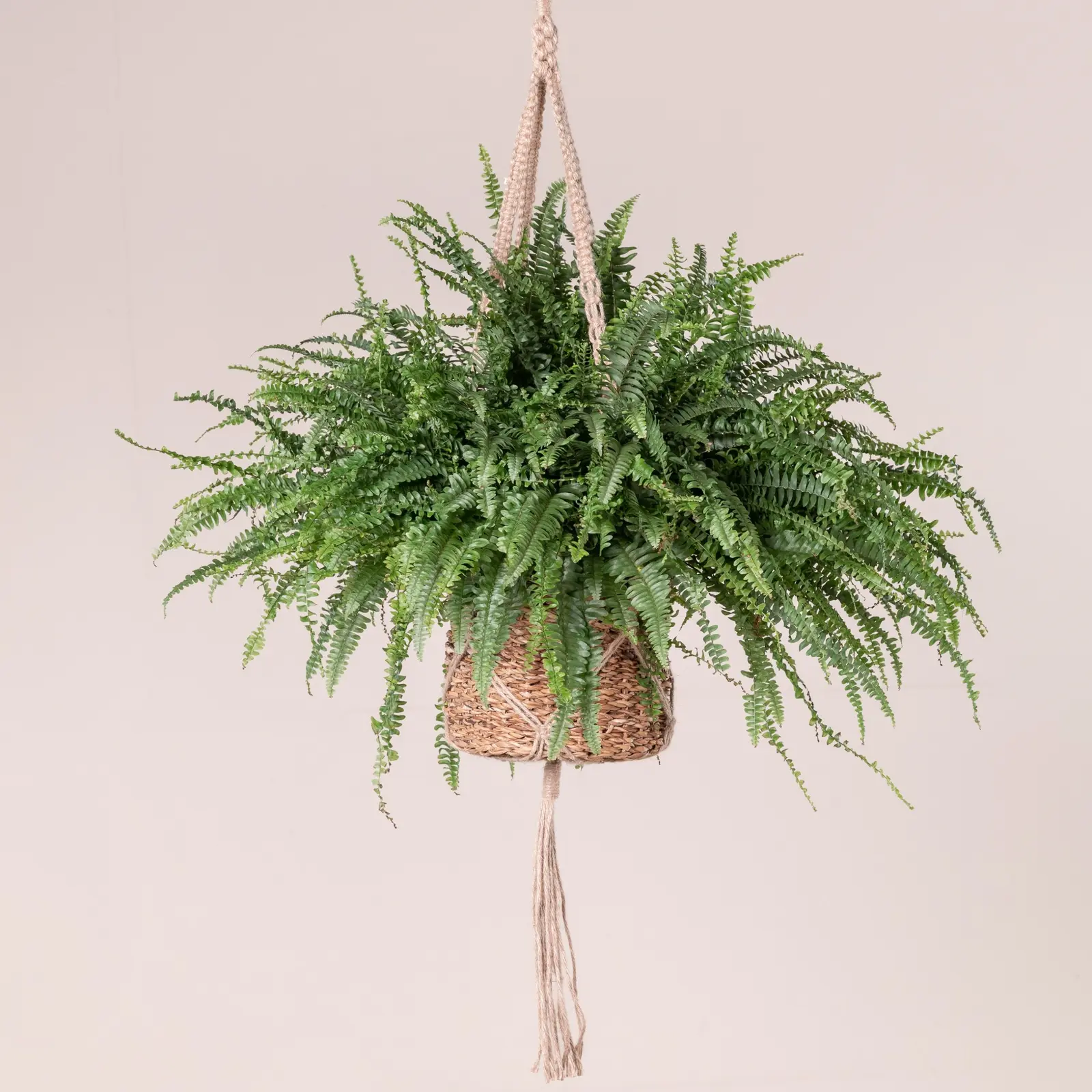
Nephrolepis exaltata 'Green Lady', commonly known as the Green Lady Fern, is a popular cultivar of the Boston fern, a tropical perennial renowned for its ornamental value. This herbaceous plant forms a dense, clumping mound of foliage, typically reaching heights of 1 to 3 feet and spreading similarly, making it ideal for both tabletops and hanging baskets. Its morphology is characterized by lush, arching fronds, which can extend up to 24 inches in length.
Each frond is finely dissected, composed of numerous narrow, elongated leaflets (pinnae) arranged alternately along a central rachis, presenting a vibrant, uniform green hue. The texture is delicate yet robust, contributing to its graceful appearance. While Nephrolepis exaltata itself is native to tropical and subtropical regions across Central and South America, Africa, and the Pacific Islands, thriving in warm, humid environments like rainforest understories, the 'Green Lady' cultivar has been specifically bred for enhanced aesthetic qualities and adaptability to indoor conditions.
It propagates through rhizomes, which can produce new plantlets, contributing to its bushy growth habit. Like all ferns, it reproduces via spores produced in sori on the underside of its fronds, rather than flowers. The plant's upright yet gracefully arching stems and finely textured foliage provide an exotic and refreshing feel to any indoor space, solidifying its status as a favored choice for home and office decor, and a key member of the Lomariopsidaceae family.
Trusted Scientific References
1. Authoritative external sources for Nephrolepis exaltata green lady
1.1 Wikipedia — Nephrolepis exaltata green lady
1.2 Kew POWO (Plants of the World Online)
1.3 PubMed — peer-reviewed research
1.4 NCBI Taxonomy Browser
1.5 GBIF — Global Biodiversity
1.6Nephrolepis Green Lady should be interpreted through verified botanical identity, practical care, and responsible safety language. This recovery note adds the missing context needed for a complete profile: match light to the plant's habit, use well-drained soil, water according to season, and avoid unsupported medicinal or edible claims. For publishing, the plant can be presented as a source-backed indoor plant with clear care guidance, common problem diagnosis, and conservative safety wording.
1.1.Nephrolepis Green Lady — Key Features
- ✓ <strong>Lush, Feathery Fronds</strong> — Characterized by vibrant green, finely dissected, arching foliage.
- ✓ <strong>Excellent Air Purifier</strong> — Highly effective at removing common indoor air pollutants.
- ✓ <strong>Humidity Enhancer</strong> — Naturally increases ambient moisture levels, benefiting dry environments.
- ✓ <strong>Non</strong> — Toxic Houseplant — Safe for households with children and pets.
- ✓ <strong>Clumping Growth Habit</strong> — Forms a bushy mound, suitable for various display options.
- ✓ <strong>Adaptable to Indoor Conditions</strong> — Thrives in typical home and office environments with proper care.
- ✓ <strong>Low Light Tolerance</strong> — Can tolerate lower light levels, though optimal growth occurs in bright, indirect light.
- ✓ <strong>Fast</strong> — Growing — With ideal conditions, it can grow quite rapidly, quickly filling its space.
- ✓ <strong>Tropical Aesthetic</strong> — Adds an exotic, refreshing touch to any interior design.
- ✓ <strong>Resilience</strong> — Known for being a relatively hardy and forgiving fern species.
1.2.Nephrolepis Green Lady — Quick Summary
- ✓ Ornamental and Air-Purifying Fern — A popular houseplant known for its lush green fronds and ability to cleanse indoor air.
- ✓ Low Maintenance — Relatively easy to care for, thriving in bright, indirect light and high humidity.
- ✓ Non-Toxic — Generally safe for homes with children and pets, though ingestion is discouraged.
- ✓ Improves Indoor Environment — Enhances air quality by filtering toxins like formaldehyde and xylene.
- ✓ Boosts Well-being — Contributes to stress reduction and a more pleasant indoor ambiance.
- ✓ Tropical Perennial — Native to warm, humid regions, ideally suited for indoor cultivation.
2.Nephrolepis Green Lady — Scientific Identity
3.Nephrolepis Green Lady — Quick Facts
4.Nephrolepis Green Lady — Appearance & Identification
5.Nephrolepis Green Lady — Native Habitat
6.Nephrolepis Green Lady — Water Requirements
- ✓ Light — Provide bright, indirect light; direct sunlight can scorch fronds.
- ✓ Soil — Use an organically rich, well-draining, peat-based potting mix with added perlite or compost.
- ✓ Water — Keep soil consistently moist but not waterlogged; water when the top inch of soil feels slightly dry.
- ✓ Humidity — Prefers high humidity (above 80%); mist daily or use a pebble tray/humidifier.
- ✓ Temperature — Maintain stable temperatures between 65-75°F (18-24°C); avoid drafts and extreme fluctuations.
- ✓ Fertilizer — Feed monthly during spring and summer with a balanced liquid houseplant fertilizer at half strength; cease in fall and winter.
- ✓ Pruning — Trim off browning or leggy fronds at the base to encourage bushy growth and maintain shape.
- ✓ Repotting — Repot in spring when roots emerge from drainage holes, typically every 1-2 years, into a pot only slightly larger.
Reviewed by the Flora Medical Global Botanical Review Panel
Multi-disciplinary editorial group · Botany · Ethnobotany · Herbal-medicine literature
Who reviewed this: This page was checked by the Flora Medical Global Botanical Review Panel — an in-house editorial group of botany graduates, ethnobotany researchers, and horticulture practitioners who collectively maintain our 7,000+ plant encyclopedia. Meet the team.
Our 4-step verification process
1. Taxonomic verification
Scientific names and synonyms cross-checked against Kew POWO, World Flora Online, and The Plant List.
2. Phytochemical & medicinal cross-reference
Active compounds, traditional uses, and reported activities are cross-referenced with PubMed, USDA Dr. Duke's database, and peer-reviewed ethnobotanical literature.
3. Conservation & distribution check
Distribution, ecology, and conservation status confirmed against GBIF occurrence records and the IUCN Red List.
4. Editorial & safety review
Every entry passes an editorial pass for clarity, originality, and safety notices (toxicity, contraindications, dosage caveats) before publication.
Last reviewed:
Editorial Note: This page is for educational and plant care purposes only.
Written by: Flora Medical Global Editorial Team
Reviewed by: Flora Medical Global Botanical Review Panel
Last Updated: June 15, 2026







Nephrolepis Green Lady — Comments & Community Reviews
Rate this plant