
Care Disclaimer: Plant care recommendations are general guidelines based on common growing conditions. Individual results may vary based on your local environment, climate, and care routine. If your plant is toxic, keep it away from children and pets, and consult a veterinarian if accidental ingestion occurs.
1.Nertera Granadensis — Overview
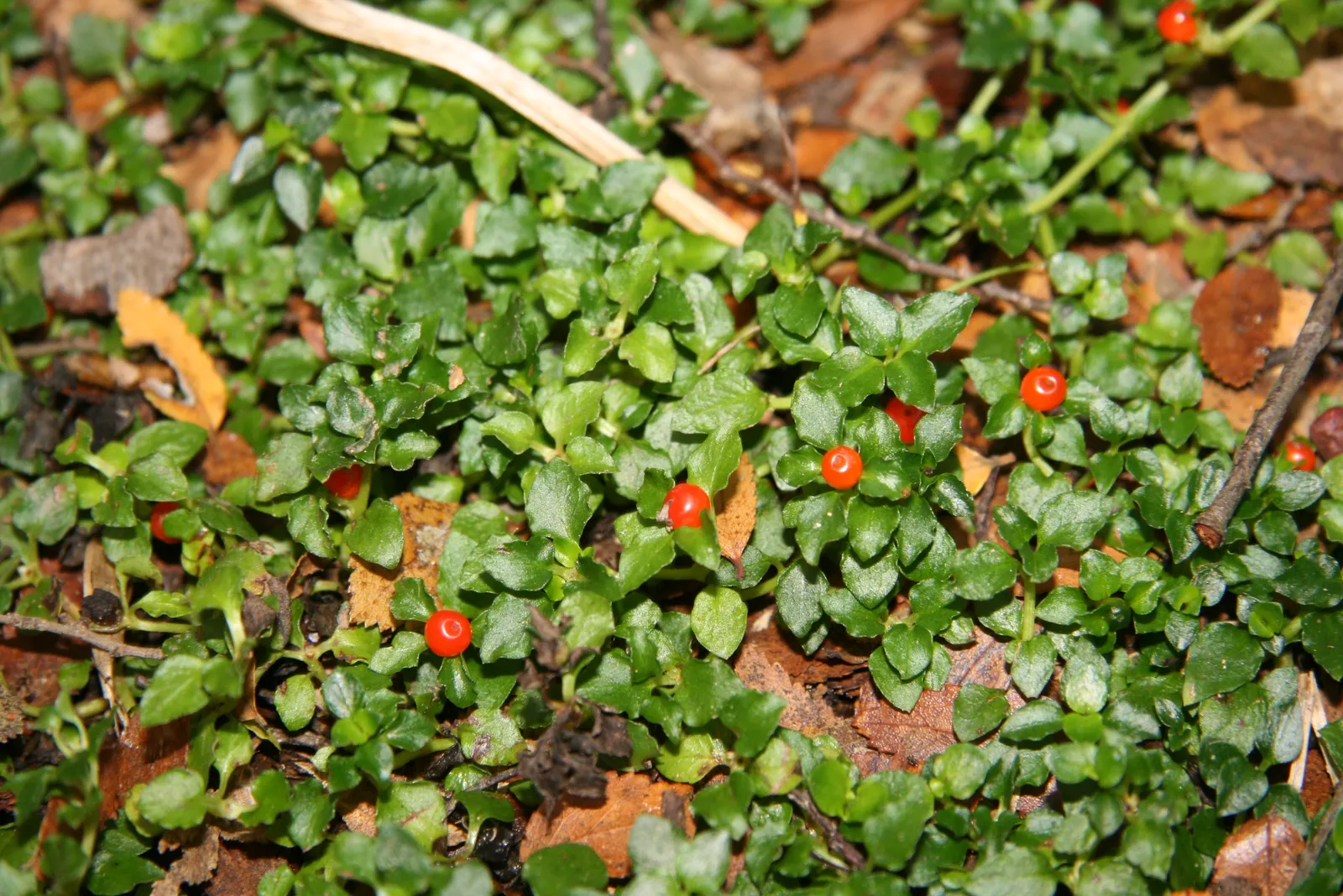
Nertera granadensis, commonly known as the coral bead plant or bead plant, is a captivating, low-growing perennial herb belonging to the expansive Rubiaceae family, which also includes coffee and gardenias. Native to a wide range of humid, tropical to subtropical regions across Central and South America, as well as parts of Australasia and the Pacific Islands, its transcontinental distribution is notably extensive. This compact plant forms a dense, verdant mat of minute, glossy, rounded succulent leaves, typically reaching only a few centimeters in height but spreading laterally.
Its most distinctive feature emerges in late summer through autumn: an abundance of small, spherical, intensely vibrant orange, red, or sometimes yellow berries that completely cover the foliage, creating a striking visual display. These 'beads' are the primary reason for its popularity as an ornamental specimen. The plant thrives in consistently moist, well-draining soil and prefers cool, humid environments with indirect light, making it an ideal choice for terrariums, vivariums, and as a unique indoor potted plant.
Its creeping habit makes it an excellent groundcover in suitable climates, though it is often cultivated as an annual indoors in less favorable conditions due to its specific environmental requirements.
Trusted Scientific References
1. Authoritative external sources for Nertera granadensis
1.1 Wikipedia — Nertera granadensis
1.2 Kew POWO (Plants of the World Online)
1.3 PubMed — peer-reviewed research
1.4 NCBI Taxonomy Browser
1.5 GBIF — Global Biodiversity
1.6Nertera Granadensis should be interpreted through verified botanical identity, practical care, and responsible safety language. This recovery note adds the missing context needed for a complete profile: match light to the plant's habit, use well-drained soil, water according to season, and avoid unsupported medicinal or edible claims. For publishing, the plant can be presented as a source-backed indoor plant with clear care guidance, common problem diagnosis, and conservative safety wording.
1.1.Nertera Granadensis — Key Features
- ✓ <strong>Striking Berry Display</strong> — Produces abundant, bright orange to red, bead-like berries in autumn and winter.
- ✓ <strong>Dense Groundcover Habit</strong> — Forms a compact, low-spreading mat of foliage, ideal for tight spaces.
- ✓ <strong>Succulent</strong> — like Leaves — Features tiny, rounded, glossy green leaves that give it a lush appearance.
- ✓ <strong>Terrarium Favorite</strong> — Perfectly suited for humid, enclosed environments due to its specific care requirements.
- ✓ <strong>Perennial in Ideal Climates</strong> — Can be a perennial in consistently cool, moist, frost-free conditions.
- ✓ <strong>Member of Rubiaceae Family</strong> — Part of a large and diverse plant family, alongside coffee and gardenias.
- ✓ <strong>Non</strong> — Medicinal Plant — Primarily cultivated for its aesthetic value, with no known therapeutic uses.
- ✓ <strong>Toxic if Ingested</strong> — Berries and foliage are poisonous, posing a risk to children and pets.
- ✓ <strong>Cool Temperature Preference</strong> — Thrives in cooler indoor temperatures, avoiding excessive heat.
- ✓ <strong>High Humidity Requirement</strong> — Needs consistent atmospheric moisture to flourish and produce berries.
1.2.Nertera Granadensis — Quick Summary
- ✓ Ornamental Houseplant — Prized for its vibrant red-orange berries and dense, mat-forming foliage.
- ✓ Toxic Berries — All parts of the plant, especially the berries, are toxic if ingested by humans or pets.
- ✓ High Humidity Lover — Thrives in cool, humid environments, making it ideal for terrariums.
- ✓ No Medicinal Use — Lacks traditional or modern medicinal applications due to its toxicity.
- ✓ Low-Growing Groundcover — Forms a compact, spreading mat, perfect for decorative containers.
- ✓ Easy Propagation — Can be readily grown from seeds or stem cuttings.
2.Nertera Granadensis — Scientific Identity
3.Nertera Granadensis — Quick Facts
4.Nertera Granadensis — Appearance & Identification
5.Nertera Granadensis — Native Habitat
6.Nertera Granadensis — Water Requirements
- ✓ Propagation — Primarily propagated by seed or stem cuttings, with cuttings rooting well in a moist, sandy medium.
- ✓ Light Requirements — Prefers bright, indirect light; direct sunlight can scorch its delicate leaves, while too little light can reduce berry production.
- ✓ Soil and Potting — Requires a well-draining, humus-rich, acidic soil mix, often with added peat or sphagnum moss to retain moisture.
- ✓ Watering — Needs consistent moisture; the soil should be kept evenly damp but never waterlogged to prevent root rot.
- ✓ Humidity — Thrives in high humidity, making it an excellent choice for terrariums or requiring regular misting in drier indoor environments.
- ✓ Temperature — Prefers cool temperatures, ideally between 50-65°F (10-18°C); it struggles in excessive heat.
- ✓ Fertilization — Feed sparingly with a balanced liquid fertilizer diluted to half strength during the growing season (spring and summer).
- ✓ Pruning — Minimal pruning is needed, mainly to remove spent foliage or to shape the plant and encourage denser growth.
Reviewed by the Flora Medical Global Botanical Review Panel
Multi-disciplinary editorial group · Botany · Ethnobotany · Herbal-medicine literature
Who reviewed this: This page was checked by the Flora Medical Global Botanical Review Panel — an in-house editorial group of botany graduates, ethnobotany researchers, and horticulture practitioners who collectively maintain our 7,000+ plant encyclopedia. Meet the team.
Our 4-step verification process
1. Taxonomic verification
Scientific names and synonyms cross-checked against Kew POWO, World Flora Online, and The Plant List.
2. Phytochemical & medicinal cross-reference
Active compounds, traditional uses, and reported activities are cross-referenced with PubMed, USDA Dr. Duke's database, and peer-reviewed ethnobotanical literature.
3. Conservation & distribution check
Distribution, ecology, and conservation status confirmed against GBIF occurrence records and the IUCN Red List.
4. Editorial & safety review
Every entry passes an editorial pass for clarity, originality, and safety notices (toxicity, contraindications, dosage caveats) before publication.
Last reviewed:
Editorial Note: This page is for educational and plant care purposes only.
Written by: Flora Medical Global Editorial Team
Reviewed by: Flora Medical Global Botanical Review Panel
Last Updated: June 15, 2026







Nertera Granadensis — Comments & Community Reviews
Rate this plant