
Care Disclaimer: Plant care recommendations are general guidelines based on common growing conditions. Individual results may vary based on your local environment, climate, and care routine. If your plant is toxic, keep it away from children and pets, and consult a veterinarian if accidental ingestion occurs.
1.Nolina — Overview
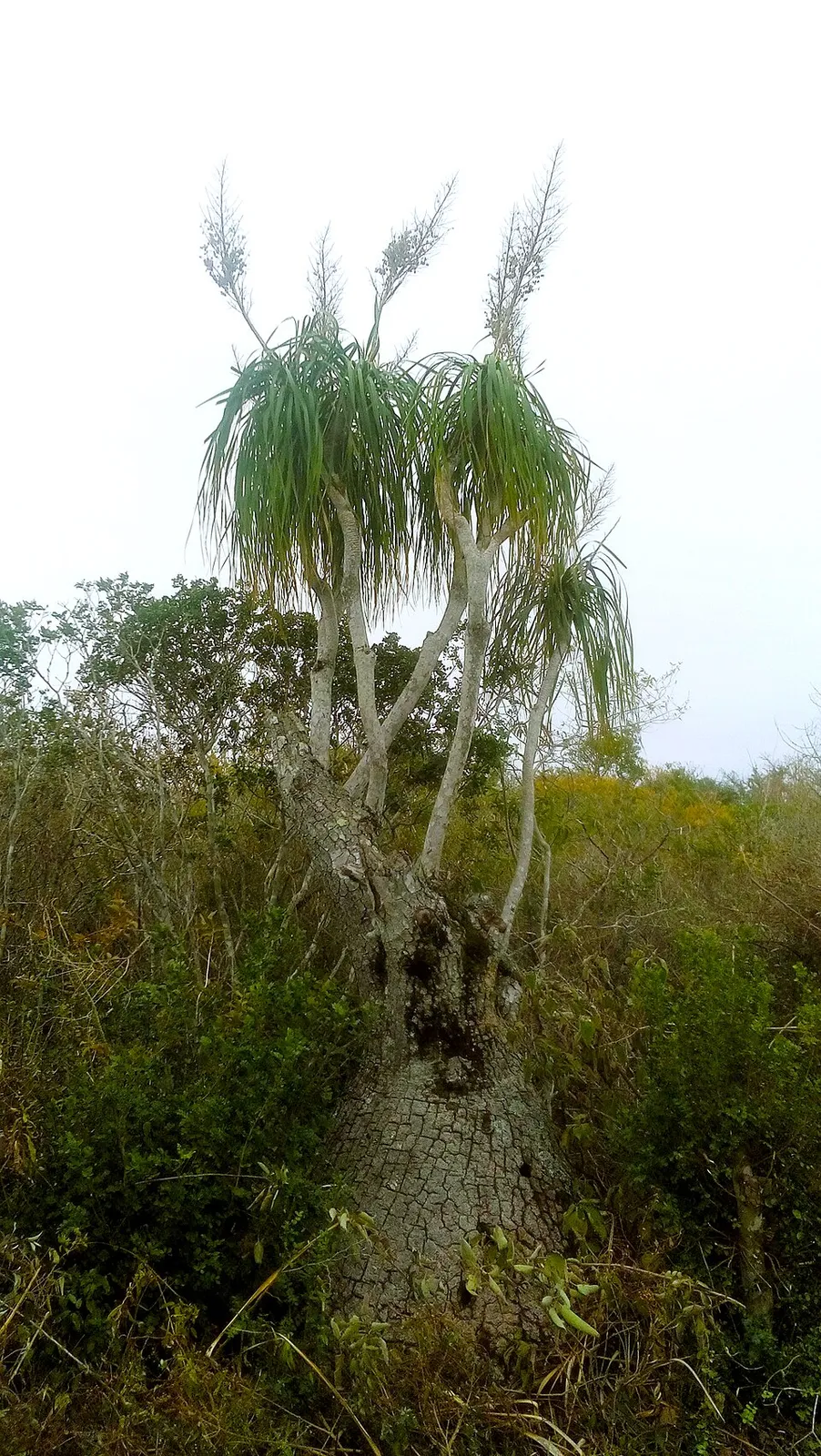
Nolina recurvata, widely recognized as the Ponytail Palm or Elephant Foot Tree, is a distinctive succulent perennial originating from the arid landscapes of southeastern Mexico, specifically the states of Veracruz, Oaxaca, and Puebla. Despite its common appellation, it is not a true palm but a member of the Asparagaceae family, a classification that underscores its unique botanical identity. The plant is characterized by its remarkable swollen, bulbous trunk base, known as a caudex, which can expand to several feet in diameter in mature specimens.
This caudex serves as a vital water-storage organ, enabling the Ponytail Palm to endure prolonged periods of drought in its native xeric scrub and dry forest habitats. From the apex of this robust caudex emerges a dense rosette of long, narrow, arching leaves, typically growing up to 1.5 to 2 meters (5 to 6.5 feet) in length, creating a cascading, ponytail-like appearance. The leaves are leathery, fibrous, and a deep green, often with finely toothed margins.
Nolina recurvata is a monocarpic species, meaning it flowers only once in its lifetime, usually after several decades of growth, producing a large, impressive panicle of small, creamy-white, dioecious flowers. In its natural environment, it thrives on rocky slopes and plains, enduring high temperatures and infrequent rainfall, but its habitat is increasingly threatened, leading to its classification as critically endangered. Its striking morphology and exceptional drought resilience have made it a highly prized ornamental plant globally, both for xeriscaping and as a popular, low-maintenance houseplant.
Trusted Scientific References
1. Authoritative external sources for Nolina recurvata
1.1 Wikipedia — Nolina recurvata
1.2 Kew POWO (Plants of the World Online)
1.3 PubMed — peer-reviewed research
1.4 NCBI Taxonomy Browser
1.5 GBIF — Global Biodiversity
1.6Nolina should be interpreted through verified botanical identity, practical care, and responsible safety language. This recovery note adds the missing context needed for a complete profile: match light to the plant's habit, use well-drained soil, water according to season, and avoid unsupported medicinal or edible claims. For publishing, the plant can be presented as a source-backed indoor plant with clear care guidance, common problem diagnosis, and conservative safety wording.
1.1.Nolina — Key Features
- ✓ <strong>Distinctive swollen caudex</strong> — Distinctive swollen caudex (bulbous trunk base) for water storage.
- ✓ <strong>Long, narrow, arching</strong> — Long, narrow, arching leaves that cascade like a ponytail.
- ✓ <strong>Exceptional drought tolerance</strong> — Exceptional drought tolerance and resilience.
- ✓ <strong>Critically endangered status</strong> — Critically endangered status in its native Mexican habitat.
- ✓ <strong>Not a true</strong> — Not a true palm; belongs to the Asparagaceae family.
- ✓ <strong>Monocarpic, flowering only</strong> — Monocarpic, flowering only once in its long lifespan, often after decades.
- ✓ <strong>Highly popular ornamental</strong> — Highly popular ornamental plant for indoor and xeriscape settings.
- ✓ <strong>Slow</strong> — growing, developing an impressive, architectural form over many years.
- ✓ <strong>Requires minimal care,</strong> — Requires minimal care, making it ideal for novice plant enthusiasts.
- ✓ <strong>Contributes to indoor</strong> — Contributes to indoor air quality and biophilic design benefits.
1.2.Nolina — Quick Summary
- ✓ Unique succulent perennial native to arid regions of Mexico, known for its bulbous, water-storing caudex and cascading, ponytail-like leaves.
- ✓ Primarily cultivated as a striking ornamental houseplant and for xeriscaping due to its extreme drought tolerance and low-maintenance nature.
- ✓ Classified as critically endangered in its native habitat due to habitat destruction and over-collection.
- ✓ Requires bright light, extremely well-draining soil, and infrequent watering, especially during cooler months.
- ✓ No significant traditional medicinal uses or scientifically documented therapeutic properties; generally considered non-toxic to humans and pets.
- ✓ Contributes to indoor air quality and psychological well-being as a living green presence.
2.Nolina — Scientific Identity
3.Nolina — Quick Facts
4.Nolina — Appearance & Identification
5.Nolina — Native Habitat
6.Nolina — Water Requirements
- ✓ Light — Requires strong, bright light exposure; a south-facing window with direct or indirect light is ideal. Can adapt to bright east or west windows but may benefit from supplemental artificial light. Rotate weekly for even growth.
- ✓ Watering — Water thoroughly in the morning when the soil is nearly dry; allow complete drainage and empty run-off. Reduce watering significantly from November to February to simulate its natural dormant period. Avoid watering directly onto the caudex to prevent rot.
- ✓ Soil — Prefers a gritty, well-draining potting mixture. A specialized cactus or succulent mix is suitable, or a homemade blend of three parts grit/sand to one part potting soil with a small amount of coir or shredded bark.
- ✓ Potting — Use a container with excellent drainage, ideally with a removable run-off dish. Repot every two years in spring, moving to only one size larger pot. Do not bury the stem deeper than it was previously, as this can lead to rot.
- ✓ Temperature — Thrives in warm household temperatures, ideally between 65-75°F (18-24°C). Protect from cold drafts and temperatures dipping below 50°F (10°C), which can be fatal.
- ✓ Nutrition — Fertilize lightly every other month during the active growing season (spring and summer) using a cactus-specific or balanced houseplant fertilizer. Over-fertilizing can lead to weak, soft growth.
- ✓ Humidity — Prefers low humidity; misting is unnecessary and can be detrimental, especially if water settles on the caudex.
- ✓ Propagation — Primarily propagated by seeds, which can be slow and challenging. Offsets (pups) can be carefully removed and rooted in spring once they reach about 6 inches in height, after allowing the cut surface to callous for several days.
Reviewed by the Flora Medical Global Botanical Review Panel
Multi-disciplinary editorial group · Botany · Ethnobotany · Herbal-medicine literature
Who reviewed this: This page was checked by the Flora Medical Global Botanical Review Panel — an in-house editorial group of botany graduates, ethnobotany researchers, and horticulture practitioners who collectively maintain our 7,000+ plant encyclopedia. Meet the team.
Our 4-step verification process
1. Taxonomic verification
Scientific names and synonyms cross-checked against Kew POWO, World Flora Online, and The Plant List.
2. Phytochemical & medicinal cross-reference
Active compounds, traditional uses, and reported activities are cross-referenced with PubMed, USDA Dr. Duke's database, and peer-reviewed ethnobotanical literature.
3. Conservation & distribution check
Distribution, ecology, and conservation status confirmed against GBIF occurrence records and the IUCN Red List.
4. Editorial & safety review
Every entry passes an editorial pass for clarity, originality, and safety notices (toxicity, contraindications, dosage caveats) before publication.
Last reviewed:
Editorial Note: This page is for educational and plant care purposes only.
Written by: Flora Medical Global Editorial Team
Reviewed by: Flora Medical Global Botanical Review Panel
Last Updated: June 15, 2026







Nolina — Comments & Community Reviews
Rate this plant