
Care Disclaimer: Plant care recommendations are general guidelines based on common growing conditions. Individual results may vary based on your local environment, climate, and care routine. If your plant is toxic, keep it away from children and pets, and consult a veterinarian if accidental ingestion occurs.
1.Notocactus Magnificus — Overview
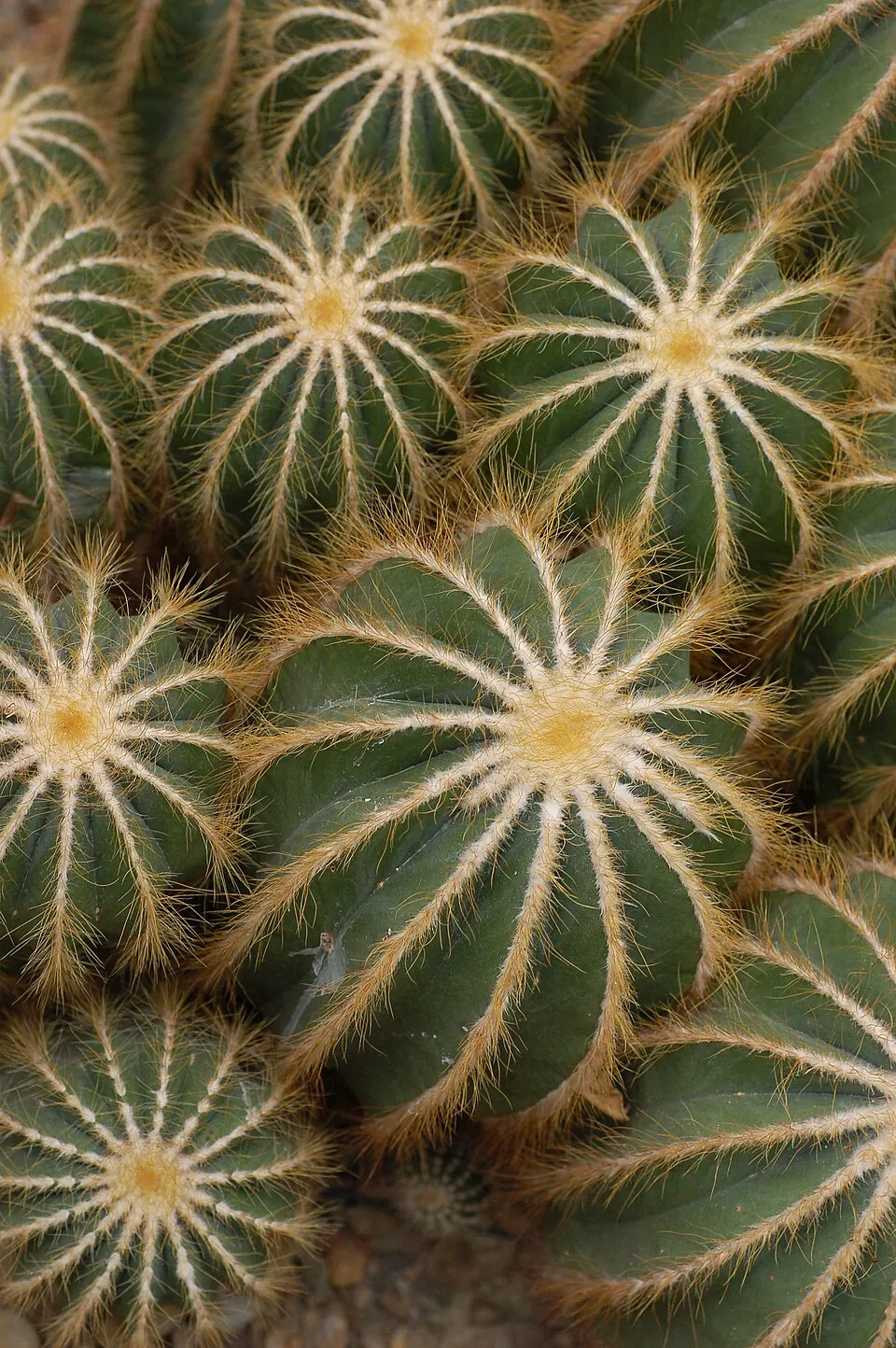
Parodia magnifica, often known by its former botanical name Notocactus magnificus or colloquially as the Magnificent Barrel Cactus or Balloon Cactus, is a captivating globular succulent belonging to the Cactaceae family within the order Caryophyllales. This species is indigenous to southern Brazil, where it thrives in cool, dry temperate grasslands at elevations up to 800 meters. Characterized by its spherical to short-cylindrical stem, Parodia magnifica typically reaches a height of 7 to 15 cm (3 to 6 inches) and can spread up to 45 cm (18 inches) in breadth.
The vibrant green stem is adorned with prominent, heavily ribbed structures, usually numbering 13 to 20, from which arise woolly areoles bearing creamy-white, robust spines up to 2.5 cm long. These striking spines create a dramatic visual contrast against the cactus body. During the summer months, Parodia magnifica produces spectacular, pale yellow flowers, which can measure up to 5 cm (2 inches) in diameter, emerging in a ring around its crown.
Its unique architecture, including a thick, waxy cuticle and CAM photosynthesis, allows it to efficiently store water and minimize loss, making it exceptionally drought-resistant. Despite its ornamental popularity, it is listed as 'Endangered' by the IUCN Red List due to sparse and fragmented wild populations in its native habitat. Its ease of care and striking appearance make it a favorite among succulent enthusiasts and a valuable subject for botanical study.
Trusted Scientific References
1. Authoritative external sources for Parodia magnifica
1.1 Wikipedia — Parodia magnifica
1.2 Kew POWO (Plants of the World Online)
1.3 PubMed — peer-reviewed research
1.4 NCBI Taxonomy Browser
1.5 GBIF — Global Biodiversity
1.6Notocactus Magnificus should be interpreted through verified botanical identity, practical care, and responsible safety language. This recovery note adds the missing context needed for a complete profile: match light to the plant's habit, use well-drained soil, water according to season, and avoid unsupported medicinal or edible claims. For publishing, the plant can be presented as a source-backed indoor plant with clear care guidance, common problem diagnosis, and conservative safety wording.
1.1.Notocactus Magnificus — Key Features
- ✓ <strong>Endangered Species</strong> — Listed as 'Endangered' by the IUCN Red List due to fragmented wild populations.
- ✓ <strong>Globular Morphology</strong> — Distinctive spherical to short-cylindrical stem with prominent ribs.
- ✓ <strong>Striking Spines</strong> — Features dense, creamy-white woolly spines contrasting with its green body.
- ✓ <strong>Summer Blooms</strong> — Produces spectacular, pale yellow flowers during the summer months.
- ✓ <strong>Native to Southern Brazil</strong> — Naturally occurs in temperate grasslands up to 800m elevation.
- ✓ <strong>Drought</strong> — Resistant — Highly adapted to arid environments through CAM photosynthesis and water-storing tissues.
- ✓ <strong>Ornamental Value</strong> — Widely popular in cultivation for its unique aesthetic and ease of care.
- ✓ <strong>Traditional Hydration</strong> — Historically utilized for its water content in survival situations by indigenous peoples.
- ✓ <strong>Skin Soothing Properties</strong> — Mucilaginous pulp traditionally applied topically for skin irritation.
- ✓ <strong>Cactaceae Family Member</strong> — Belongs to the cactus family, known for its succulent adaptations.
1.2.Notocactus Magnificus — Quick Summary
- ✓ Parodia magnifica, or Magnificent Barrel Cactus, is an endangered globular succulent native to southern Brazil.
- ✓ Known for its ribbed, spiny stem and vibrant yellow summer blooms, primarily grown as an ornamental.
- ✓ Traditionally used by indigenous cultures for hydration and soothing skin due to its mucilaginous pulp.
- ✓ Contains polysaccharides, flavonoids, and betalains, contributing to potential antioxidant and anti-inflammatory effects.
- ✓ Requires bright sun, well-draining soil, and infrequent watering, highly adapted to arid conditions.
- ✓ Medicinal applications are largely traditional and require careful preparation, particularly spine removal.
2.Notocactus Magnificus — Scientific Identity
3.Notocactus Magnificus — Quick Facts
4.Notocactus Magnificus — Appearance & Identification
5.Notocactus Magnificus — Native Habitat
6.Notocactus Magnificus — Water Requirements
- ✓ Light — Requires abundant bright, direct sunlight for at least 6 hours daily; a south-facing window or outdoor full sun exposure is ideal.
- ✓ Soil — Needs extremely well-draining soil, typically a cactus or succulent mix amended with coarse sand, perlite, or pumice to prevent root rot.
- ✓ Watering — Water thoroughly only when the soil is completely dry to the touch, then allow excess water to drain completely; reduce watering significantly in winter.
- ✓ Temperature — Prefers warm temperatures between 20-35°C (68-95°F) during the growing season; can tolerate brief drops to -5°C (23°F) but protect from prolonged frost.
- ✓ Humidity — Thrives in low humidity environments, typical of its native arid habitat; avoid overly humid conditions.
- ✓ Fertilization — Feed sparingly with a diluted, low-nitrogen liquid cactus fertilizer once or twice during the active growing season (spring/summer).
- ✓ Propagation — Primarily propagated by seeds, which can be sown in well-draining soil; offsets are rare but can be rooted if they form.
- ✓ Potting — Use terracotta pots with drainage holes to allow for good airflow and prevent moisture retention.
Reviewed by the Flora Medical Global Botanical Review Panel
Multi-disciplinary editorial group · Botany · Ethnobotany · Herbal-medicine literature
Who reviewed this: This page was checked by the Flora Medical Global Botanical Review Panel — an in-house editorial group of botany graduates, ethnobotany researchers, and horticulture practitioners who collectively maintain our 7,000+ plant encyclopedia. Meet the team.
Our 4-step verification process
1. Taxonomic verification
Scientific names and synonyms cross-checked against Kew POWO, World Flora Online, and The Plant List.
2. Phytochemical & medicinal cross-reference
Active compounds, traditional uses, and reported activities are cross-referenced with PubMed, USDA Dr. Duke's database, and peer-reviewed ethnobotanical literature.
3. Conservation & distribution check
Distribution, ecology, and conservation status confirmed against GBIF occurrence records and the IUCN Red List.
4. Editorial & safety review
Every entry passes an editorial pass for clarity, originality, and safety notices (toxicity, contraindications, dosage caveats) before publication.
Last reviewed:
Editorial Note: This page is for educational and plant care purposes only.
Written by: Flora Medical Global Editorial Team
Reviewed by: Flora Medical Global Botanical Review Panel
Last Updated: June 15, 2026







Notocactus Magnificus — Comments & Community Reviews
Rate this plant