
Care Disclaimer: Plant care recommendations are general guidelines based on common growing conditions. Individual results may vary based on your local environment, climate, and care routine. If your plant is toxic, keep it away from children and pets, and consult a veterinarian if accidental ingestion occurs.
1.Oncidium Twinkle — Overview
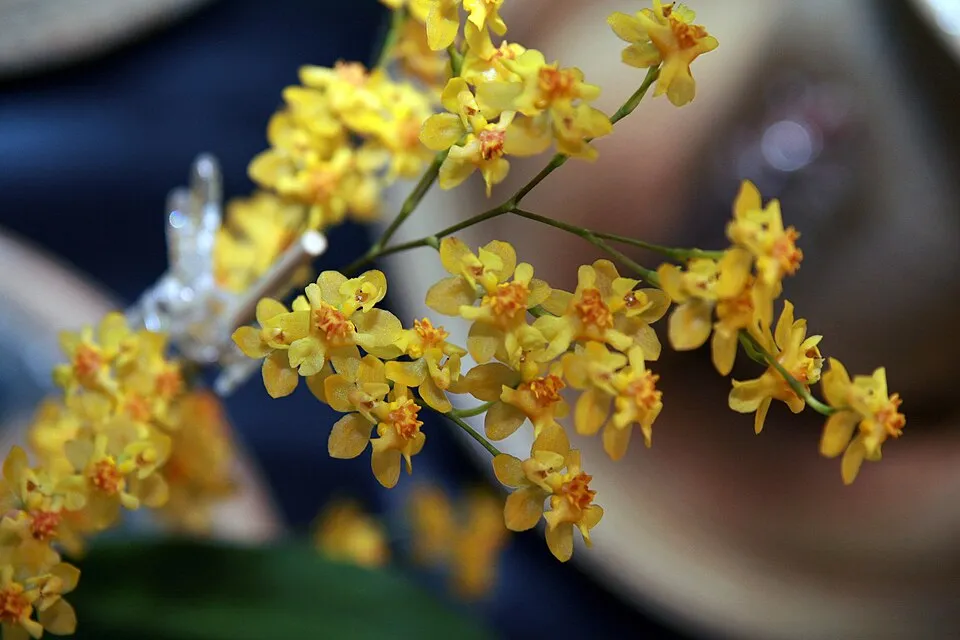
Oncidium Twinkle, commonly celebrated as the Dancing Lady Orchid, is a captivating and compact hybrid within the expansive Orchidaceae family. This epiphytic orchid typically achieves a modest height of 30 to 45 centimeters, presenting slender, elongated leaves that can extend up to 30 centimeters in length. The foliage is a vibrant green, strap-like, and forms an elegant backdrop for its prolific floral display. The plant generates gracefully arching spikes adorned with numerous small flowers, clustered densely.
Individual blossoms measure approximately 2 to 3 centimeters across, characterized by a striking yellow base often accentuated with maroon markings. A distinctive feature of Oncidium Twinkle is its sweet, pervasive vanilla-like fragrance, which significantly enhances its appeal, particularly in indoor environments. This orchid traces its lineage to the tropical and subtropical regions of Central and South America, where its parent species thrive in warm, humid conditions. In its natural setting, Oncidium Twinkle, like many epiphytes, gracefully attaches itself to trees, absorbing essential moisture and nutrients from the ambient air and accumulated organic detritus.
Its stems are characteristically slender and pseudobulbous, contributing to the plant's overall elegant and delicate stature. Taxonomically, Oncidium belongs to a vast and highly diverse genus renowned for its extensive hybridization, making Oncidium Twinkle a successful horticultural hybrid specifically bred for its aesthetic qualities and manageable size.
Trusted Scientific References
1. Authoritative external sources for Oncidium Twinkle
1.1 Wikipedia — Oncidium Twinkle
1.2 Kew POWO (Plants of the World Online)
1.3 PubMed — peer-reviewed research
1.4 NCBI Taxonomy Browser
1.5 GBIF — Global Biodiversity
1.6Oncidium Twinkle should be interpreted through verified botanical identity, practical care, and responsible safety language. This recovery note adds the missing context needed for a complete profile: match light to the plant's habit, use well-drained soil, water according to season, and avoid unsupported medicinal or edible claims. For publishing, the plant can be presented as a source-backed indoor plant with clear care guidance, common problem diagnosis, and conservative safety wording.
1.1.Oncidium Twinkle — Key Features
- ✓ <strong>Scientific Name</strong> — Oncidium Twinkle
- ✓ <strong>Common Name</strong> — Dancing Lady Orchid
- ✓ <strong>Family</strong> — Orchidaceae
- ✓ <strong>Distinctive Fragrance</strong> — Sweet vanilla or sugar cookie scent
- ✓ <strong>Flower Colors</strong> — Varieties include red, pink, white, yellow, and cinnamon hues
- ✓ <strong>Bloom Season</strong> — Primarily winter, but can be free-flowering with new growth maturation
- ✓ <strong>Growth Habit</strong> — Compact, epiphytic hybrid with pseudobulbs
- ✓ <strong>Native Region</strong> — Tropical and subtropical Central and South America (parent species)
- ✓ <strong>Care Level</strong> — Relatively low maintenance, considered easy to grow indoors
- ✓ <strong>Aesthetic Value</strong> — Highly prized for its beautiful, abundant floral displays and pleasant aroma
1.2.Oncidium Twinkle — Quick Summary
- ✓ Oncidium Twinkle is a compact, fragrant orchid known for its vanilla-scented blooms.
- ✓ Primarily an ornamental plant, highly valued for its aesthetic appeal and mood-enhancing qualities.
- ✓ An easy-going hybrid, making it suitable for indoor cultivation by both novice and experienced growers.
- ✓ Thrives in bright, indirect light, consistent moisture, and moderate to high humidity.
- ✓ While not specifically researched, general orchids are referenced in traditional medicine for respiratory and immune support.
- ✓ Lacks specific scientific or clinical research to support direct medicinal applications for human consumption.
2.Oncidium Twinkle — Scientific Identity
3.Oncidium Twinkle — Quick Facts
4.Oncidium Twinkle — Appearance & Identification
5.Oncidium Twinkle — Native Habitat
6.Oncidium Twinkle — Water Requirements
- ✓ Light — Provide bright, indirect light; east or west-facing windows are ideal. Leaves should be light green; yellowing indicates too much light, dark green suggests insufficient light for optimal blooming.
- ✓ Temperature — Maintain indoor temperatures between 55-85°F (13-29°C), with a slight diurnal drop to encourage flowering.
- ✓ Humidity — Prefers moderate to high humidity, around 40-60%. Can tolerate temporary dips, but consistent low humidity may cause dry leaf tips.
- ✓ Watering — Oncidium Twinkle is a thirsty orchid, especially during active growth. Water frequently, allowing the media to dry slightly between waterings. Reduce frequency during its winter rest period.
- ✓ Potting Media — Use a well-draining yet moisture-retentive mix such as small bark, sphagnum moss, or a blend of inorganic components like kanama, akadama, and perlite.
- ✓ Repotting — Repot when new root growth emerges from new pseudobulbs or when the plant outgrows its pot, typically every 1-2 years. Be gentle with the fine root system to avoid setting the plant back.
- ✓ Fertilization — Fertilize regularly during active growth with a balanced orchid fertilizer (e.g., MSU formula at 100 ppm), adjusting water pH to around 6.5. Flush the media monthly with plain water to prevent salt buildup.
- ✓ Blooming — Spikes can take 3-6 months to develop into flowers. Blooms typically appear in winter and last about a month, emitting a strong vanilla scent. Cooler temperatures can enhance flower vibrancy and longevity.
Reviewed by the Flora Medical Global Botanical Review Panel
Multi-disciplinary editorial group · Botany · Ethnobotany · Herbal-medicine literature
Who reviewed this: This page was checked by the Flora Medical Global Botanical Review Panel — an in-house editorial group of botany graduates, ethnobotany researchers, and horticulture practitioners who collectively maintain our 7,000+ plant encyclopedia. Meet the team.
Our 4-step verification process
1. Taxonomic verification
Scientific names and synonyms cross-checked against Kew POWO, World Flora Online, and The Plant List.
2. Phytochemical & medicinal cross-reference
Active compounds, traditional uses, and reported activities are cross-referenced with PubMed, USDA Dr. Duke's database, and peer-reviewed ethnobotanical literature.
3. Conservation & distribution check
Distribution, ecology, and conservation status confirmed against GBIF occurrence records and the IUCN Red List.
4. Editorial & safety review
Every entry passes an editorial pass for clarity, originality, and safety notices (toxicity, contraindications, dosage caveats) before publication.
Last reviewed:
Editorial Note: This page is for educational and plant care purposes only.
Written by: Flora Medical Global Editorial Team
Reviewed by: Flora Medical Global Botanical Review Panel
Last Updated: June 15, 2026







Oncidium Twinkle — Comments & Community Reviews
Rate this plant