

Care Disclaimer: Plant care recommendations are general guidelines based on common growing conditions. Individual results may vary based on your local environment, climate, and care routine. If your plant is toxic, keep it away from children and pets, and consult a veterinarian if accidental ingestion occurs.
1.Ophiopogon Japonicus Indoor — Overview
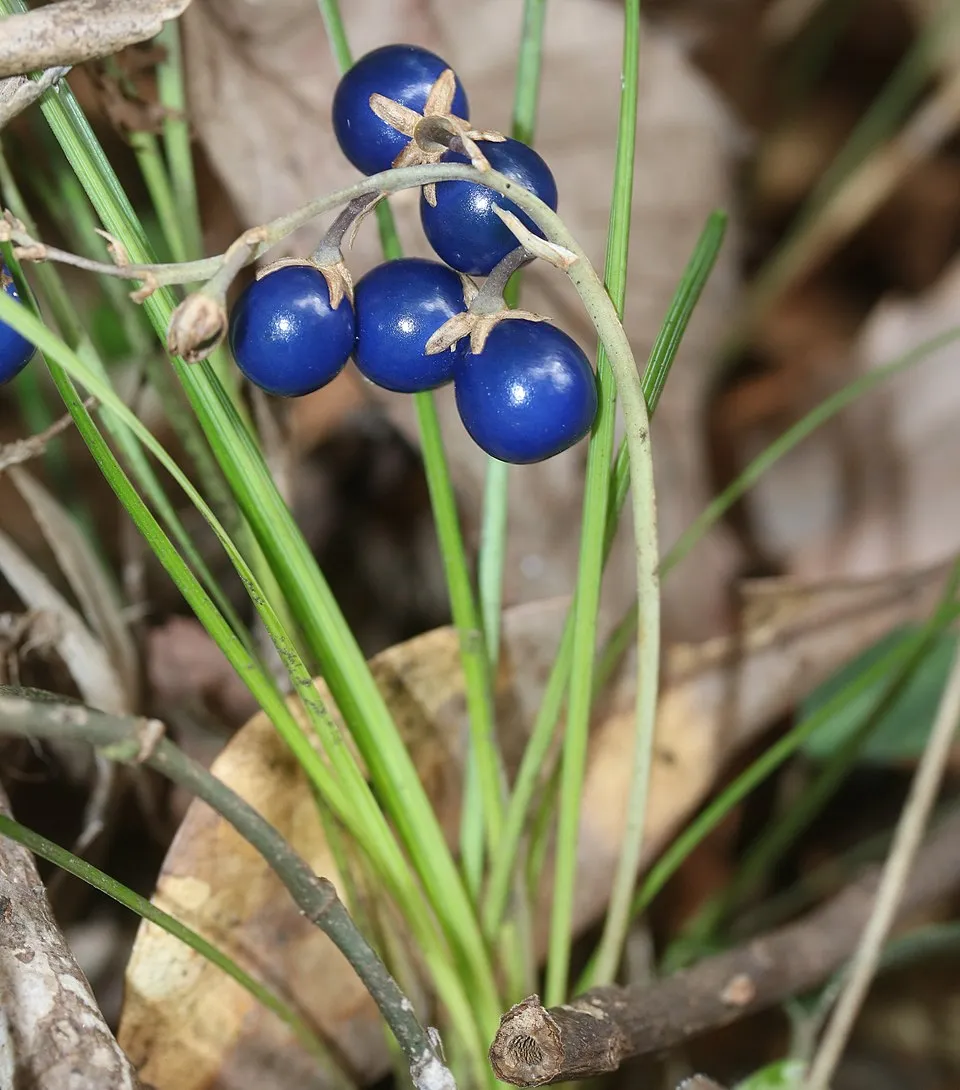
Ophiopogon japonicus, widely recognized as Mondo Grass or Dwarf Lilyturf, is a highly resilient evergreen perennial belonging to the Asparagaceae family, distinguishing it from true grasses by its closer relation to lilies. Native to East Asia, particularly Japan, China, and Korea, this plant forms dense, low-growing clumps of narrow, strap-like leaves, typically reaching heights of 15 to 30 centimeters (6 to 12 inches). Its dark green, glossy foliage provides an attractive, consistent backdrop in diverse settings.
While primarily valued for its evergreen leaves, Ophiopogon japonicus produces delicate, small, white to pale lavender flowers that emerge on short stems in late summer to early fall, followed by small, non-toxic, cobalt blue berries. The plant's robust underground rhizomes are fibrous, contributing to its hardiness and ability to thrive in various conditions. It is notably resistant to juglone, making it suitable for planting under black walnut trees, and also exhibits tolerance to salt, deer, and rabbits.
This species is available in both a standard type that spreads via stolons, ideal for large groundcover areas, and a dwarf type that grows in dense tufts, perfect for borders or between pavers. It adapts well to a range of indoor and outdoor environments, preferring well-draining soil and flourishing best in moderate indirect sunlight, though it can tolerate full sun to deep shade, with shadier conditions enhancing its deep green hue. Its low maintenance requirements and adaptability make it a popular choice for ornamental landscaping and indoor gardening globally.
Trusted Scientific References
1. Authoritative external sources for Ophiopogon japonicus
1.1 Wikipedia — Ophiopogon japonicus
1.2 Kew POWO (Plants of the World Online)
1.3 PubMed — peer-reviewed research
1.4 NCBI Taxonomy Browser
1.5 GBIF — Global Biodiversity
1.6Ophiopogon Japonicus Indoor should be interpreted through verified botanical identity, practical care, and responsible safety language. This recovery note adds the missing context needed for a complete profile: match light to the plant's habit, use well-drained soil, water according to season, and avoid unsupported medicinal or edible claims. For publishing, the plant can be presented as a source-backed indoor plant with clear care guidance, common problem diagnosis, and conservative safety wording.
1.1.Ophiopogon Japonicus Indoor — Key Features
- ✓ <strong>Evergreen Foliage</strong> — Maintains vibrant, dark green, strap-like leaves year-round, offering consistent aesthetic appeal.
- ✓ <strong>Resilient Groundcover</strong> — Forms dense, spreading clumps, making it an excellent, low-maintenance choice for groundcover or borders.
- ✓ <strong>Adaptable to Shade</strong> — Thrives in partial to full shade, providing a valuable option for challenging garden spots where other plants struggle.
- ✓ <strong>Medicinal Rhizomes</strong> — Its underground rhizomes are the primary part utilized in traditional medicine for a range of health benefits.
- ✓ <strong>Small Lilac Flowers</strong> — Produces delicate white to pale lavender flowers in late summer, followed by distinctive small blue berries.
- ✓ <strong>Juglone Resistant</strong> — Uniquely tolerant to juglone, enabling successful growth under black walnut trees without adverse effects.
- ✓ <strong>Drought Tolerant</strong> — Once established, it exhibits good drought resistance, reducing the need for frequent watering.
- ✓ <strong>Deer & Rabbit Resistant</strong> — Generally unpalatable to deer and rabbits, protecting it from common garden browsing.
- ✓ <strong>Non</strong> — Toxic Berries — Develops small, non-toxic cobalt blue berries, which add seasonal visual interest.
- ✓ <strong>Low Maintenance</strong> — Requires minimal care, making it suitable for both experienced gardeners and beginners seeking easy-care plants.
1.2.Ophiopogon Japonicus Indoor — Quick Summary
- ✓ Botanical Name — Ophiopogon japonicus, commonly known as Mondo Grass or Dwarf Lilyturf.
- ✓ Traditional Uses — Valued in Traditional Chinese Medicine (TCM) for heart health, cough relief, and lung moistening.
- ✓ Key Constituents — Rich in steroidal saponins (ophiopogonins), immunomodulatory polysaccharides, and flavonoids.
- ✓ Ornamental Value — Popular evergreen perennial for groundcover, borders, and containers due to its attractive, resilient foliage.
- ✓ Growth Profile — Low-maintenance, adaptable to various light conditions, and thrives in well-draining soil in USDA Zones 6-10.
- ✓ Safety Note — Generally safe, but caution advised for pregnant individuals, those on heart medication, or with diabetes, always consult a professional.
2.Ophiopogon Japonicus Indoor — Scientific Identity
3.Ophiopogon Japonicus Indoor — Quick Facts
4.Ophiopogon Japonicus Indoor — Appearance & Identification
5.Ophiopogon Japonicus Indoor — Native Habitat
6.Ophiopogon Japonicus Indoor — Water Requirements
- ✓ Light Requirements — Prefers partial shade for optimal foliage color and growth, though it is highly adaptable and can tolerate conditions from full sun to deep shade.
- ✓ Soil Preference — Thrives in well-draining soil types, including sandy or loamy, with a slightly acidic to neutral pH range of 5.5-7; also suitable for containers.
- ✓ Watering Schedule — Requires regular moisture during establishment; once mature, it becomes drought-tolerant, but avoid overwatering to prevent root rot.
- ✓ Temperature & Hardiness — Best grown in USDA Hardiness Zones 6-10, as the plant is sensitive to hard frosts which can cause significant damage.
- ✓ Fertilization Needs — Generally low-maintenance regarding nutrients; a light top-dressing of compost in early spring is usually sufficient if fertilization is desired.
- ✓ Propagation Method — Most effectively propagated by dividing mature clumps in early spring, ensuring each section has a healthy root system and some foliage.
- ✓ Maintenance & Pruning — Minimal maintenance required; does not need mowing and only benefits from the removal of dead or damaged foliage to maintain its appearance.
- ✓ Pest & Disease Resistance — Generally robust, but watch for slugs and snails; susceptible to fungal issues and root rot if kept in overly wet or poorly drained conditions.
Reviewed by the Flora Medical Global Botanical Review Panel
Multi-disciplinary editorial group · Botany · Ethnobotany · Herbal-medicine literature
Who reviewed this: This page was checked by the Flora Medical Global Botanical Review Panel — an in-house editorial group of botany graduates, ethnobotany researchers, and horticulture practitioners who collectively maintain our 7,000+ plant encyclopedia. Meet the team.
Our 4-step verification process
1. Taxonomic verification
Scientific names and synonyms cross-checked against Kew POWO, World Flora Online, and The Plant List.
2. Phytochemical & medicinal cross-reference
Active compounds, traditional uses, and reported activities are cross-referenced with PubMed, USDA Dr. Duke's database, and peer-reviewed ethnobotanical literature.
3. Conservation & distribution check
Distribution, ecology, and conservation status confirmed against GBIF occurrence records and the IUCN Red List.
4. Editorial & safety review
Every entry passes an editorial pass for clarity, originality, and safety notices (toxicity, contraindications, dosage caveats) before publication.
Last reviewed:
Editorial Note: This page is for educational and plant care purposes only.
Written by: Flora Medical Global Editorial Team
Reviewed by: Flora Medical Global Botanical Review Panel
Last Updated: June 15, 2026







Ophiopogon Japonicus Indoor — Comments & Community Reviews
Rate this plant