
Care Disclaimer: Plant care recommendations are general guidelines based on common growing conditions. Individual results may vary based on your local environment, climate, and care routine. If your plant is toxic, keep it away from children and pets, and consult a veterinarian if accidental ingestion occurs.
1.Orchid Epidendrum — Overview
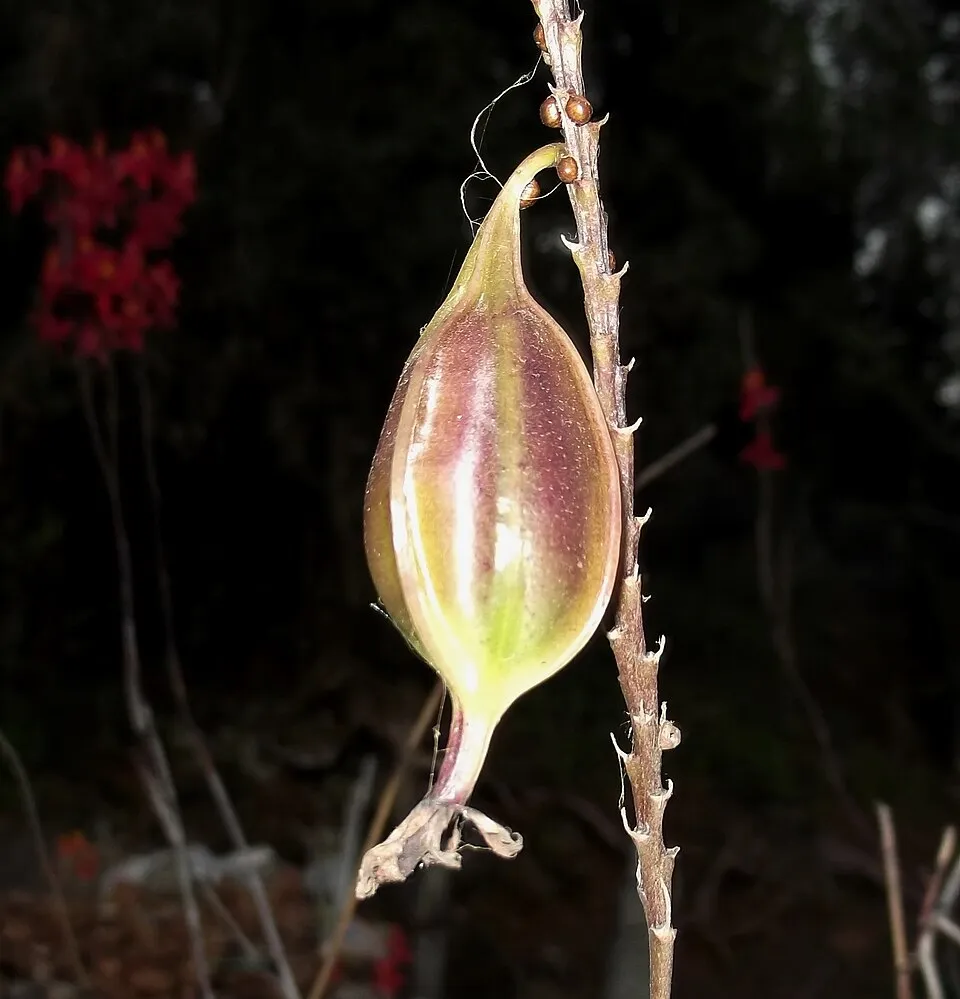
Epidendrum radicans, commonly known as the Orchid Epidendrum or Reedstem Epidendrum, is a striking perennial epiphytic orchid native to the tropical and subtropical regions of Central America, particularly abundant in Mexico and Guatemala. This resilient species typically grows to a height of 30 to 60 cm, though under optimal conditions, its reed-like stems can ramble much taller. Its slender, often branching stems are characterized by their smooth texture, supporting alternately arranged, lanceolate leaves that can reach 15 to 25 cm in length.
The most captivating feature is its vibrant inflorescence, which presents in terminal clusters of numerous small flowers, typically bright orange to yellow. Each flower, measuring approximately 3 to 5 cm across, displays five distinct petals and a prominent, often trilobed lip that may be streaked with contrasting red or brown markings. As an epiphyte, Epidendrum radicans naturally adheres to trees or rocks, drawing moisture and nutrients from the humid air and decaying organic matter, rather than soil.
This adaptation to high humidity and filtered light makes it a popular and somewhat demanding ornamental plant for indoor cultivation, belonging to the diverse and extensive Orchidaceae family, which boasts over 25,000 known species globally. Its robust growth habit and showy blooms contribute to its significant appeal in botanical collections.
Trusted Scientific References
1. Authoritative external sources for Epidendrum radicans
1.1 Wikipedia — Epidendrum radicans
1.2 Kew POWO (Plants of the World Online)
1.3 PubMed — peer-reviewed research
1.4 NCBI Taxonomy Browser
1.5 GBIF — Global Biodiversity
1.6Orchid Epidendrum should be interpreted through verified botanical identity, practical care, and responsible safety language. This recovery note adds the missing context needed for a complete profile: match light to the plant's habit, use well-drained soil, water according to season, and avoid unsupported medicinal or edible claims. For publishing, the plant can be presented as a source-backed indoor plant with clear care guidance, common problem diagnosis, and conservative safety wording.
1.1.Orchid Epidendrum — Key Features
- ✓ <strong>Epiphytic Growth Habit</strong> — Thrives on trees or rocks, absorbing moisture and nutrients from the air.
- ✓ <strong>Vibrant Orange to Yellow Flowers</strong> — Showy inflorescences with distinct, often streaked lips.
- ✓ <strong>Reed</strong> — like Stems — Slender, often branching stems characteristic of the 'reedstem' orchid group.
- ✓ <strong>Central American Native</strong> — Indigenous to humid regions of Mexico and Guatemala.
- ✓ <strong>Traditional Medicinal Uses</strong> — Folkloric applications for digestion, respiratory health, and inflammation.
- ✓ <strong>Limited Scientific Validation</strong> — Modern research on its specific medicinal efficacy is scarce.
- ✓ <strong>High Ornamental Value</strong> — Popular as an indoor plant for its striking appearance.
- ✓ <strong>Specific Cultivation Requirements</strong> — Demands careful management of light, water, and temperature.
- ✓ <strong>Orchidaceae Family Member</strong> — Belongs to one of the largest and most diverse plant families.
1.2.Orchid Epidendrum — Quick Summary
- ✓ Orchid Epidendrum (Epidendrum radicans) is an epiphytic orchid native to Central America, prized for its vibrant ornamental flowers.
- ✓ Traditionally used in folk medicine for digestive and respiratory support, and as an anti-inflammatory.
- ✓ Scientific research specifically on its medicinal properties is limited, and most claims are based on traditional use.
- ✓ Requires specific care for cultivation, including bright indirect light, consistent moisture, and good air circulation.
- ✓ Contains various phytochemicals like flavonoids and alkaloids, which may contribute to its observed traditional effects.
- ✓ Caution is advised for medicinal use due to lack of comprehensive safety data, especially for pregnant women and children.
2.Orchid Epidendrum — Scientific Identity
3.Orchid Epidendrum — Quick Facts
4.Orchid Epidendrum — Appearance & Identification
5.Orchid Epidendrum — Native Habitat
6.Orchid Epidendrum — Water Requirements
- ✓ Light — Provide bright, indirect light, equivalent to 2500-3500 footcandles (60-70% shade); insufficient light leads to leggy growth, while excessive light may cause foliage bronzing.
- ✓ Watering — Water thoroughly when the growing medium approaches dryness, typically every 4-5 days during active growth (March-October) and reducing to 7-8 days in cooler, drier periods.
- ✓ Potting Medium — Use an open, well-draining mix, such as a combination of fine and medium-grade fir bark (70-80%) with 15-20% coarse perlite or coconut chips, ensuring good aeration for the roots.
- ✓ Fertilization — Apply a balanced orchid fertilizer (e.g., 20-10-20) at half strength every other watering during the growing season; reduce or cease fertilization in fall and winter to limit cane growth.
- ✓ Temperature — Maintain night temperatures between 10-15°C (50-60°F) and day temperatures below 27°C (80°F); while tolerant of some chill, prolonged exposure below 4°C (40°F) can cause stress and leaf drop.
- ✓ Air Circulation — Ensure excellent air movement around the plant to prevent fungal diseases and deter pests like aphids, especially in humid environments.
- ✓ Pest Management — Regularly inspect for common orchid pests such as hard brown scale and aphids, treating promptly with appropriate horticultural oils or insecticidal soaps if detected.
Reviewed by the Flora Medical Global Botanical Review Panel
Multi-disciplinary editorial group · Botany · Ethnobotany · Herbal-medicine literature
Who reviewed this: This page was checked by the Flora Medical Global Botanical Review Panel — an in-house editorial group of botany graduates, ethnobotany researchers, and horticulture practitioners who collectively maintain our 7,000+ plant encyclopedia. Meet the team.
Our 4-step verification process
1. Taxonomic verification
Scientific names and synonyms cross-checked against Kew POWO, World Flora Online, and The Plant List.
2. Phytochemical & medicinal cross-reference
Active compounds, traditional uses, and reported activities are cross-referenced with PubMed, USDA Dr. Duke's database, and peer-reviewed ethnobotanical literature.
3. Conservation & distribution check
Distribution, ecology, and conservation status confirmed against GBIF occurrence records and the IUCN Red List.
4. Editorial & safety review
Every entry passes an editorial pass for clarity, originality, and safety notices (toxicity, contraindications, dosage caveats) before publication.
Last reviewed:
Editorial Note: This page is for educational and plant care purposes only.
Written by: Flora Medical Global Editorial Team
Reviewed by: Flora Medical Global Botanical Review Panel
Last Updated: June 15, 2026







Orchid Epidendrum — Comments & Community Reviews
Rate this plant