
Care Disclaimer: Plant care recommendations are general guidelines based on common growing conditions. Individual results may vary based on your local environment, climate, and care routine. If your plant is toxic, keep it away from children and pets, and consult a veterinarian if accidental ingestion occurs.
1.Orchid Ludisia — Overview
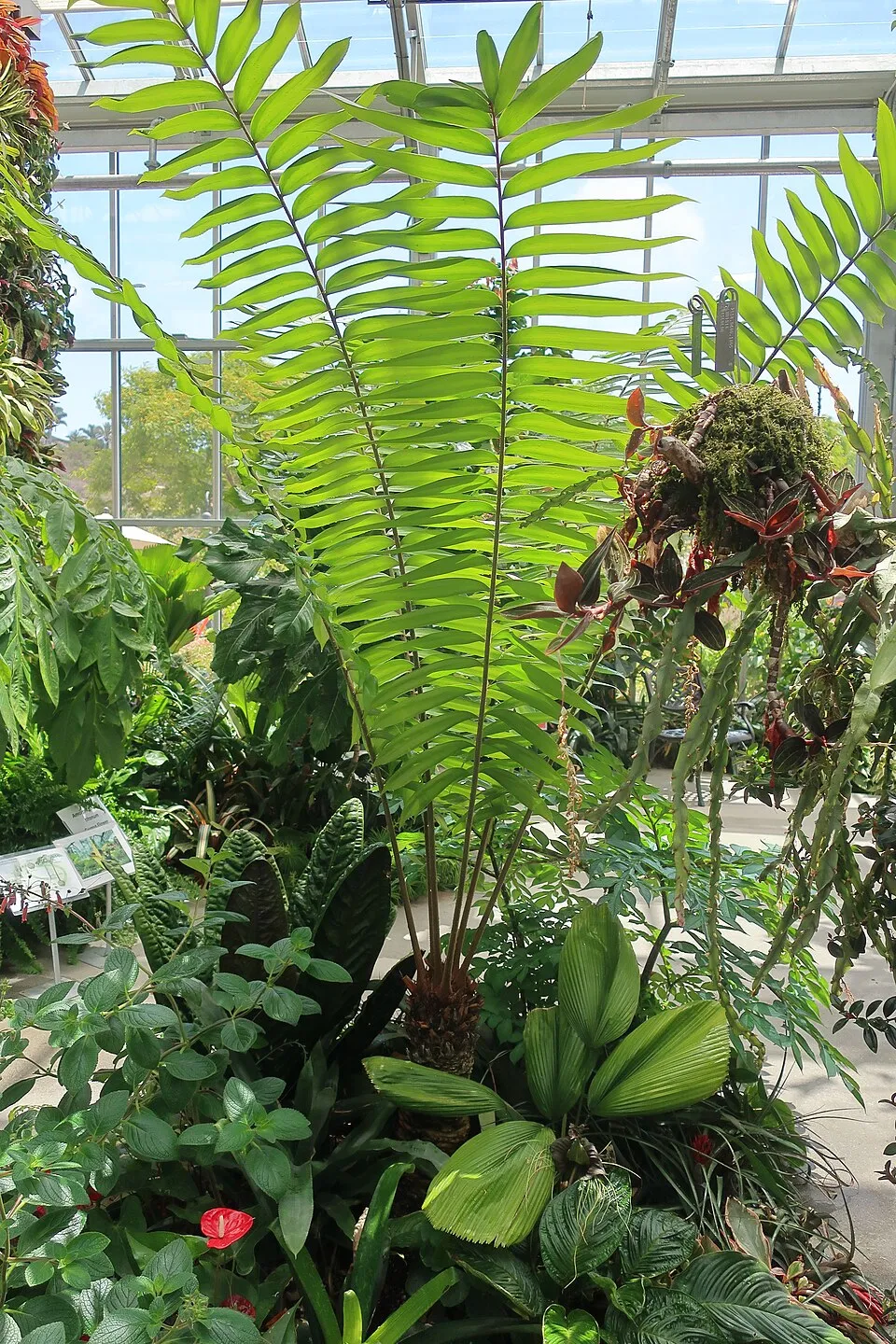
Orchid Ludisia, scientifically known as Ludisia discolor, is a striking terrestrial orchid species revered more for its exceptionally ornamental foliage than its modest flowers, earning it the common name Jewel Orchid. This herbaceous perennial typically grows as a compact clump, reaching a height of 30 to 50 centimeters (approximately 12 to 20 inches) in cultivation, though it can attain slightly greater stature in its natural habitat. Its most captivating feature is undoubtedly its leaves, which are lanceolate to ovate in shape, measuring between 8 to 15 centimeters (3 to 6 inches) in length. These leaves possess a luxurious, velvety texture and a deep, often near-black, green coloration, dramatically contrasted by prominent white, silver, or light green longitudinal stripes that elegantly trace the veins, creating a distinctive tessellated or marbled pattern.
The stems are semi-erect to creeping, characteristically hairy with a somewhat rough texture, and often root at the nodes where they contact the substrate, effectively supporting the vibrant foliage. During its blooming season, typically in late autumn to winter, Ludisia discolor produces delicate, small flowers arranged in terminal racemes that rise gracefully above the leaf cluster. Each individual flower is approximately 2.5 centimeters (1 inch) across, typically displaying hues of white, pink, or pale lavender, often with a contrasting yellow or white lip, providing an elegant counterpoint to the dark, striped leaves. The root system is fibrous and relatively shallow, well-adapted to spreading across the forest floor.
Native to the tropical and subtropical forests of Southeast Asia, including southern China, Vietnam, Thailand, Laos, Myanmar, Malaysia, Indonesia, and the Philippines, Ludisia discolor thrives as a lithophyte or terrestrial plant. It prefers the moist, shaded understory environments of these dense forests, benefiting from dappled sunlight and consistent humidity.
Trusted Scientific References
1. Authoritative external sources for Ludisia discolor
1.1 Wikipedia — Ludisia discolor
1.2 Kew POWO (Plants of the World Online)
1.3 PubMed — peer-reviewed research
1.4 NCBI Taxonomy Browser
1.5 GBIF — Global Biodiversity
1.1.Orchid Ludisia — Key Features
- ✓ <strong>Jewel Orchid</strong> — Renowned for its stunning, ornamental foliage rather than its flowers.
- ✓ <strong>Velvety Leaves</strong> — Features a unique velvety texture on its dark green leaves.
- ✓ <strong>Striking Venation</strong> — Displays prominent white, silver, or light green longitudinal stripes along the leaf veins.
- ✓ <strong>Terrestrial Orchid</strong> — Grows on the forest floor or as a lithophyte in its native habitat.
- ✓ <strong>Compact Growth</strong> — Forms a relatively small, clump-forming herbaceous perennial.
- ✓ <strong>Delicate Winter Blooms</strong> — Produces small, white to pink flowers on terminal racemes in late autumn to winter.
- ✓ <strong>Southeast Asian Native</strong> — Indigenous to tropical and subtropical regions of Southeast Asia.
- ✓ <strong>Relatively Easy Care</strong> — Considered one of the easier Jewel Orchids to cultivate indoors, tolerating varied humidity.
- ✓ <strong>Rooting Stems</strong> — Stems are semi-erect to creeping and readily root at the nodes, aiding in propagation.
- ✓ <strong>Adaptable to Shade</strong> — Thrives in dappled light conditions, making it suitable for indoor environments.
1.2.Orchid Ludisia — Quick Summary
- ✓ Ludisia discolor is a Jewel Orchid, prized for its velvet, striped foliage.
- ✓ Native to Southeast Asian tropical forests, it thrives in shaded, moist conditions.
- ✓ Traditionally, related orchids are used for anti-inflammatory, antioxidant, and wound-healing properties.
- ✓ Cultivation requires consistent moisture, bright indirect light, and good airflow.
- ✓ Potential benefits include antioxidant, anti-inflammatory, and skin-soothing effects.
- ✓ Limited scientific research on specific medicinal uses for Ludisia discolor requires caution.
2.Orchid Ludisia — Scientific Identity
3.Orchid Ludisia — Quick Facts
4.Orchid Ludisia — Appearance & Identification
5.Orchid Ludisia — Native Habitat
6.Orchid Ludisia — Water Requirements
- ✓ Humidity Management — Ludisia discolor is more tolerant of lower ambient humidity than many other Jewel Orchid species; focus on consistent root hydration rather than enclosed high-humidity environments.
- ✓ Consistent Hydration — Do not allow the roots to go bone dry; maintain evenly moist conditions in the potting media, watering as the top layer begins to dry.
- ✓ Appropriate Potting Media — Utilize a well-draining yet moisture-retentive mix, such as a blend of sphagnum moss, perlite, and fine bark, or a peat-based mix with extra perlite for aeration.
- ✓ Optimal Light Conditions — Provide bright, indirect light; an east or west-facing window with filtered light or a sheer curtain is ideal to prevent leaf scorching while ensuring sufficient photosynthesis.
- ✓ Regular Fertilization — Feed weakly, weekly, using a balanced, soluble orchid fertilizer (e.g., 1/8-1/4 tsp per gallon of water), applying to both leaves and potting mix, and flush monthly with plain water.
- ✓ Air Circulation — Ensure good airflow around the plant to prevent fungal issues, especially if humidity levels are naturally higher.
- ✓ Temperature Range — Maintain typical indoor room temperatures, ideally between 18-24°C (65-75°F), avoiding extreme fluctuations.
- ✓ Repotting — Repot when the plant outgrows its container or the potting media begins to break down, typically every 1-2 years, to refresh the substrate and provide space for growth.
Reviewed by the Flora Medical Global Botanical Review Panel
Multi-disciplinary editorial group · Botany · Ethnobotany · Herbal-medicine literature
Who reviewed this: This page was checked by the Flora Medical Global Botanical Review Panel — an in-house editorial group of botany graduates, ethnobotany researchers, and horticulture practitioners who collectively maintain our 7,000+ plant encyclopedia. Meet the team.
Our 4-step verification process
1. Taxonomic verification
Scientific names and synonyms cross-checked against Kew POWO, World Flora Online, and The Plant List.
2. Phytochemical & medicinal cross-reference
Active compounds, traditional uses, and reported activities are cross-referenced with PubMed, USDA Dr. Duke's database, and peer-reviewed ethnobotanical literature.
3. Conservation & distribution check
Distribution, ecology, and conservation status confirmed against GBIF occurrence records and the IUCN Red List.
4. Editorial & safety review
Every entry passes an editorial pass for clarity, originality, and safety notices (toxicity, contraindications, dosage caveats) before publication.
Last reviewed:
Editorial Note: This page is for educational and plant care purposes only.
Written by: Flora Medical Global Editorial Team
Reviewed by: Flora Medical Global Botanical Review Panel
Last Updated: June 15, 2026







Orchid Ludisia — Comments & Community Reviews
Rate this plant