
Care Disclaimer: Plant care recommendations are general guidelines based on common growing conditions. Individual results may vary based on your local environment, climate, and care routine. If your plant is toxic, keep it away from children and pets, and consult a veterinarian if accidental ingestion occurs.
1.Orchid Oncidium — Overview
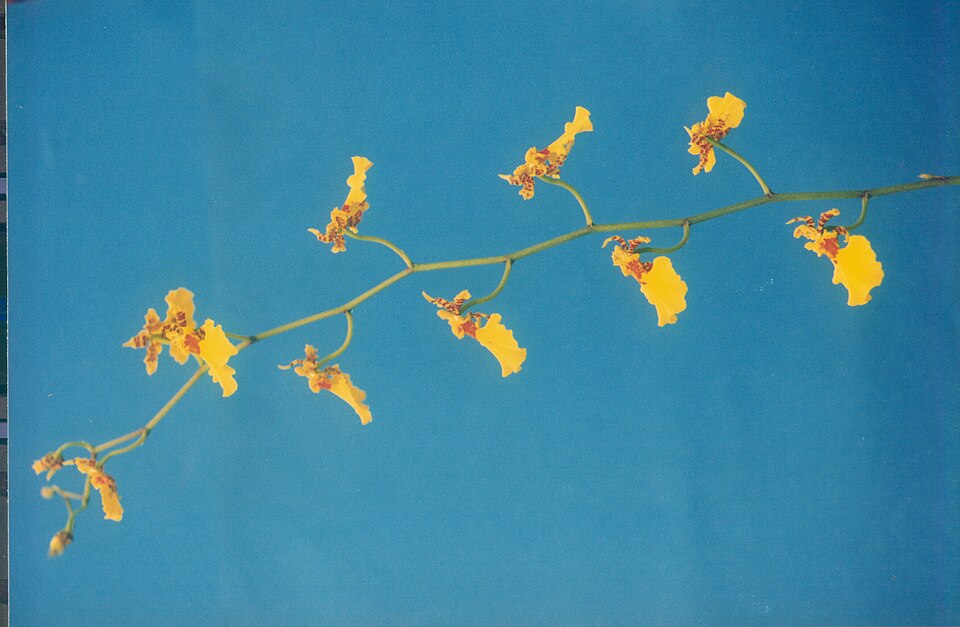
Oncidium varicosum, widely recognized as the Orchid Oncidium or the charismatic Dancing Lady Orchid, is an exquisite epiphytic orchid species native to the vibrant, humid rainforests of South America, particularly thriving in Brazil. This botanical marvel typically grows clinging to tree branches and rocky outcrops, drawing its sustenance from atmospheric moisture and accumulated organic debris rather than conventional soil. Characterized by its prominent, oval to pear-shaped pseudobulbs, which are smooth and often enveloped by a papery sheath, the plant averages 30 to 45 cm (12 to 18 inches) in height.
These pseudobulbs are crucial for water and nutrient storage, enabling the plant's resilience during drier periods in its tropical habitat. From these robust storage organs emerge long, strap-like leaves, typically 20 to 30 cm (8 to 12 inches) in length, displaying a rich, deep green hue that persists year-round. The root system is thick, fleshy, and highly specialized, often covered by a spongy, absorbent layer known as the velamen, which efficiently captures humidity and dissolved minerals from the air.
Taxonomically, Oncidium varicosum is a member of the vast and diverse Orchidaceae family, globally celebrated for its stunning floral complexity. The plant's true spectacle unfolds during its peak blooming season, typically from late summer through autumn, when it produces magnificent, arching flower spikes that can extend up to 60 cm (24 inches) or more. These spikes are profusely adorned with numerous small, often fragrant blossoms, predominantly a brilliant yellow, frequently accented with intricate patterns of brown or reddish-brown spots and stripes, creating a captivating visual display reminiscent of a figure in motion, hence its common name.
Trusted Scientific References
1. Authoritative external sources for Oncidium varicosum
1.1 Wikipedia — Oncidium varicosum
1.2 Kew POWO (Plants of the World Online)
1.3 PubMed — peer-reviewed research
1.4 NCBI Taxonomy Browser
1.5 GBIF — Global Biodiversity
1.1.Orchid Oncidium — Key Features
- ✓ <strong>Epiphytic Growth Habit</strong> — Thrives on trees or rocks, not soil, using specialized roots for moisture.
- ✓ <strong>Prominent Pseudobulbs</strong> — Oval to pear-shaped structures storing water and nutrients.
- ✓ <strong>'Dancing Lady' Flowers</strong> — Distinctive yellow blooms with a prominent labellum, often spotted.
- ✓ <strong>Arching Flower Spikes</strong> — Produces numerous small flowers on long, elegant inflorescences.
- ✓ <strong>South American Native</strong> — Indigenous to humid rainforests, particularly in Brazil.
- ✓ <strong>Evergreen Foliage</strong> — Retains vibrant green, strap-like leaves year-round.
- ✓ <strong>Velamen Root System</strong> — Specialized spongy layer on roots for efficient atmospheric moisture absorption.
- ✓ <strong>Ornamental Value</strong> — Highly prized for its aesthetic beauty and unique floral display.
- ✓ <strong>Fall Blooming Season</strong> — Typically flowers in late summer or autumn, providing a spectacular show.
- ✓ <strong>Moderate Care Requirements</strong> — Considered relatively manageable for orchid enthusiasts with proper environmental conditions.
1.2.Orchid Oncidium — Quick Summary
- ✓ Oncidium varicosum, the Dancing Lady Orchid, is an epiphytic species from South America.
- ✓ Known for its vibrant yellow, architecturally unique flowers resembling dancing figures.
- ✓ Primarily an ornamental plant with no established traditional or modern medicinal uses.
- ✓ Requires specific care: bright indirect light, bark medium, consistent humidity, and temperature control.
- ✓ Pseudobulbs serve as vital water and nutrient storage organs for resilience.
- ✓ While not medicinal, it offers aesthetic and potential indirect well-being benefits as a houseplant.
2.Orchid Oncidium — Scientific Identity
3.Orchid Oncidium — Quick Facts
4.Orchid Oncidium — Appearance & Identification
5.Orchid Oncidium — Native Habitat
6.Orchid Oncidium — Water Requirements
- ✓ Light Requirements — Place Oncidium varicosum in bright, indirect light; an east, west, or south-facing window with a sheer curtain is ideal. They prefer more light than Phalaenopsis orchids.
- ✓ Potting Medium — Use a specialized bark-based orchid potting mix, as these are epiphytic plants that do not grow in traditional soil and require excellent drainage.
- ✓ Watering Schedule — Water every 2 to 10 days during the growing season when the medium is about half dry, using lukewarm or room-temperature water. Reduce frequency in winter.
- ✓ Temperature & Humidity — Maintain night temperatures of 13-16°C (55-60°F) and day temperatures of 27-29°C (80-85°F). Humidity levels should be 30-60%, often requiring a humidifier or pebble tray.
- ✓ Fertilization — During the active growing period, feed bimonthly with a weak, balanced orchid fertilizer (e.g., 30-10-10 for bark media). Slow-release pellets can also be used.
- ✓ Air Circulation — Good air movement is crucial to prevent fungal issues and support healthy growth, especially in humid conditions.
- ✓ Repotting — Repot only when necessary, typically every few years when the plant becomes root-bound or the potting medium breaks down. Use a slightly undersized pot.
Reviewed by the Flora Medical Global Botanical Review Panel
Multi-disciplinary editorial group · Botany · Ethnobotany · Herbal-medicine literature
Who reviewed this: This page was checked by the Flora Medical Global Botanical Review Panel — an in-house editorial group of botany graduates, ethnobotany researchers, and horticulture practitioners who collectively maintain our 7,000+ plant encyclopedia. Meet the team.
Our 4-step verification process
1. Taxonomic verification
Scientific names and synonyms cross-checked against Kew POWO, World Flora Online, and The Plant List.
2. Phytochemical & medicinal cross-reference
Active compounds, traditional uses, and reported activities are cross-referenced with PubMed, USDA Dr. Duke's database, and peer-reviewed ethnobotanical literature.
3. Conservation & distribution check
Distribution, ecology, and conservation status confirmed against GBIF occurrence records and the IUCN Red List.
4. Editorial & safety review
Every entry passes an editorial pass for clarity, originality, and safety notices (toxicity, contraindications, dosage caveats) before publication.
Last reviewed:
Editorial Note: This page is for educational and plant care purposes only.
Written by: Flora Medical Global Editorial Team
Reviewed by: Flora Medical Global Botanical Review Panel
Last Updated: June 15, 2026







Orchid Oncidium — Comments & Community Reviews
Rate this plant