
Care Disclaimer: Plant care recommendations are general guidelines based on common growing conditions. Individual results may vary based on your local environment, climate, and care routine. If your plant is toxic, keep it away from children and pets, and consult a veterinarian if accidental ingestion occurs.
1.Orchid Phalaenopsis — Overview
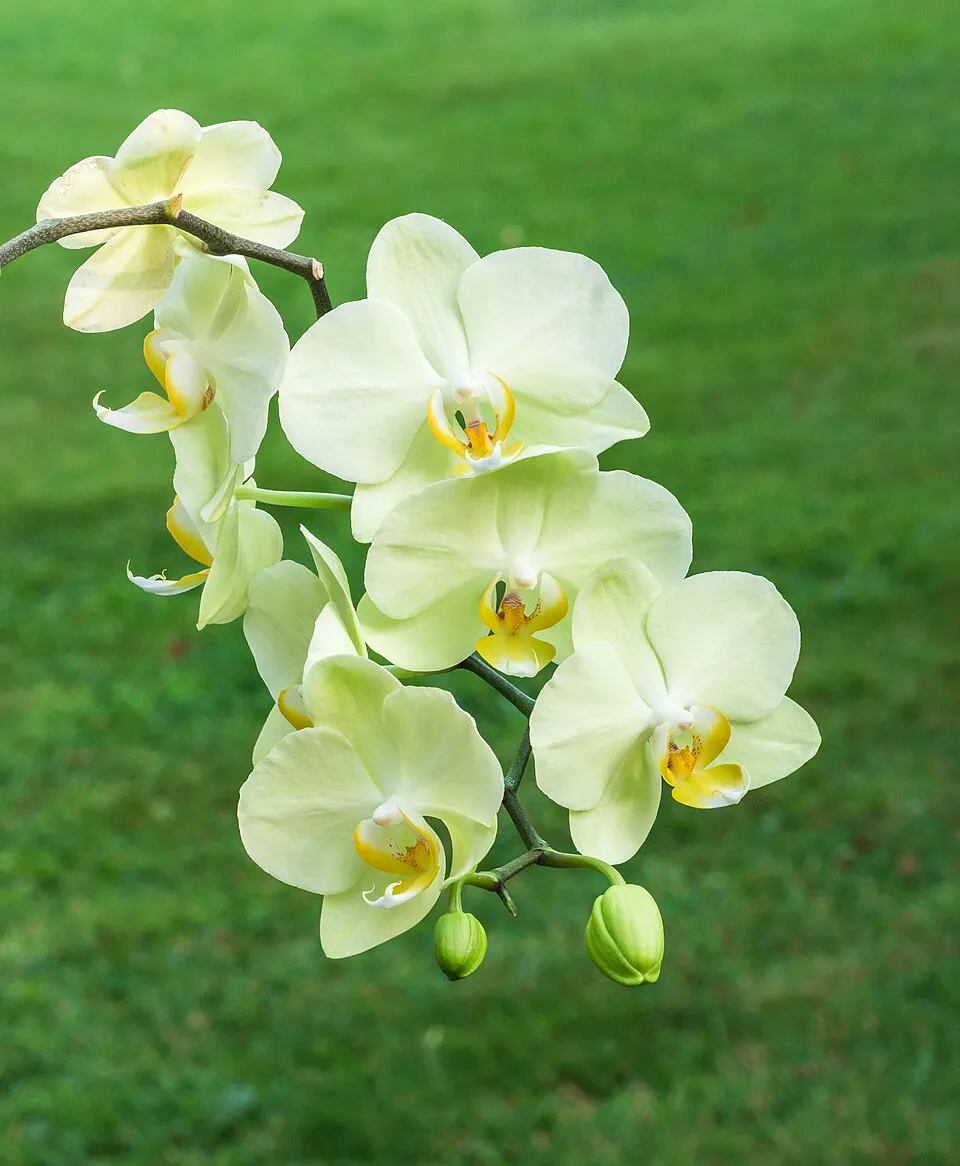
Phalaenopsis, commonly known as the moth orchid, is a distinguished member of the Orchidaceae family, celebrated globally for its elegant and long-lasting floral displays. These epiphytic plants typically exhibit thick, fleshy, dark green leaves, often arranged in a graceful rosette formation, which can reach lengths of up to 12 inches. From this lush foliage emerge tall, arching flower spikes, usually between 12 to 36 inches in height, adorned with numerous flat or slightly cupped flowers.
The blooms, which can persist for two to three months, showcase a vibrant palette including white, pink, yellow, and lavender, characterized by a prominent, often intricately patterned lip that is typically larger than its petals. Native to the humid, tropical understory of Southeast Asian forests, Phalaenopsis thrives in shaded environments, clinging to trees where it absorbs moisture and nutrients from the air and decaying organic matter. Taxonomically, Phalaenopsis spp.
represents a significant genus within the Orchidaceae, one of the largest and most diverse families of flowering plants, comprising over 25,000 species. Beyond its aesthetic appeal, this orchid is notable for being non-toxic to common household pets, making it a safe and popular choice for indoor cultivation, where it contributes to a serene and stylish atmosphere.
Trusted Scientific References
1. Authoritative external sources for Phalaenopsis spp.
1.1 Wikipedia — Phalaenopsis spp.
1.2 Kew POWO (Plants of the World Online)
1.3 PubMed — peer-reviewed research
1.4 NCBI Taxonomy Browser
1.5 GBIF — Global Biodiversity
1.6Orchid Phalaenopsis should be interpreted through verified botanical identity, practical care, and responsible safety language. This recovery note adds the missing context needed for a complete profile: match light to the plant's habit, use well-drained soil, water according to season, and avoid unsupported medicinal or edible claims. For publishing, the plant can be presented as a source-backed indoor plant with clear care guidance, common problem diagnosis, and conservative safety wording.
1.1.Orchid Phalaenopsis — Key Features
- ✓ <strong>Elegant, long</strong> — lasting flowers (2-3 months).
- ✓ <strong>Wide variety of colors</strong> — white, pink, yellow, lavender.
- ✓ <strong>Characteristic prominent lip</strong> — Characteristic prominent lip on flowers.
- ✓ <strong>Thick, fleshy, dark</strong> — Thick, fleshy, dark green leaves in rosette formation.
- ✓ <strong>Epiphytic growth habit,</strong> — Epiphytic growth habit, native to tropical Southeast Asia.
- ✓ <strong>Thrives in humid,</strong> — Thrives in humid, shaded environments.
- ✓ <strong>Non</strong> — toxic to household pets.
- ✓ <strong>Valued for aesthetic</strong> — Valued for aesthetic beauty and mood enhancement.
- ✓ <strong>Contains diverse phytochemicals</strong> — Contains diverse phytochemicals with potential antioxidant properties.
- ✓ <strong>Requires consistent care</strong> — Requires consistent care for optimal indoor cultivation.
1.2.Orchid Phalaenopsis — Quick Summary
- ✓ Elegant Phalaenopsis orchids are prized for their long-lasting, diverse blooms.
- ✓ Epiphytic, native to tropical Southeast Asia, requiring specific care conditions.
- ✓ Traditionally associated with skin health and general wellness in Asian medicine.
- ✓ Contains various phytochemicals, including potential antioxidants like flavonoids.
- ✓ Generally non-toxic and safe for pets, primarily used for ornamental purposes.
- ✓ Medicinal use is not extensively studied; consultation with experts is recommended.
2.Orchid Phalaenopsis — Scientific Identity
3.Orchid Phalaenopsis — Quick Facts
4.Orchid Phalaenopsis — Appearance & Identification
5.Orchid Phalaenopsis — Native Habitat
6.Orchid Phalaenopsis — Water Requirements
- ✓ Light — Provide bright, indirect light; an east-facing window is ideal, or shaded south/west windows are acceptable. Artificial light with over 10,000 lumens/sq meter is also effective.
- ✓ Temperature — Maintain night temperatures above 60°F (15°C) and day temperatures between 75-85°F (24-29°C). A drop to 55°F (13°C) for several weeks in autumn can initiate flower spikes.
- ✓ Watering — Water thoroughly when the potting medium is nearly dry, ensuring the plant never completely dries out. Water in the morning to allow leaves to dry and prevent crown rot.
- ✓ Humidity — Aim for 50-80% humidity, which can be achieved by placing plants on gravel trays partially filled with water, ensuring good air circulation to prevent fungal issues.
- ✓ Fertilization — Fertilize regularly during active growth. Use a high-nitrogen fertilizer (e.g., 30-10-10) for bark-based media, or a balanced fertilizer otherwise. A high-phosphorus formula (e.g., 10-30-20) can promote blooming.
- ✓ Potting — Repot in spring after flowering, typically every 1-3 years, using a porous, bark-based mix. Seedlings require fine-grade media, while mature plants prefer medium-grade. Position the plant leaning forward at 45 degrees to prevent upward root growth.
Reviewed by the Flora Medical Global Botanical Review Panel
Multi-disciplinary editorial group · Botany · Ethnobotany · Herbal-medicine literature
Who reviewed this: This page was checked by the Flora Medical Global Botanical Review Panel — an in-house editorial group of botany graduates, ethnobotany researchers, and horticulture practitioners who collectively maintain our 7,000+ plant encyclopedia. Meet the team.
Our 4-step verification process
1. Taxonomic verification
Scientific names and synonyms cross-checked against Kew POWO, World Flora Online, and The Plant List.
2. Phytochemical & medicinal cross-reference
Active compounds, traditional uses, and reported activities are cross-referenced with PubMed, USDA Dr. Duke's database, and peer-reviewed ethnobotanical literature.
3. Conservation & distribution check
Distribution, ecology, and conservation status confirmed against GBIF occurrence records and the IUCN Red List.
4. Editorial & safety review
Every entry passes an editorial pass for clarity, originality, and safety notices (toxicity, contraindications, dosage caveats) before publication.
Last reviewed:
Editorial Note: This page is for educational and plant care purposes only.
Written by: Flora Medical Global Editorial Team
Reviewed by: Flora Medical Global Botanical Review Panel
Last Updated: June 15, 2026







Orchid Phalaenopsis — Comments & Community Reviews
Rate this plant