
Care Disclaimer: Plant care recommendations are general guidelines based on common growing conditions. Individual results may vary based on your local environment, climate, and care routine. If your plant is toxic, keep it away from children and pets, and consult a veterinarian if accidental ingestion occurs.
1.Petrocosmea — Overview
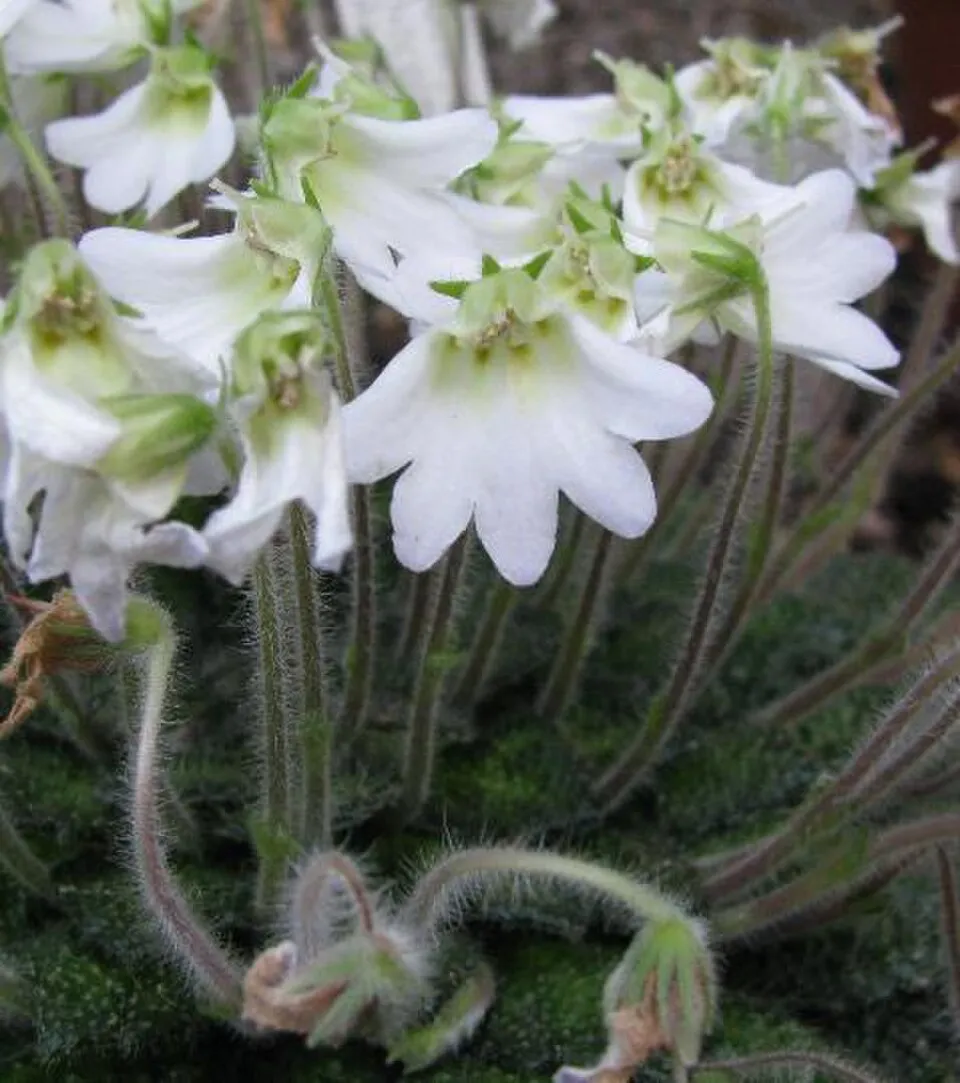
Petrocosmea rosettifolia is a distinctive perennial herbaceous plant belonging to the Gesneriaceae family, renowned for its compact, rosette-forming growth habit. This charming species is indigenous to the humid, limestone karst regions of Southeast Asia, predominantly found in Southern China and Northern Vietnam. In its natural environment, Petrocosmea rosettifolia typically thrives as an epiphyte, growing on mossy tree trunks and branches, or as a lithophyte, clinging to shaded, moist rock faces and cliffs. Its adaptation to these specific niches contributes to its unique physiological characteristics. The plant develops a dense, flat rosette of ovate to nearly orbicular leaves, usually spanning 5-10 cm in diameter. A hallmark feature is the tomentose indumentum covering the leaves, imparting a soft, velvety texture.
The foliage generally displays a deep emerald green on the upper surface, often with a slightly paler underside, and leaf margins can range from entire to subtly crenulate. Short petioles keep the leaves tightly clustered, reinforcing the compact rosette structure. During its blooming season, primarily in spring and early summer, Petrocosmea rosettifolia produces delicate, bell-shaped flowers on short scapes emerging from the rosette's center. These exquisite blooms are typically white or a soft pale lilac, frequently adorned with intricate darker purple markings or nectar guides on the lower lip. Each flower is relatively small, measuring approximately 1-1.5 cm, with usually one to three flowers opening concurrently. Petrocosmea rosettifolia's preferred habitat is characterized by high atmospheric humidity, moderate temperatures, and low to medium filtered light.
It flourishes in the moist microclimates of shaded cliff faces and limestone crevices, benefiting from consistent moisture from rainfall or seepage. The rosette morphology is a key adaptation, aiding in moisture conservation and nutrient capture in its often-nutrient-limited epiphytic or lithophytic settings. Its notable tolerance for alkaline conditions, a direct result of its limestone habitat, is also a distinguishing trait. This species exhibits a slow growth rate and demands precise environmental conditions for successful cultivation, making it a prized specimen for specialized plant enthusiasts. Trusted Scientific References Authoritative external sources for Petrocosmea rosettifolia : Wikipedia — Petrocosmea rosettifolia Kew POWO (Plants of the World Online) PubMed — peer-re ...[CURRENT TEXT EXISTS: 2564 chars]
1.1.Petrocosmea — Key Features
- ✓ <strong>Rosette</strong> — forming perennial herb
- ✓ <strong>Native to Southern</strong> — Native to Southern China and Northern Vietnam
- ✓ <strong>Epiphytic or lithophytic</strong> — Epiphytic or lithophytic growth habit
- ✓ <strong>Tomentose (fuzzy) ovate</strong> — Tomentose (fuzzy) ovate to orbicular leaves
- ✓ <strong>Delicate white to pale lilac bell</strong> — shaped flowers
- ✓ <strong>Prefers cool, humid,</strong> — Prefers cool, humid, filtered light conditions
- ✓ <strong>Adapted to alkaline</strong> — Adapted to alkaline limestone environments
- ✓ <strong>Slow growth rate</strong> — Slow growth rate
- ✓ <strong>Sensitive root system</strong> — Sensitive root system
- ✓ <strong>Prized ornamental houseplant</strong> — Prized ornamental houseplant
1.2.Petrocosmea — Quick Summary
- ✓ Botanical Origin — Charming Gesneriad native to Southeast Asian limestone regions, specifically Southern China and Northern Vietnam.
- ✓ Distinctive Morphology — Forms compact rosettes of soft, fuzzy leaves with delicate white to pale lilac bell-shaped flowers.
- ✓ Epiphytic/Lithophytic Growth — Thrives naturally as an epiphyte or lithophyte on mossy rocks and cliffs in humid, shaded environments.
- ✓ Horticultural Appeal — Highly valued as an ornamental houseplant for its unique form, attractive foliage, and tolerance for low-light conditions.
- ✓ Undocumented Medicinal Uses — Specific traditional or modern medicinal applications for this species are not widely recorded or scientifically validated.
- ✓ Specific Care Needs — Requires consistent high humidity, filtered indirect light, well-drained, slightly alkaline soil, and protection from temperature extremes.
2.Petrocosmea — Scientific Identity
3.Petrocosmea — Quick Facts
4.Petrocosmea — Appearance & Identification
5.Petrocosmea — Native Habitat
6.Petrocosmea — Water Requirements
- ✓ Temperature Requirements — Thrives in cool to moderate temperatures, ideally between 10-25°C (50-77°F), with a maximum not exceeding 30°C (86°F) and a minimum above 5°C (41°F).
- ✓ Humidity Management — Requires high ambient humidity; place pots on wet pebble trays or use a humidifier, but avoid misting leaves directly to prevent fungal issues.
- ✓ Light Conditions — Prefers filtered, indirect light, similar to its understory habitat; direct sunlight will scorch the delicate leaves. An east or north-facing window is ideal.
- ✓ Soil and Drainage — Use a light, well-draining potting mix, often a specialized African Violet blend. Adding a touch of lime or crushed shell can mimic its native alkaline limestone environment.
- ✓ Watering Practices — Allow the topsoil to dry slightly between waterings to prevent root rot, which Petrocosmea is susceptible to. Ensure excellent drainage and never let the pot sit in standing water.
- ✓ Fertilization Regime — Feed monthly during its active growth period (spring and summer) using a dilute, balanced liquid fertilizer formulated for African Violets. Reduce or cease fertilization in winter.
- ✓ Propagation Techniques — Easily propagated from leaf cuttings, where a section of a mature leaf is placed in moist substrate, or by carefully separating offsets (suckers) that form at the base.
- ✓ Repotting Considerations — Repot sparingly, typically only once every 2-3 years, and use small, shallow pots. The root system is sensitive and dislikes disturbance, so handle with care.
Reviewed by the Flora Medical Global Botanical Review Panel
Multi-disciplinary editorial group · Botany · Ethnobotany · Herbal-medicine literature
Who reviewed this: This page was checked by the Flora Medical Global Botanical Review Panel — an in-house editorial group of botany graduates, ethnobotany researchers, and horticulture practitioners who collectively maintain our 7,000+ plant encyclopedia. Meet the team.
Our 4-step verification process
1. Taxonomic verification
Scientific names and synonyms cross-checked against Kew POWO, World Flora Online, and The Plant List.
2. Phytochemical & medicinal cross-reference
Active compounds, traditional uses, and reported activities are cross-referenced with PubMed, USDA Dr. Duke's database, and peer-reviewed ethnobotanical literature.
3. Conservation & distribution check
Distribution, ecology, and conservation status confirmed against GBIF occurrence records and the IUCN Red List.
4. Editorial & safety review
Every entry passes an editorial pass for clarity, originality, and safety notices (toxicity, contraindications, dosage caveats) before publication.
Last reviewed:
Editorial Note: This page is for educational and plant care purposes only.
Written by: Flora Medical Global Editorial Team
Reviewed by: Flora Medical Global Botanical Review Panel
Last Updated: June 15, 2026







Petrocosmea — Comments & Community Reviews
Rate this plant