
Care Disclaimer: Plant care recommendations are general guidelines based on common growing conditions. Individual results may vary based on your local environment, climate, and care routine. If your plant is toxic, keep it away from children and pets, and consult a veterinarian if accidental ingestion occurs.
1.Philodendron Congo Rojo — Overview
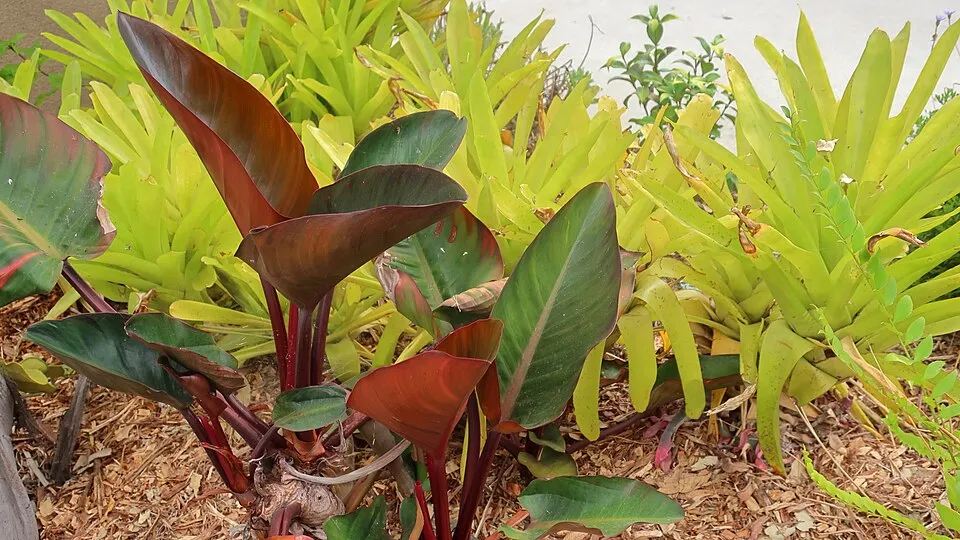
The Philodendron Congo Rojo, botanically known as Philodendron congo rojo, is a captivating hybrid cultivar within the diverse Araceae family, celebrated for its striking ornamental foliage. This self-heading philodendron does not climb but grows upright, forming a bushy, compact stature, typically reaching an indoor height and width of 2 to 3 feet. Its most distinguishing feature is its large, glossy leaves, which emerge with a vibrant coppery-red hue, gradually maturing into a deep, rich green.
These substantial leaves can measure up to 12 inches long and 6 inches wide, exhibiting a classic heart-shaped or slightly oval form. The sturdy, thick stems often retain a reddish undertone, complementing the foliage's coloration.
Originating as a horticultural hybrid developed in Florida, Philodendron congo rojo is believed to be a cross between Philodendron tatei and Philodendron imperial red. Unlike many other philodendrons, it does not possess aerial roots for climbing, making it an ideal floor or tabletop plant. While primarily grown for its aesthetic appeal, it occasionally produces an inconspicuous spadix-type flower, though this is a rare occurrence in indoor settings.
Its natural affinity for the warm, humid conditions of tropical rainforest understories makes it perfectly adapted to indoor environments, where it thrives in bright, indirect light. This plant has gained immense popularity globally, particularly in homes and offices across the U.S. and Europe, due to its exotic appearance and relatively low-maintenance requirements.
Trusted Scientific References
1. Authoritative external sources for Philodendron congo rojo
1.1 Wikipedia — Philodendron congo rojo
1.2 Kew POWO (Plants of the World Online)
1.3 PubMed — peer-reviewed research
1.4 NCBI Taxonomy Browser
1.5 GBIF — Global Biodiversity
1.6Philodendron Congo Rojo should be interpreted through verified botanical identity, practical care, and responsible safety language. This recovery note adds the missing context needed for a complete profile: match light to the plant's habit, use well-drained soil, water according to season, and avoid unsupported medicinal or edible claims. For publishing, the plant can be presented as a source-backed indoor plant with clear care guidance, common problem diagnosis, and conservative safety wording.
1.1.Philodendron Congo Rojo — Key Features
- ✓ <strong>Striking Coppery</strong> — Red to Deep Green Foliage
- ✓ <strong>Large, Glossy, Heart</strong> — Shaped Leaves
- ✓ <strong>Self</strong> — Heading, Non-Climbing Growth Habit
- ✓ <strong>Horticultural Hybrid Cultivar</strong> — Horticultural Hybrid Cultivar
- ✓ <strong>Enhances Indoor Air</strong> — Enhances Indoor Air Quality (VOC absorption)
- ✓ <strong>Contributes to Psychological Well</strong> — being
- ✓ <strong>Low</strong> — Maintenance Houseplant
- ✓ <strong>Requires Bright, Indirect</strong> — Requires Bright, Indirect Light & High Humidity
- ✓ <strong>Highly Toxic if</strong> — Highly Toxic if Ingested (Calcium Oxalate)
- ✓ <strong>Ideal for Indoor</strong> — Ideal for Indoor Ornamental Display
1.2.Philodendron Congo Rojo — Quick Summary
- ✓ Striking hybrid Philodendron known for vibrant, large, coppery-red to deep green foliage.
- ✓ Primarily an ornamental houseplant, valued for its aesthetic appeal and self-heading growth.
- ✓ Offers indirect benefits like improved indoor air quality and enhanced psychological well-being.
- ✓ Contains calcium oxalate crystals, making all parts toxic if ingested by humans or pets.
- ✓ Requires bright, indirect light, consistent moisture, high humidity, and warm temperatures.
- ✓ Relatively low-maintenance, making it a popular choice for indoor décor globally.
2.Philodendron Congo Rojo — Scientific Identity
3.Philodendron Congo Rojo — Quick Facts
4.Philodendron Congo Rojo — Appearance & Identification
5.Philodendron Congo Rojo — Native Habitat
6.Philodendron Congo Rojo — Water Requirements
- ✓ Light Requirement — Provide several hours of bright, indirect light; direct sunlight can scorch leaves, while low light leads to leggy growth.
- ✓ Soil Preference — Plant in a well-draining, airy potting mix rich in organic materials, such as a blend of potting soil, perlite, and orchid bark.
- ✓ Watering Schedule — Water thoroughly when the top 50% of the soil feels dry to the touch; avoid overwatering to prevent root rot, reducing frequency in colder months.
- ✓ Temperature Needs — Thrives in warm household temperatures, ideally between 65-80°F (18-27°C); protect from cold drafts and extreme fluctuations.
- ✓ Humidity Levels — Prefers high humidity (50-60% or more); consider using a humidifier or placing it in a naturally humid room like a bathroom.
- ✓ Fertilization Regimen — Feed with a balanced liquid houseplant fertilizer once a month during the active growing season (spring and summer), suspending feeding in fall and winter.
- ✓ Repotting Frequency — Repot every one to two years, or when roots emerge from drainage holes, into a pot only 2-4 inches larger than the previous one.
- ✓ Propagation Method — Easily propagated via stem cuttings with at least two nodes, rooted in water or moist soil, preferably during the spring or summer.
Reviewed by the Flora Medical Global Botanical Review Panel
Multi-disciplinary editorial group · Botany · Ethnobotany · Herbal-medicine literature
Who reviewed this: This page was checked by the Flora Medical Global Botanical Review Panel — an in-house editorial group of botany graduates, ethnobotany researchers, and horticulture practitioners who collectively maintain our 7,000+ plant encyclopedia. Meet the team.
Our 4-step verification process
1. Taxonomic verification
Scientific names and synonyms cross-checked against Kew POWO, World Flora Online, and The Plant List.
2. Phytochemical & medicinal cross-reference
Active compounds, traditional uses, and reported activities are cross-referenced with PubMed, USDA Dr. Duke's database, and peer-reviewed ethnobotanical literature.
3. Conservation & distribution check
Distribution, ecology, and conservation status confirmed against GBIF occurrence records and the IUCN Red List.
4. Editorial & safety review
Every entry passes an editorial pass for clarity, originality, and safety notices (toxicity, contraindications, dosage caveats) before publication.
Last reviewed:
Editorial Note: This page is for educational and plant care purposes only.
Written by: Flora Medical Global Editorial Team
Reviewed by: Flora Medical Global Botanical Review Panel
Last Updated: June 15, 2026







Philodendron Congo Rojo — Comments & Community Reviews
Rate this plant