
Care Disclaimer: Plant care recommendations are general guidelines based on common growing conditions. Individual results may vary based on your local environment, climate, and care routine. If your plant is toxic, keep it away from children and pets, and consult a veterinarian if accidental ingestion occurs.
1.Philodendron Selloum — Overview
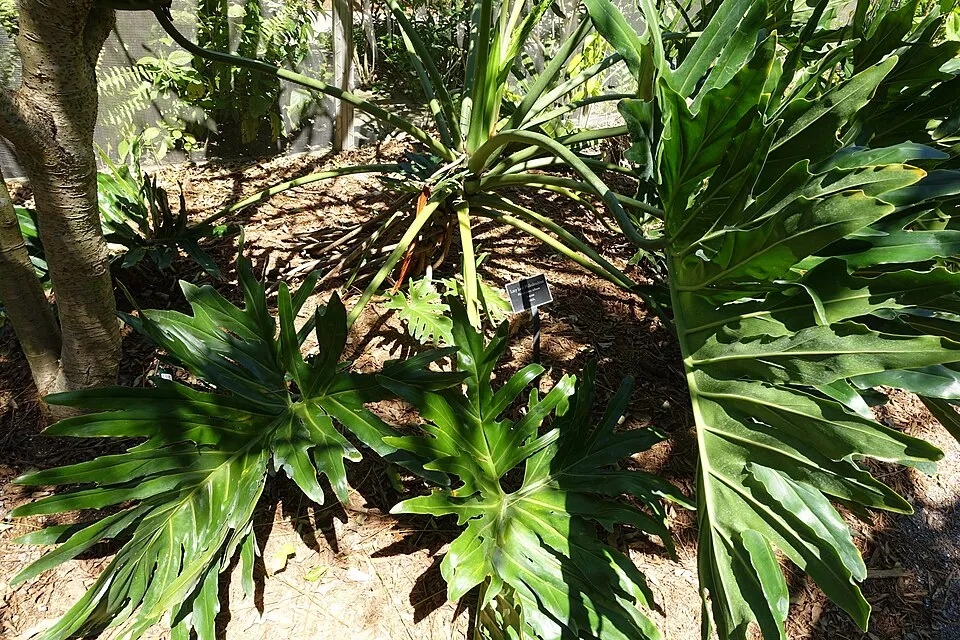
Thaumatophyllum bipinnatifidum, commonly known as Philodendron Selloum or Split-Leaf Philodendron, is a magnificent evergreen shrub belonging to the Araceae family. Native to the lush tropical and subtropical rainforests of southern Brazil, Argentina, and Paraguay, this plant thrives in elevations typically below 800 meters. When mature, it develops a distinctive, somewhat woody trunk, reaching impressive heights of up to 2 meters and a thickness of 10 cm at the base, often becoming more prostrate with age in its natural habitat.
Its most striking feature is the expansive, deeply lobed leaves, which can grow up to 1 meter long, displaying a rich, glossy green hue and a characteristic palmate appearance. The robust leaf stems, or petioles, support these grand leaves. While it rarely flowers indoors, its inflorescence is a unique spadix enveloped by a cream or white spathe, a hallmark of the Araceae family.
Notably, the spadix exhibits thermogenesis, heating up to attract beetle pollinators and enhance the release of its aroma, even in cool ambient temperatures. The plant prefers moist, well-drained, humus-rich soil and partial shade, mirroring its understory origins in dense forest environments. Its adaptability makes it a popular ornamental, though understanding its native ecology highlights its resilience and specific growth requirements.
Trusted Scientific References
1. Authoritative external sources for Philodendron selloum
1.1 Wikipedia — Philodendron selloum
1.2 Kew POWO (Plants of the World Online)
1.3 PubMed — peer-reviewed research
1.4 NCBI Taxonomy Browser
1.5 GBIF — Global Biodiversity
1.6Philodendron Selloum should be interpreted through verified botanical identity, practical care, and responsible safety language. This recovery note adds the missing context needed for a complete profile: match light to the plant's habit, use well-drained soil, water according to season, and avoid unsupported medicinal or edible claims. For publishing, the plant can be presented as a source-backed indoor plant with clear care guidance, common problem diagnosis, and conservative safety wording.
1.1.Philodendron Selloum — Key Features
- ✓ <strong>Common Name</strong> — Split-Leaf Philodendron, Lacy Tree Philodendron, Philodendron Selloum.
- ✓ <strong>Scientific Name</strong> — Thaumatophyllum bipinnatifidum (formerly Philodendron selloum).
- ✓ <strong>Family</strong> — Araceae (Arum Family).
- ✓ <strong>Native Range</strong> — Tropical South America (Brazil, Argentina, Paraguay).
- ✓ <strong>Growth Habit</strong> — Large evergreen shrub with a distinctive trunk, reaching up to 2 meters tall.
- ✓ <strong>Foliage</strong> — Large, deeply lobed, glossy green, palmate leaves up to 1 meter in length.
- ✓ <strong>Toxicity</strong> — Contains calcium oxalate crystals in all fresh parts, causing severe irritation upon ingestion.
- ✓ <strong>Traditional Uses</strong> — Roots as a purgative, seeds for medicinal purposes, and fruit edible when cooked.
- ✓ <strong>Indoor Benefits</strong> — Exceptional air purification qualities, aesthetic appeal, and humidity regulation.
- ✓ <strong>Unique Physiology</strong> — Exhibits thermogenesis in its spadix flowers to attract pollinators.
1.2.Philodendron Selloum — Quick Summary
- ✓ Thaumatophyllum bipinnatifidum, or Philodendron Selloum, is a large, ornamental evergreen native to South American tropics.
- ✓ Known for its deeply lobed, glossy leaves and significant indoor air-purifying capabilities.
- ✓ Contains calcium oxalate crystals, making all fresh plant parts toxic if ingested, causing severe irritation.
- ✓ Traditional uses include purgative roots and medicinal seeds, along with edible cooked fruit, all requiring specific preparation.
- ✓ Thrives in bright, indirect light and high humidity, making it a popular but cautious choice for indoor gardens.
- ✓ Offers aesthetic and indirect wellness benefits, but safety regarding its toxicity is paramount for all users.
2.Philodendron Selloum — Scientific Identity
3.Philodendron Selloum — Quick Facts
4.Philodendron Selloum — Appearance & Identification
5.Philodendron Selloum — Native Habitat
6.Philodendron Selloum — Water Requirements
- ✓ Light — Prefers bright, indirect light or partial shade; direct, intense sunlight can scorch the large leaves of Philodendron Selloum.
- ✓ Soil — Requires a well-draining, humus-rich potting mix that retains moisture, mimicking its natural rainforest floor environment.
- ✓ Watering — Keep soil consistently moist but never waterlogged; allow the top inch or two of soil to dry out between waterings.
- ✓ Humidity — Thrives in high humidity (60-80%); regularly misting, using a pebble tray, or a humidifier is beneficial for Thaumatophyllum bipinnatifidum.
- ✓ Temperature — Optimal growth occurs between 18-30°C (65-85°F); protect from cold drafts and temperatures below 10°C (50°F).
- ✓ Fertilization — Feed sparingly with a balanced liquid fertilizer every 2-4 weeks during the growing season; occasional magnesium-rich feeds are beneficial.
- ✓ Propagation — Can be propagated from seed, which germinates best around 20°C, or via stem cuttings, especially air layering for larger specimens.
- ✓ Pruning — Prune to maintain size and shape, removing any yellowing or damaged leaves to encourage new growth and plant health.
Reviewed by the Flora Medical Global Botanical Review Panel
Multi-disciplinary editorial group · Botany · Ethnobotany · Herbal-medicine literature
Who reviewed this: This page was checked by the Flora Medical Global Botanical Review Panel — an in-house editorial group of botany graduates, ethnobotany researchers, and horticulture practitioners who collectively maintain our 7,000+ plant encyclopedia. Meet the team.
Our 4-step verification process
1. Taxonomic verification
Scientific names and synonyms cross-checked against Kew POWO, World Flora Online, and The Plant List.
2. Phytochemical & medicinal cross-reference
Active compounds, traditional uses, and reported activities are cross-referenced with PubMed, USDA Dr. Duke's database, and peer-reviewed ethnobotanical literature.
3. Conservation & distribution check
Distribution, ecology, and conservation status confirmed against GBIF occurrence records and the IUCN Red List.
4. Editorial & safety review
Every entry passes an editorial pass for clarity, originality, and safety notices (toxicity, contraindications, dosage caveats) before publication.
Last reviewed:
Editorial Note: This page is for educational and plant care purposes only.
Written by: Flora Medical Global Editorial Team
Reviewed by: Flora Medical Global Botanical Review Panel
Last Updated: June 15, 2026







Philodendron Selloum — Comments & Community Reviews
Rate this plant