
Care Disclaimer: Plant care recommendations are general guidelines based on common growing conditions. Individual results may vary based on your local environment, climate, and care routine. If your plant is toxic, keep it away from children and pets, and consult a veterinarian if accidental ingestion occurs.
1.Philodendron Sodiroi — Overview
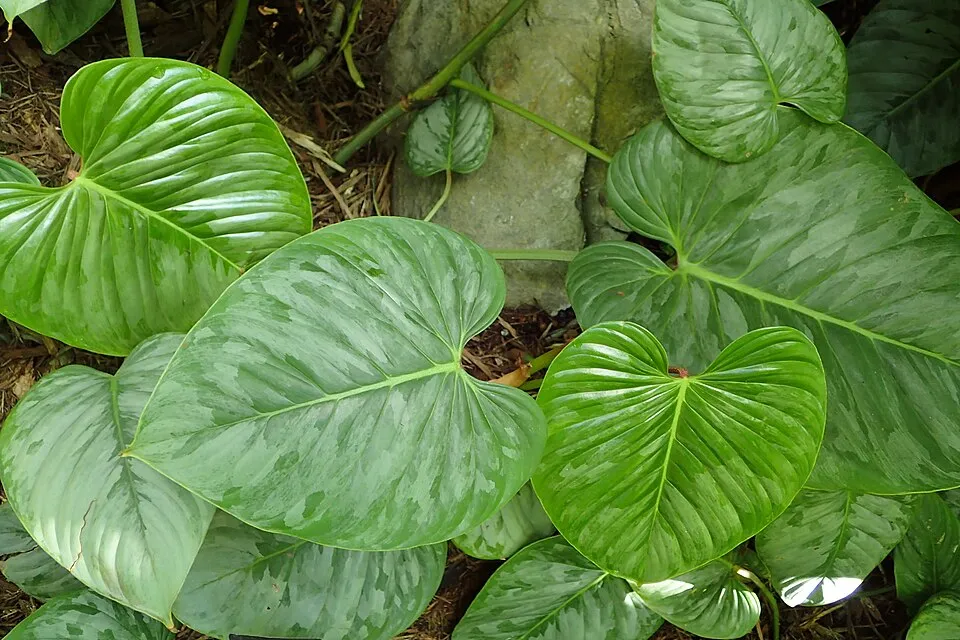
Philodendron sodiroi is a captivating species of flowering plant indigenous to the humid, tropical rainforests of Ecuador and Colombia, where it thrives within the shaded understory. Belonging to the extensive Araceae family, this plant exhibits a fascinating hemiepiphytic growth habit. It typically commences its life cycle as a terrestrial seedling, establishing roots in the forest floor.
As it matures, Philodendron sodiroi transitions to an epiphytic or climbing existence, anchoring itself to the trunks of larger host trees. This allows it to ascend towards dappled, filtered sunlight and benefit from the high ambient humidity characteristic of its native habitat. Its robust root system initially secures it in soil, later adapting to crevices in tree bark, from which it extracts moisture and nutrients from decaying organic matter and rainwater.
The most striking feature of Philodendron sodiroi is its distinctive foliage. The leaves are characteristically cordate, or heart-shaped, presenting a glossy, deep green upper surface. This rich verdant hue is dramatically punctuated by an irregular, yet aesthetically pleasing, variegation of silvery-white splotches and intricate patterns.
These silvery markings often follow the primary veins and extend into the interveinal areas, contributing to its high ornamental appeal. The lower surface of the leaf typically maintains a uniform green, occasionally displaying a subtle pale greenish-purple tint. The leaves possess a coriaceous, leathery texture, providing a substantial feel.
Long, relatively slender petioles support these impressive leaves, sometimes exhibiting a slightly rugose texture and vestigial wings.
Taxonomically, Philodendron sodiroi is classified within the genus Philodendron, one of the largest genera in the Araceae family, encompassing hundreds of species. The genus name 'Philodendron' originates from the Greek 'philo' (loving) and 'dendron' (tree), aptly describing its affinity for climbing trees.
Trusted Scientific References
1. Authoritative external sources for Philodendron sodiroi
1.1 Wikipedia — Philodendron sodiroi
1.2 Kew POWO (Plants of the World Online)
1.3 PubMed — peer-reviewed research
1.4 NCBI Taxonomy Browser
1.5 GBIF — Global Biodiversity
1.1.Philodendron Sodiroi — Key Features
- ✓ <strong>Foliage Variegation</strong> — Displays striking irregular silvery-white splotches and patterns on glossy dark green, heart-shaped leaves.
- ✓ <strong>Hemiepiphytic Growth</strong> — Begins as a terrestrial plant and later climbs trees, adapting to an epiphytic lifestyle.
- ✓ <strong>Cordate Leaves</strong> — Distinctive heart-shaped (cordate) leaves, typically ranging from 6-10 inches (15-25 cm) long.
- ✓ <strong>Araceae Family Member</strong> — Belongs to the Araceae family, known for containing irritating calcium oxalate crystals.
- ✓ <strong>Tropical Origin</strong> — Native to the humid rainforests of Ecuador and Colombia, requiring warm, moist conditions.
- ✓ <strong>Climbing Habit</strong> — Naturally climbs support structures, benefiting from moss poles or trellises in cultivation.
- ✓ <strong>Ornamental Value</strong> — Highly sought after by plant collectors and enthusiasts for its exceptional aesthetic appeal.
- ✓ <strong>Coriaceous Texture</strong> — Leaves possess a leathery, somewhat rigid, and substantial texture.
- ✓ <strong>Long Petioles</strong> — Features relatively long and slender petioles supporting the impressive leaves.
- ✓ <strong>Understory Dweller</strong> — Thrives in dappled, filtered light conditions found in forest understories.
1.2.Philodendron Sodiroi — Quick Summary
- ✓ Primary Use — Highly prized ornamental houseplant for its striking variegated foliage.
- ✓ Key Compound — Contains insoluble calcium oxalate crystals, making it toxic if ingested.
- ✓ Medicinal Status — Not a medicinal plant; no documented traditional or scientific therapeutic uses.
- ✓ Toxicity Risk — Severe oral and gastrointestinal irritation, swelling, and breathing difficulties if ingested.
- ✓ Safe Handling — Requires protective gloves during handling to prevent skin irritation.
- ✓ Habitat — Native to tropical rainforests of Ecuador and Colombia, thrives in high humidity and indirect light.
2.Philodendron Sodiroi — Scientific Identity
3.Philodendron Sodiroi — Quick Facts
4.Philodendron Sodiroi — Appearance & Identification
5.Philodendron Sodiroi — Native Habitat
6.Philodendron Sodiroi — Water Requirements
- ✓ Light — Provide bright, indirect light; direct sun can scorch its delicate variegated leaves. Filtered light, mimicking its understory habitat, is ideal.
- ✓ Humidity — Requires high ambient humidity (60-80%) to thrive. Use a humidifier, pebble tray, or group with other plants to maintain moisture.
- ✓ Soil & Potting — Plant in a well-draining, airy potting mix rich in organic matter. An aroid mix with bark, perlite, and coco coir is recommended. Ensure the pot has drainage holes.
- ✓ Watering — Water thoroughly when the top 1-2 inches of soil feel dry. Allow excess water to drain completely to prevent root rot. Reduce watering in cooler months.
- ✓ Support — As a climbing hemiepiphyte, Philodendron sodiroi benefits significantly from a moss pole or other climbing structure to support its aerial roots and encourage larger leaf growth.
- ✓ Temperature — Maintain warm temperatures between 65-80°F (18-27°C). Avoid sudden temperature fluctuations or cold drafts.
- ✓ Fertilization — Feed with a balanced liquid fertilizer diluted to half strength every 2-4 weeks during the growing season (spring and summer). Reduce or cease feeding in winter.
- ✓ Propagation — Can be propagated through stem cuttings, ideally with at least one node and aerial root, rooted in water, sphagnum moss, or a well-draining substrate.
Reviewed by the Flora Medical Global Botanical Review Panel
Multi-disciplinary editorial group · Botany · Ethnobotany · Herbal-medicine literature
Who reviewed this: This page was checked by the Flora Medical Global Botanical Review Panel — an in-house editorial group of botany graduates, ethnobotany researchers, and horticulture practitioners who collectively maintain our 7,000+ plant encyclopedia. Meet the team.
Our 4-step verification process
1. Taxonomic verification
Scientific names and synonyms cross-checked against Kew POWO, World Flora Online, and The Plant List.
2. Phytochemical & medicinal cross-reference
Active compounds, traditional uses, and reported activities are cross-referenced with PubMed, USDA Dr. Duke's database, and peer-reviewed ethnobotanical literature.
3. Conservation & distribution check
Distribution, ecology, and conservation status confirmed against GBIF occurrence records and the IUCN Red List.
4. Editorial & safety review
Every entry passes an editorial pass for clarity, originality, and safety notices (toxicity, contraindications, dosage caveats) before publication.
Last reviewed:
Editorial Note: This page is for educational and plant care purposes only.
Written by: Flora Medical Global Editorial Team
Reviewed by: Flora Medical Global Botanical Review Panel
Last Updated: June 15, 2026







Philodendron Sodiroi — Comments & Community Reviews
Rate this plant